
RECENT POSTS

22.March.2026
Kinesiology Tape for Knee Pain: Complete Relief Guide for Athletes and Active Individual
0 Comments
21.March.2026
Kinesiology Tape for Knee Pain: Complete Relief Guide for Athletes and Active Individuals
0 Comments
21.March.2026
Kinesiology Tape Benefits: Complete Guide to Uses, Applications, and Therapeutic Effects
0 Comments
05.August.2025
Kinesiology Tape for Plantar Fasciitis: Complete Pain Relief and Recovery Guide
0 CommentsTendonitis Kinesiology Tape Guide: General Application for Overuse Pain
60-Second Taping Guide
Tendonitis & Tendinopathy
Pre-cut kinesiology tape principles for tendon overuse pain: patellar, biceps, quadriceps, peroneal, anywhere on the body.
What is tendonitis?
The accurate term is tendinopathy, overuse irritation of a tendon (the rope-like connective tissue that joins muscle to bone). Older textbooks call it tendonitis (“itis” meaning inflammation), but research shows most chronic cases are degenerative rather than inflammatory. The most common sites are the Achilles, patellar (jumper’s knee), rotator cuff, tennis/golfer’s elbow, biceps, quadriceps, peroneal and posterior tibial tendons. Pain is gradual onset, worsens with the activity that causes it, and improves with rest then comes back when you return.

Common causes
- Sudden increase in training load (volume, intensity, frequency)
- Insufficient recovery between sessions
- Tight or weak muscles around the tendon
- Poor technique or biomechanics
- Age: tendons get less elastic past 35 to 40
How kinesiology tape helps tendinopathy
Tape applied along the affected tendon and across the painful point does three useful things during a tendinopathy rebuild. First, it provides proprioceptive feedback that encourages the muscle to fire more evenly, reducing the eccentric overload that drives tendon irritation. Second, the skin-lift effect over the tender area is thought to reduce pressure on local pain receptors. Third, it lets you keep moving and loading the tendon at a tolerable level, which is exactly what tendinopathy needs to heal (load, not rest).
How to apply: any tendon


01
Prep
Put the muscle on stretch. Clean dry skin.
02
Strip 1
Anchor below tendon. Lay along the muscle in the direction of pull at 25% stretch.
03
Strip 2
Horizontal across the tender attachment point at 50% stretch. Anchor ends flat.
04
Activate
Rub firmly 30 seconds. Test movement.
Tendons love load, not rest. Total rest weakens the tendon further. The cure is graded loading: isometric holds first, then eccentric work, then full functional movement. Tape supports the load, not replaces it.
Best Tape For This
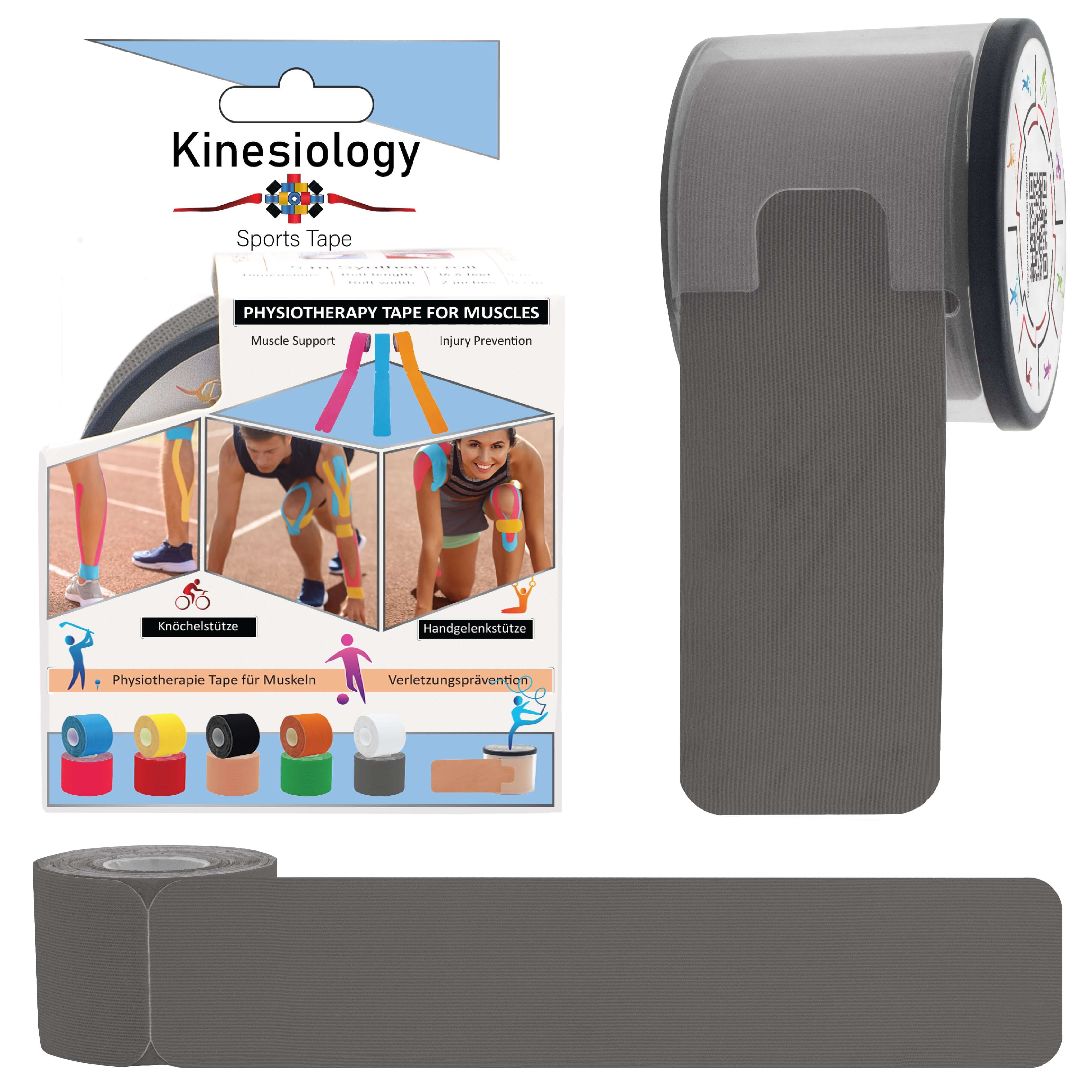
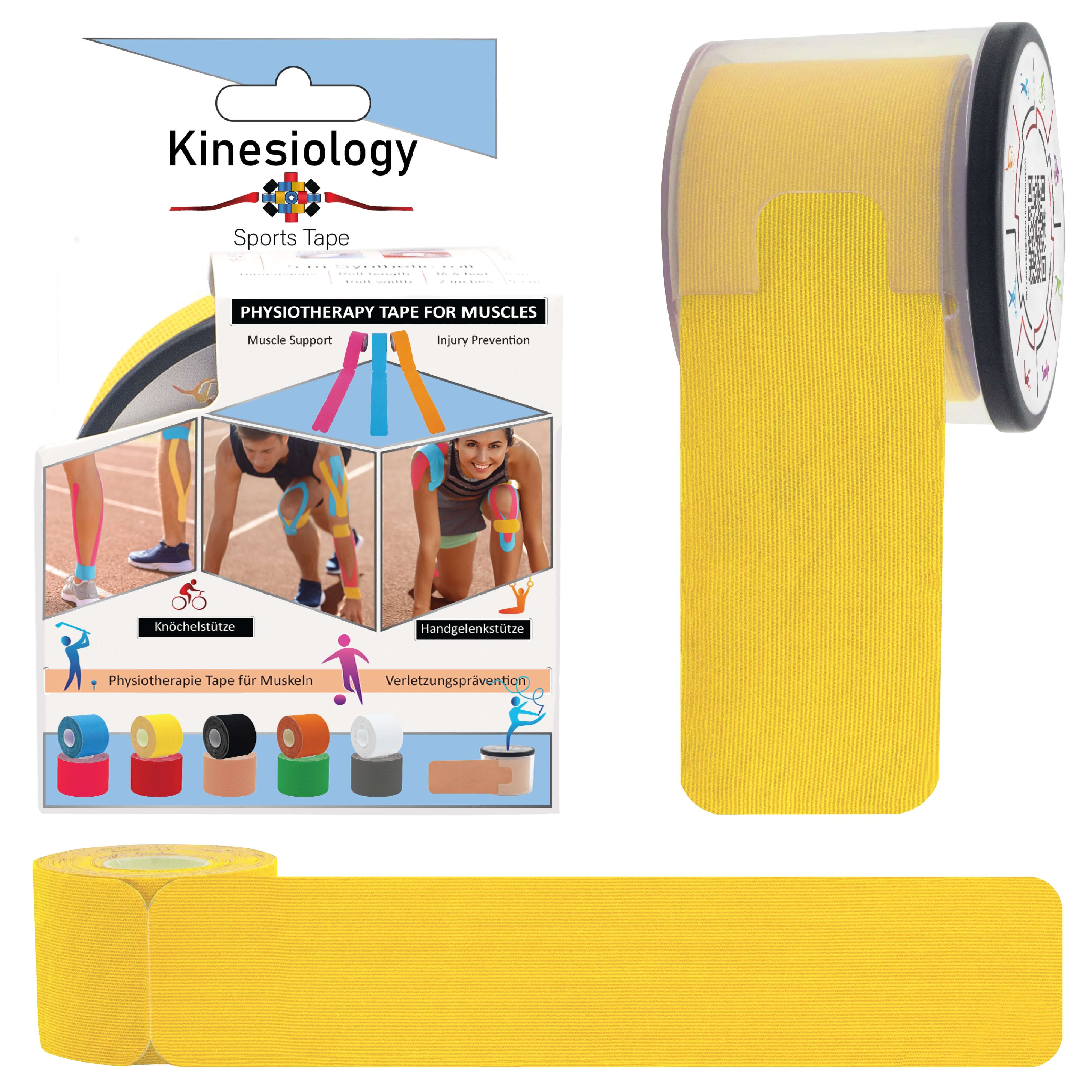
Pick a colour by where it goes. Beige discreet; black for the gym; bright colours for outdoor sport.
BlackShop the rangeRecovery tips beyond taping
- Isometric holds first: 5 × 45 seconds, hold at ~70% effort. The best pain-reducer in early stage tendinopathy.
- Heavy slow resistance: 3 × 8 to 10 reps eccentric and concentric, 3 days a week.
- Reduce the offending load by 30 to 50% for 2 to 3 weeks while you rebuild.
- Address the chain: hip weakness drives many lower-limb tendinopathies, scapular weakness drives upper-limb ones.
- Patience: tendons heal slowly. 6 to 12 weeks is normal, 6 months for chronic cases.
- Avoid stretching aggressively: compressive tendinopathies (insertional Achilles, glute med) hate stretch in the early stage.
When to see a physio or GP
See a physio for any tendon pain not improving after 4 to 6 weeks of self-management, or if you notice swelling, a palpable lump on the tendon, or sharp pain rather than dull ache. Imaging (ultrasound) can rule out a partial tear.
Frequently asked
Tendonitis or tendinopathy, what’s the difference?
“Tendonitis” implies inflammation, which research shows is rare in chronic cases. “Tendinopathy” is the modern term and means overuse change in the tendon, degenerative more than inflammatory.
Should I take anti-inflammatories?
Not as a default. NSAIDs can interfere with tendon repair in the chronic phase. Use them sparingly for acute flares. Speak to a pharmacist or GP.
How long until I’m pain-free?
Acute: 2 to 6 weeks. Chronic: 3 to 6 months. Tape and graded loading are the cornerstones.
Will it come back?
Often yes if you skip the strength work. Tendinopathy is a load-tolerance issue. Build the tendon’s tolerance permanently with maintenance strength work.
Related post
22
Mar
21
Mar
21
Mar
05
Aug
Pain & Recovery Guides
Kinesiology Tape for Plantar Fasciitis: Complete Pain Relief and Recovery Guide
Read more
05
Aug