
RECENT POSTS

22.March.2026
Kinesiology Tape for Knee Pain: Complete Relief Guide for Athletes and Active Individual
0 Comments
21.March.2026
Kinesiology Tape for Knee Pain: Complete Relief Guide for Athletes and Active Individuals
0 Comments
21.March.2026
Kinesiology Tape Benefits: Complete Guide to Uses, Applications, and Therapeutic Effects
0 Comments
05.August.2025
Kinesiology Tape for Plantar Fasciitis: Complete Pain Relief and Recovery Guide
0 CommentsRotator Cuff Kinesiology Tape Guide: Shoulder Support & Impingement Relief
60-Second Taping Guide
Rotator Cuff & Shoulder Impingement
Pre-cut kinesiology tape to support the supraspinatus, ease overhead pain and cue better shoulder posture.
What is rotator cuff pain?
The rotator cuff is a group of four small muscles (supraspinatus, infraspinatus, teres minor, subscapularis) that stabilise the shoulder joint and lift the arm in all planes. Pain comes from overuse irritation (most common), impingement (the supraspinatus tendon gets pinched under the acromion), partial tears, or full tears. The hallmark symptom is a painful arc when raising the arm overhead, ache when sleeping on the affected side, and weakness reaching behind your back.

Common causes
- Overhead work or sport: painters, swimmers, throwers, racquet players
- Sudden increase in pressing volume at the gym
- Forward-rounded shoulder posture from desk work
- Falls onto an outstretched arm or shoulder
- Age-related tendon degeneration (40+)
How kinesiology tape helps the rotator cuff
Tape applied across the deltoid and along the supraspinatus encourages the cuff muscles to engage earlier and more consistently, reducing the impingement-style pinch at the top of the painful arc. A second strip across the upper traps and back of the shoulder cues the scapula into better posture (back and down rather than forward-rolled), which opens up the subacromial space and gives the tendons more room.
How to apply: deltoid and supraspinatus


01
Prep
Cross arm across chest, hand on opposite shoulder. Clean dry skin.
02
Strip 1
Anchor on front of deltoid. Curve over top of shoulder to back at 25% stretch.
03
Strip 2
Anchor on upper traps. Lay diagonally across the painful area to lower shoulder blade at 50% stretch.
04
Activate
Rub firmly 30 seconds. Slowly raise arm. Feel the cueing effect.
Don’t push through sharp shoulder pain. Rotator cuff issues respond well to graded loading but flare with overhead pressing. Drop weight, focus on form, and add overhead volume back gradually.
Best Tape For This
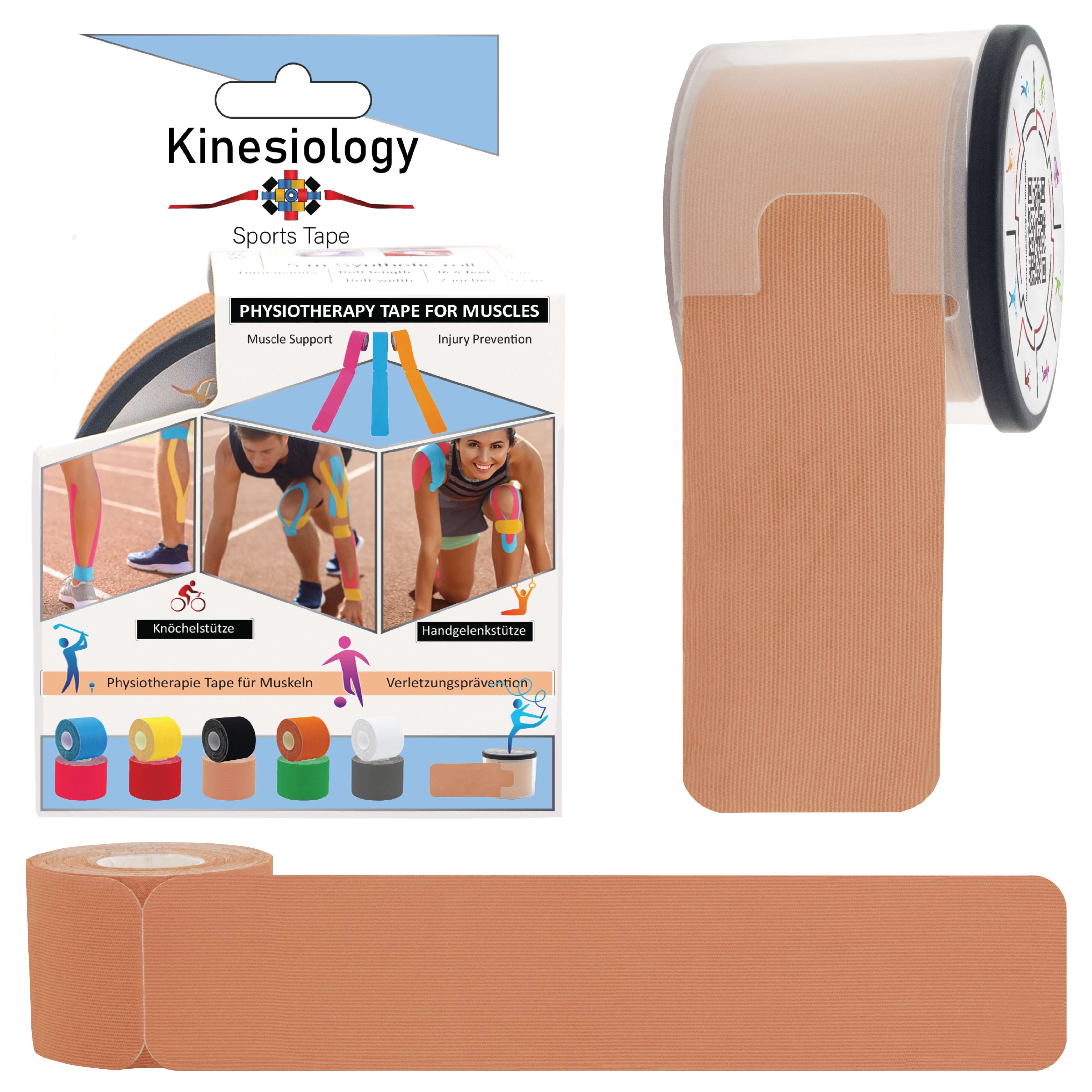
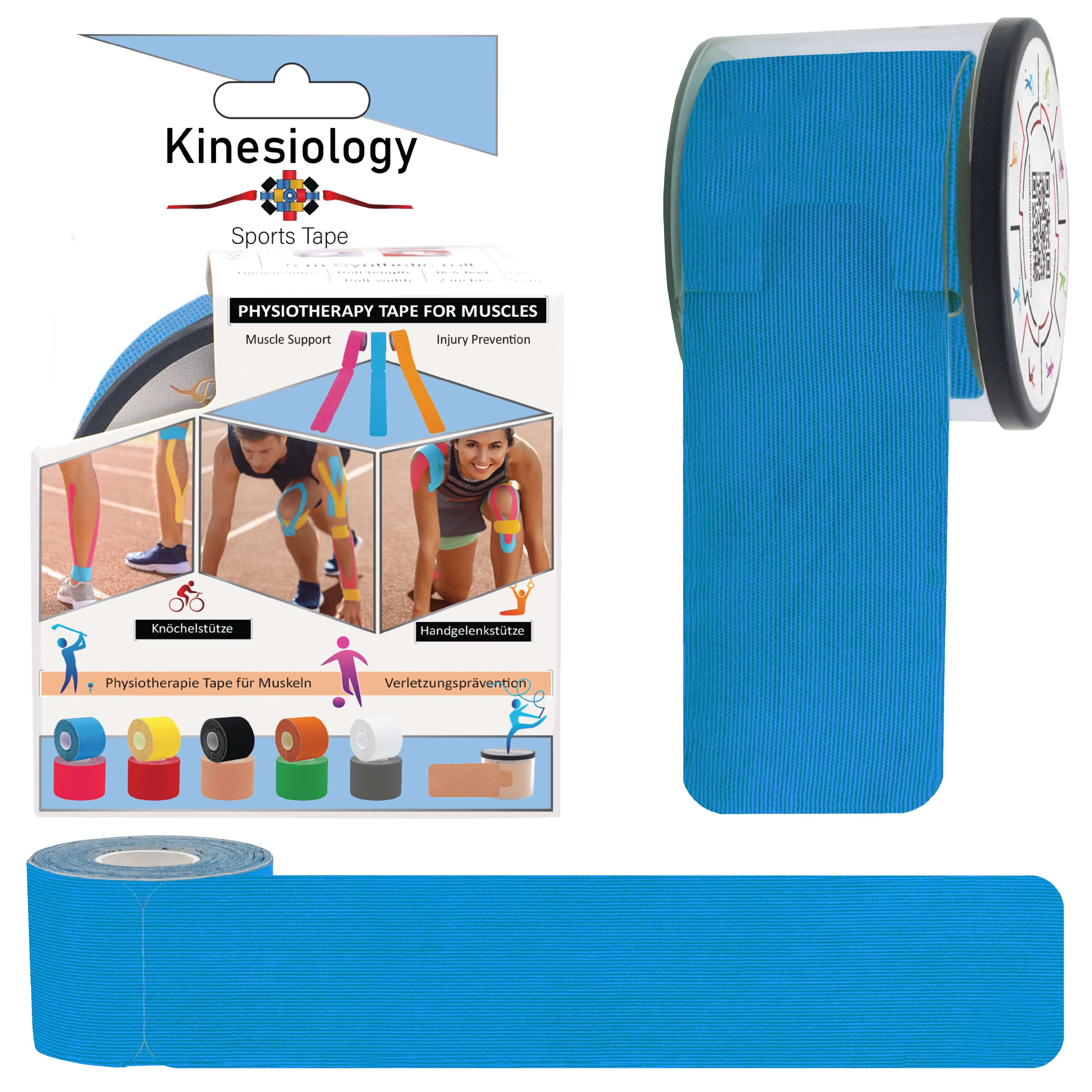
Beige is the discreet office choice. Black for gym kit visibility.
BeigeShop the rangeRecovery tips beyond taping
- External rotation with band: 3 × 15, daily. The single best cuff strengthener.
- Scapular retractions: 3 × 15. Pull shoulder blades down and back.
- Y-T-W raises face-down on a bench, light weights, 3 × 10 each.
- Doorway pec stretch: 30 seconds each side, opens up the chest.
- Reduce overhead pressing volume for 2 to 4 weeks. Replace with horizontal pulls and rows.
- Sleep on your back or unaffected side with a pillow supporting the sore arm.
When to see a physio or GP
See a physio or GP if pain is severe, persistent or follows a fall, if you can’t lift the arm at all, if there’s significant weakness, or if it doesn’t improve after 6 to 8 weeks of self-management. Imaging (ultrasound or MRI) can rule out a tear that may need referral.
Frequently asked
Can I train with the tape on?
Yes. That’s the point. The tape supports the cuff during pressing, pulling and overhead work. Drop the weight if it flares.
How long until shoulder pain settles?
Cuff issues often take 6 to 12 weeks of consistent strengthening to fully settle. Tape helps with day-to-day function during that window.
Can I sleep with the tape on?
Yes. Many people specifically apply for sleep, as the cueing reduces the position-related ache that wakes them.
One strip or two?
One Y-shape strip works for many people. Two strips, one over the deltoid, one across the upper back, gives better coverage for impingement-pattern pain.
Related post
22
Mar
21
Mar
21
Mar
05
Aug
Pain & Recovery Guides
Kinesiology Tape for Plantar Fasciitis: Complete Pain Relief and Recovery Guide
Read more
05
Aug