
Price :
QTY :
CART TOTALS :
There are items
in your cart
CART TOTALS :
With this products also buy:
Your shopping bag is empty
Go to the shop
Targeted Pain Relief
Pre-cut kinesiology tape for tech-neck tension, cervical muscle strain, levator scapulae trigger points, cervicogenic headaches, whiplash recovery and stiff neck.
This page covers six of the most common neck conditions kinesiology tape can help. Most everyday neck pain is mechanical — the upper trapezius and levator scapulae become tight and overactive from sustained forward-head posture (phones, laptops, driving), prolonged sitting, stress-related shoulder hiking, or sleeping in a poor position.
Aching across the top of the shoulders and side of the neck, worse by end of work day. Looking down at phones and laptops puts up to 27kg of effective load on the neck. The upper trapezius muscle has to hold the head up against gravity in this flexed position.
Tape pattern: Strip 1 from base of skull along upper trap to shoulder tip at 25% stretch (with head tilted away). Strip 2 diagonally from opposite shoulder blade across upper back at 50% stretch for postural cueing.
Full Neck Pain Guide →Sharp pain on a specific movement following a quick turn, sleeping in a draught, or a sudden jerk. The muscle goes into protective spasm and you wake unable to turn your head fully. Most acute strains settle in 7 to 14 days with movement, gentle stretching and support.
Tape pattern: Same as tech-neck plus a horizontal decompression strip across the spasming muscle at 50 to 75% stretch.
Sharp pain at the back-side of the neck radiating down to the upper inner corner of the shoulder blade. Caused by holding a phone between ear and shoulder, sleeping with too many pillows, or sudden head turn. Often described as “feels like a knot”.
Tape pattern: Strip from base of skull diagonally down to the upper-inner shoulder blade at 25% stretch, following the line of the levator scapulae.
Headache that starts at the base of the skull and refers forward, often over one eye or temple. Driven by trigger points in the upper trapezius and suboccipital muscles. Worse with stress, bad sleep, or long screen time.
Tape pattern: Standard upper-trap inhibition pattern. Relaxing the overactive trap reduces the headache referral. Many desk workers find this the most effective non-pharmacological headache management.
Neck pain, stiffness and sometimes headache following a road traffic accident, fall or other sudden head movement. Modern guidance is to keep moving the neck gently rather than immobilising. Tape supports gentle motion through the rebuild.
Tape pattern: Light support pattern with 15 to 25% stretch only. Get assessed first — whiplash needs a clinical exam to rule out cervical instability.
Sudden severe stiffness on one side, often noticed first thing in the morning. The neck locks in a tilted position. Usually a small joint or muscle “catch” that resolves in 3 to 7 days with gentle movement, heat, and tape support.
Tape pattern: Apply with the head tilted AWAY from the painful side (puts the overactive muscle on stretch). Strip along the painful side at 25% stretch to inhibit the spasm.
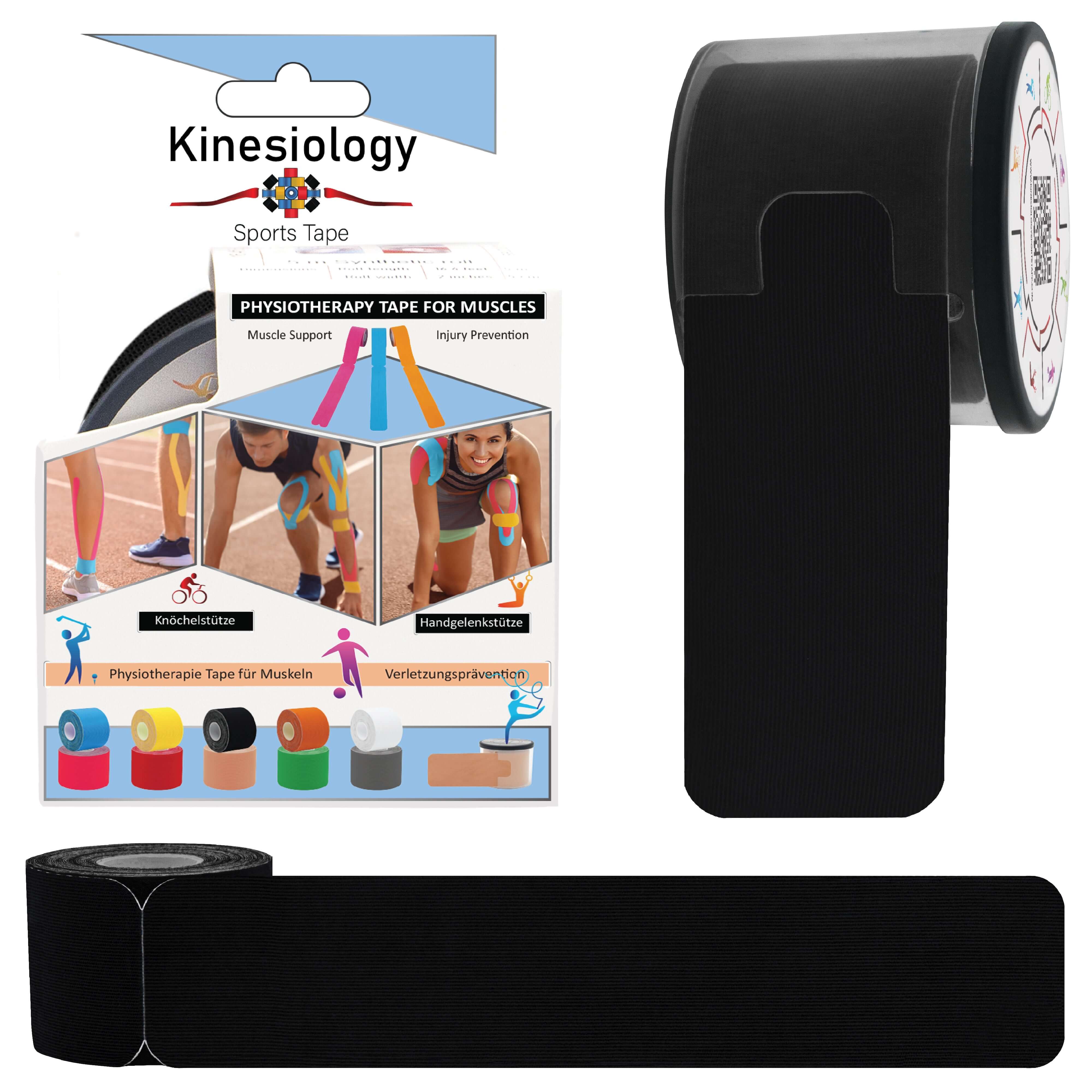
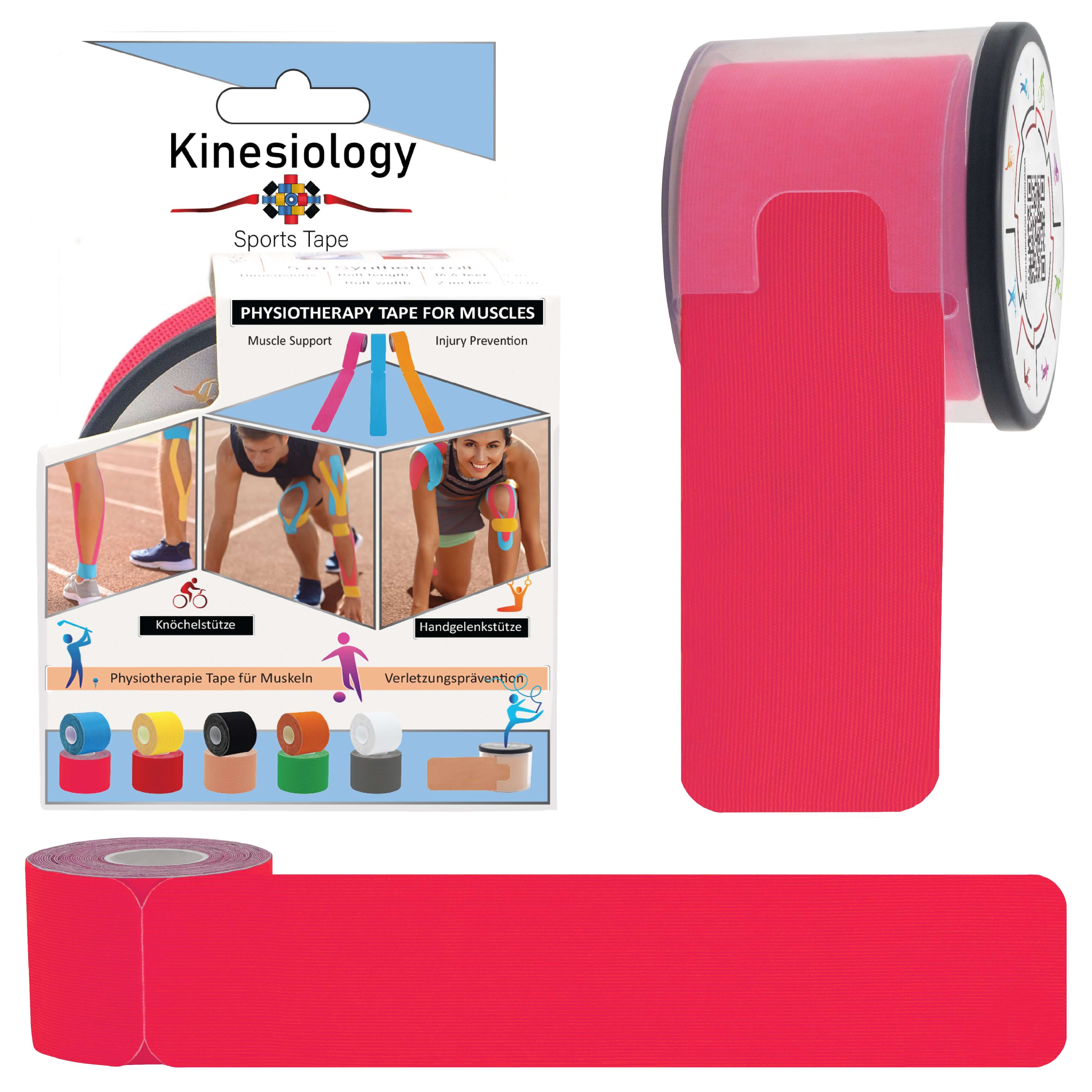
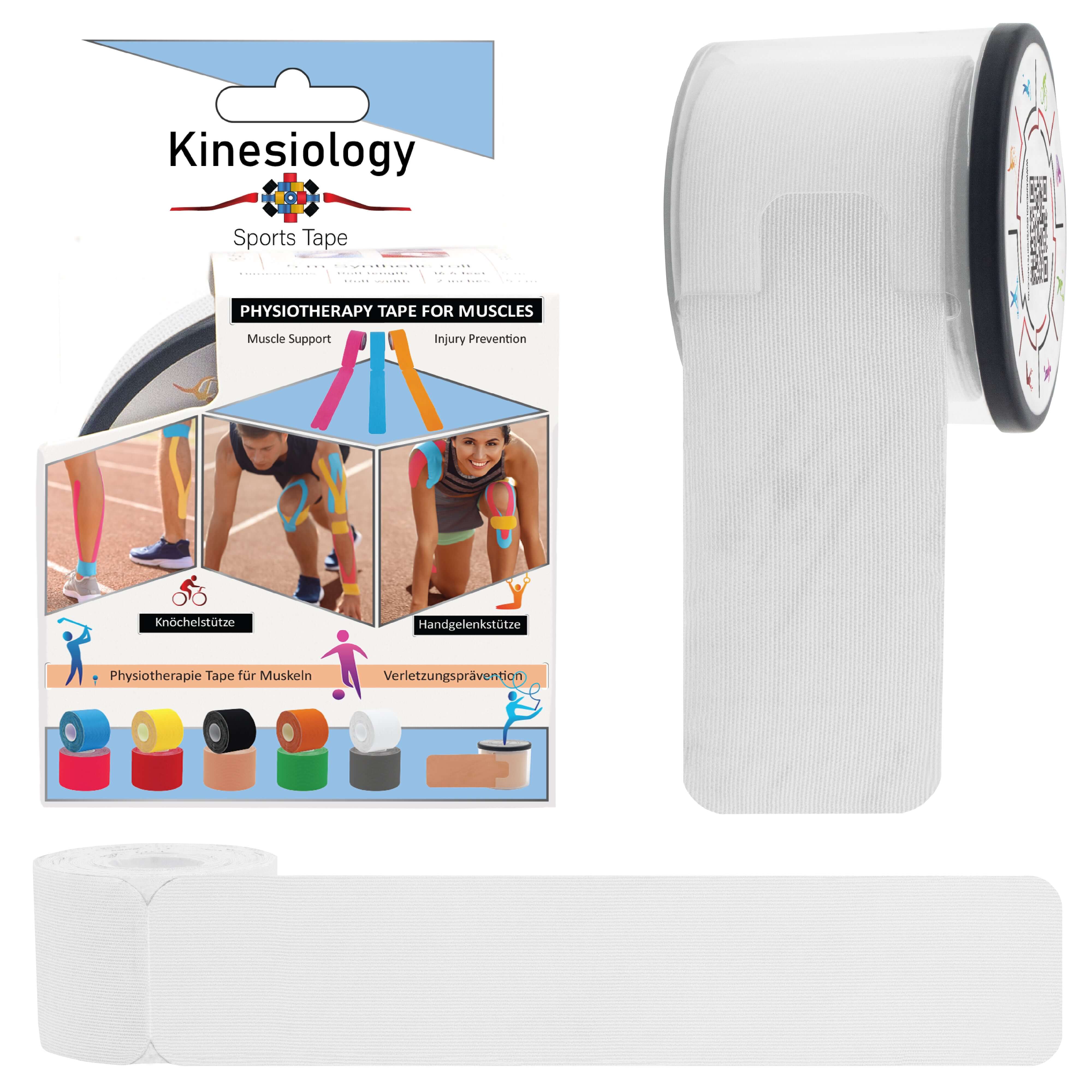
Pre-cut 5cm × 25cm strips fit the upper trap perfectly. Beige is the discreet office choice; black if it’ll show above your collar.
From £3.99 per pack
Shop 10 Plain ColoursShop Talisman DesignsThree mechanisms work together. First, muscle inhibition: tape applied along the upper trapezius with the muscle on stretch and the tape at low tension gives a proprioceptive cue for the overactive muscle to relax. Second, postural cueing: a diagonal strip across the upper back pulls slightly when you slouch forward, reminding the scapula to sit down and back, which lengthens the neck. Third, skin lift over the painful trigger points is thought to ease pressure on local pain receptors.
Many desk workers notice less afternoon tightness and fewer end-of-day tension headaches within the first 2 to 3 days of taping. Lasting improvement comes from the postural strengthening work.
Yes. Beige is barely visible under a thin shirt. The tape lies flat against the skin and shouldn’t show through a collar.
Every 5 to 7 days, or sooner if edges lift significantly. Most office workers replace weekly.
No — it cues better posture but you also need the strength work and ergonomic fixes (monitor height, pillow choice, phone habits). Tape buys you comfort to do the rehab.
Often yes, particularly headaches that start at the base of the skull and refer forward. Relaxing the upper traps reduces the referral pattern. Many desk workers report fewer headaches after 2 weeks of consistent taping.
Different tools. A soft collar restricts movement and is now only recommended for very short periods (24 to 48 hours) after acute injury — long-term use weakens the neck. Tape supports motion without restricting it, much better for chronic and postural issues.
Difficult solo because you can’t see the back of your neck. Get a partner to help, or use a two-mirror setup. The diagonal upper-back strip is particularly tricky alone.
Yes, with the standard caveats: patch test if you have sensitive skin, and don’t use if you have very thin or fragile skin (common in those on long-term steroids). The hypoallergenic adhesive is well tolerated.
Browse all 19 taping guides
From plantar fasciitis to shoulder impingement, step-by-step guides for every common condition.
All Pain Guides →Neck Taping Gallery