
Price :
QTY :
CART TOTALS :
There are items
in your cart
CART TOTALS :
With this products also buy:
Your shopping bag is empty
Go to the shopKinesiology Tape For Runners
Mile after mile.
Pre-cut kinesiology tape engineered for runners — 5-7 day wear through sweat, showers and marathons. Shin splints, IT band, runner’s knee, plantar fasciitis.
Running breaks down where the kinetic chain is weakest. The foot strikes the ground 1,500 times per mile. That force travels up the calf to the knee, through the IT band into the hip, and out across the lower back. Find the link that’s under-prepared for the volume, and that’s where the injury arrives — usually three weeks before a goal race.
Kinesiology tape supports the chain at the link that needs it most. It’s the lightest layer of intervention you can run with — lighter than a compression sleeve, lighter than a brace, and once it’s on it stays on through a marathon and the showers afterward. This page is for runners who want to keep training when something is grumbling, and want a race-day ritual that goes beyond pinning a number to a vest.
The runner’s kinetic chain is a sequence of energy returns. Foot strike loads the plantar fascia and Achilles. The calf decelerates the tibia. The quad eccentrically controls the knee through mid-stance. The IT band stabilises the lateral chain. The glute med keeps the pelvis level. The lower back resists rotation. Each of those structures has a failure mode, and the same five or six injuries account for the vast majority of running clinic visits.
Tape doesn’t fix a structural problem. It does three useful things while you sort the structural problem out: it cues the muscle to fire (proprioceptive support), it provides a small mechanical assist along the line of pull (decompression), and it can encourage swelling to drain along a fan pattern (lymphatic). For shin splints, that means a calf fan to offload the medial tibial periosteum. For runner’s knee, a patellar correction strip. For IT band, a glute med activator above the lateral knee.
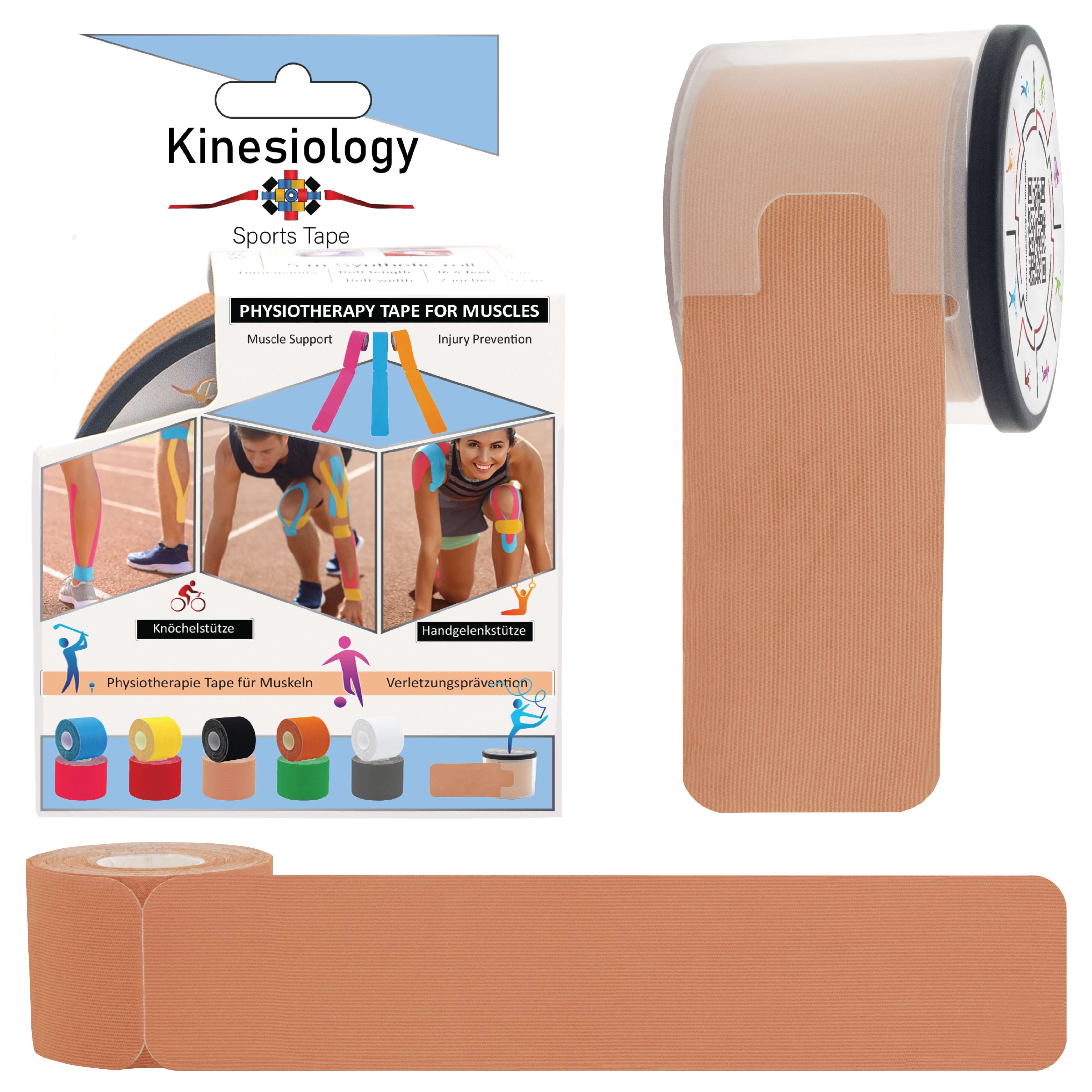
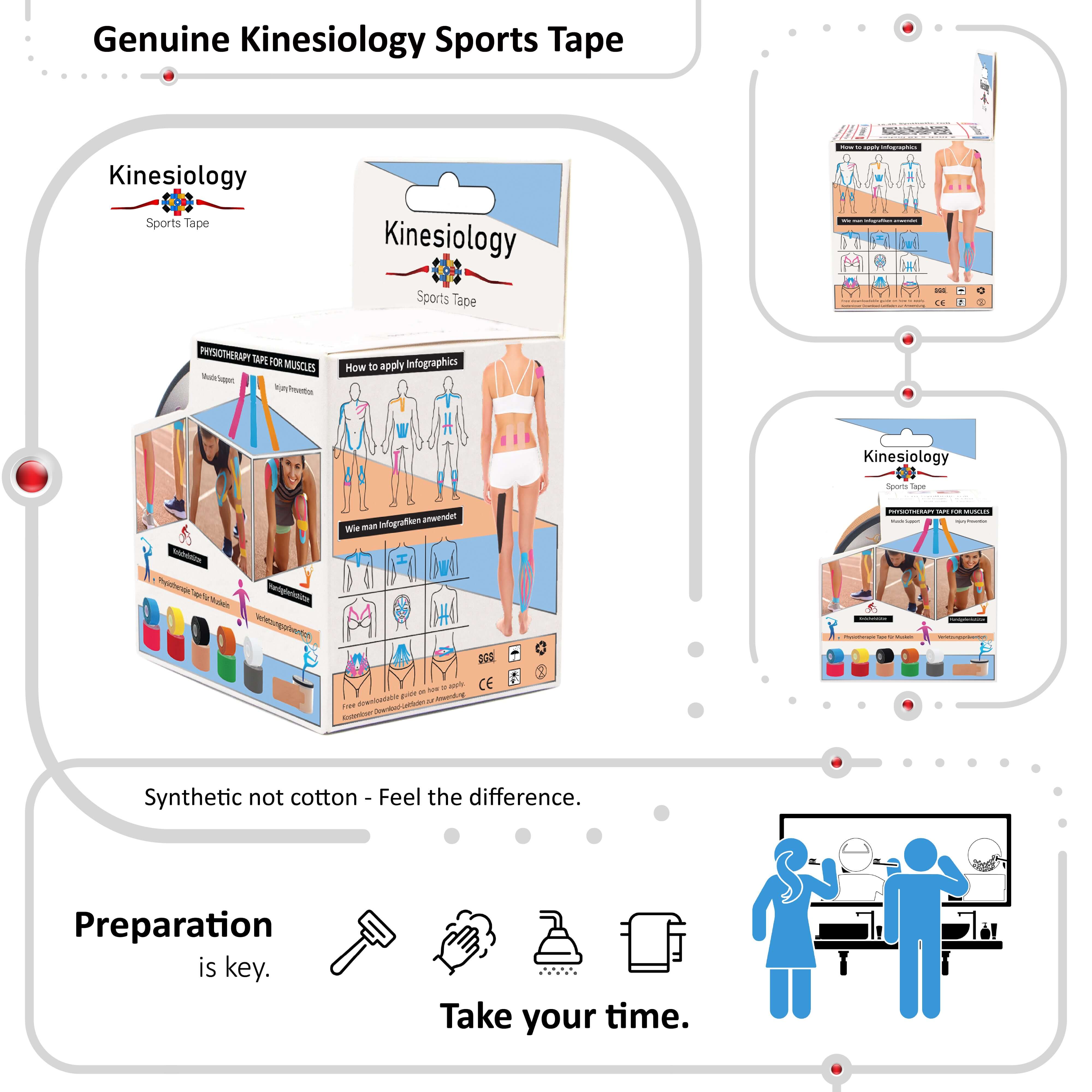
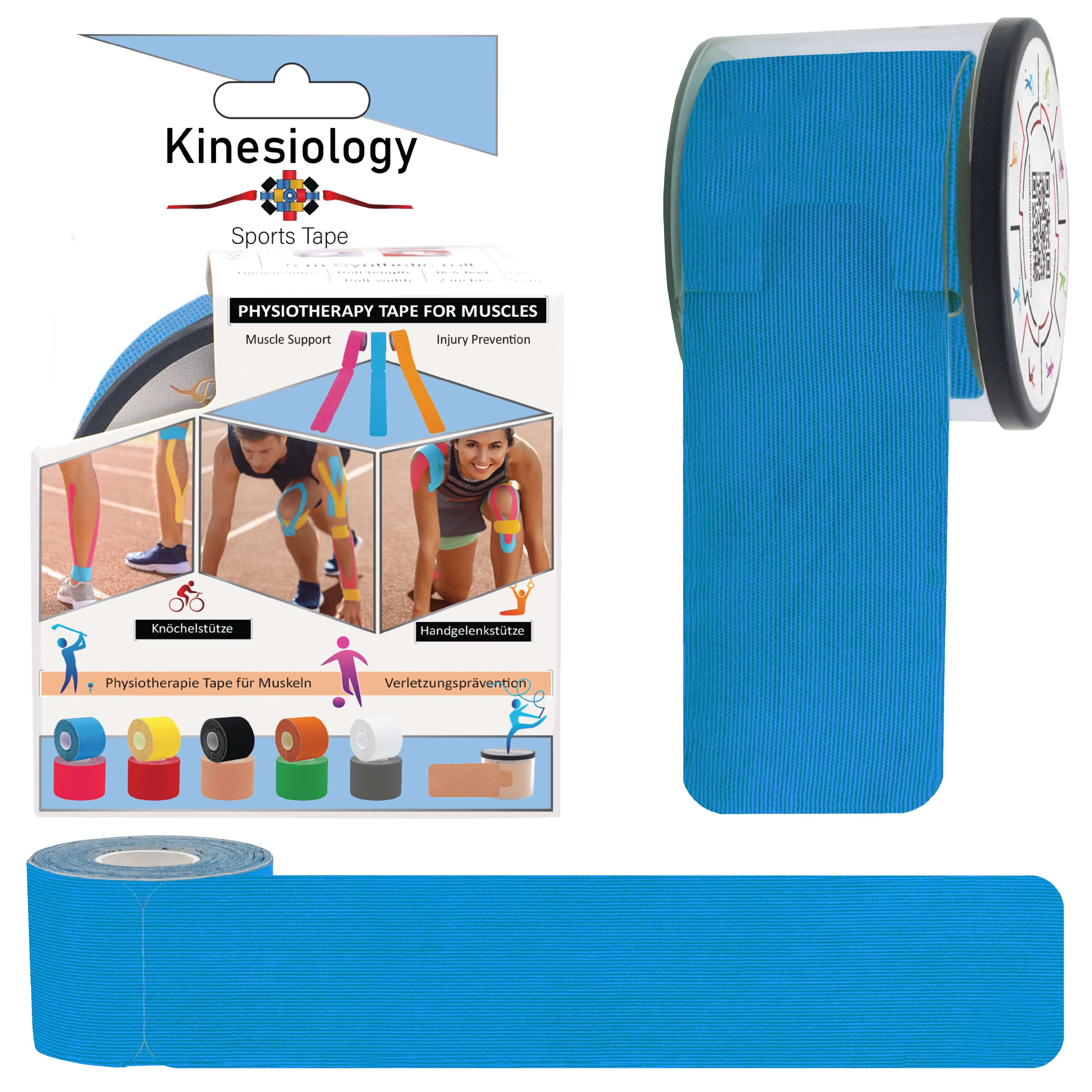
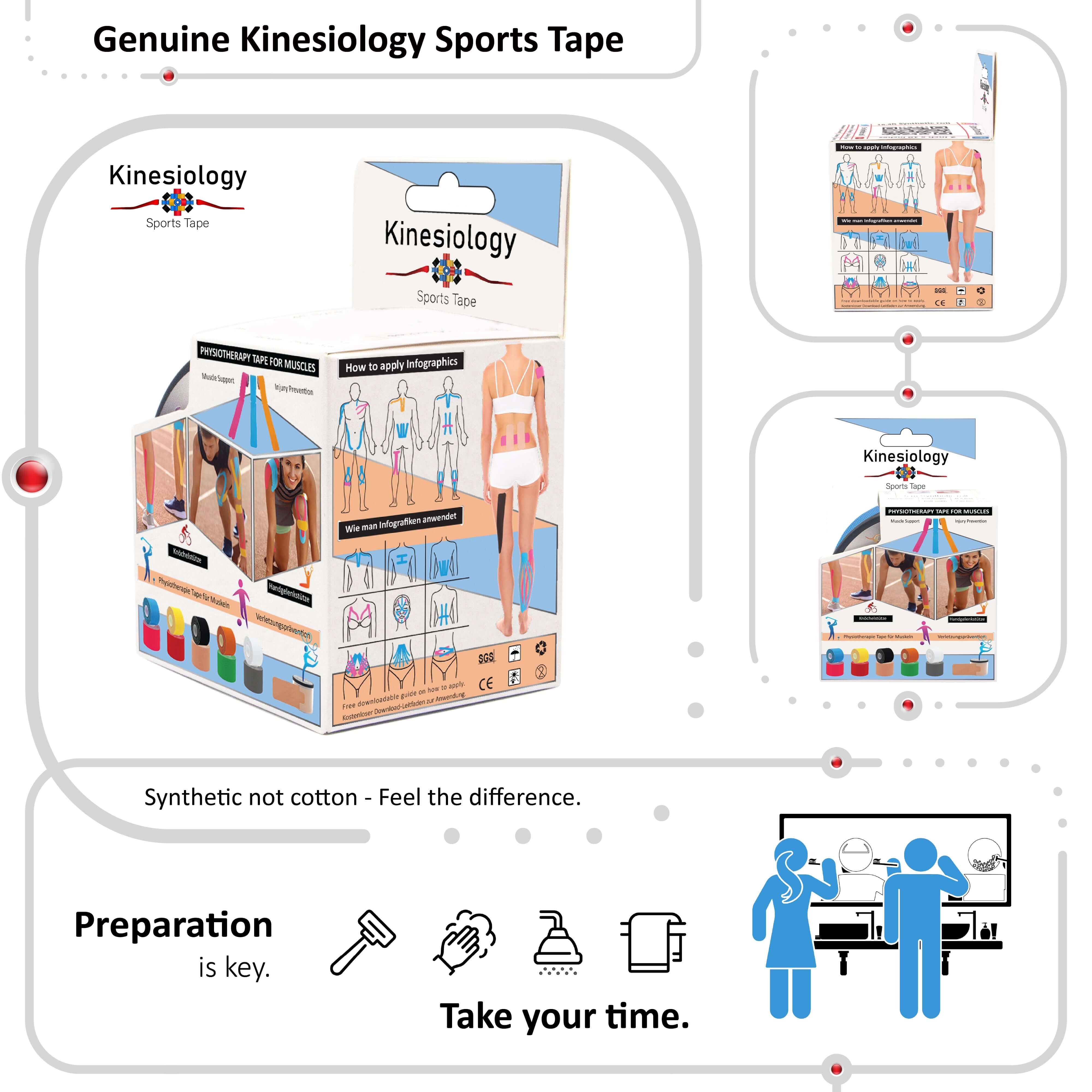
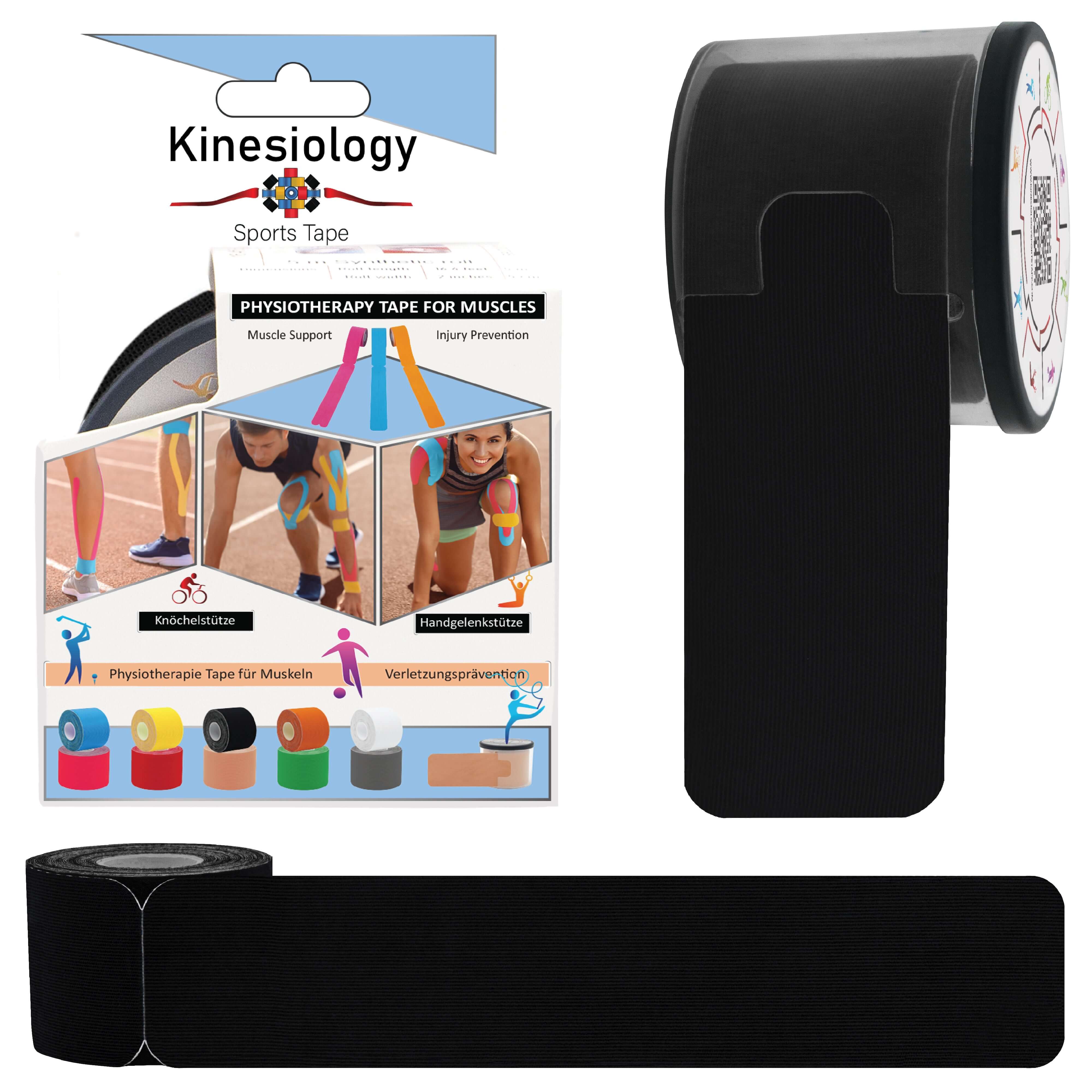
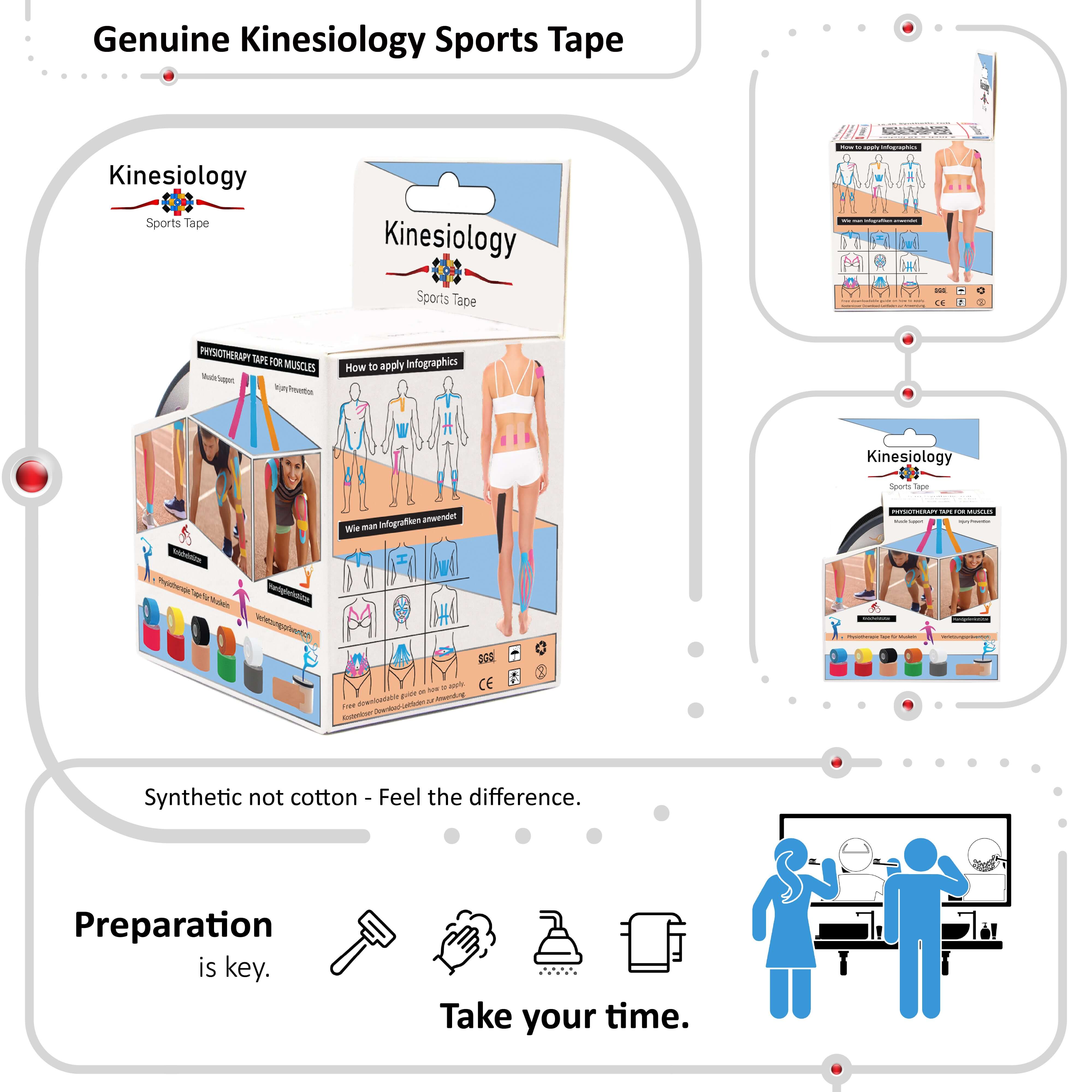
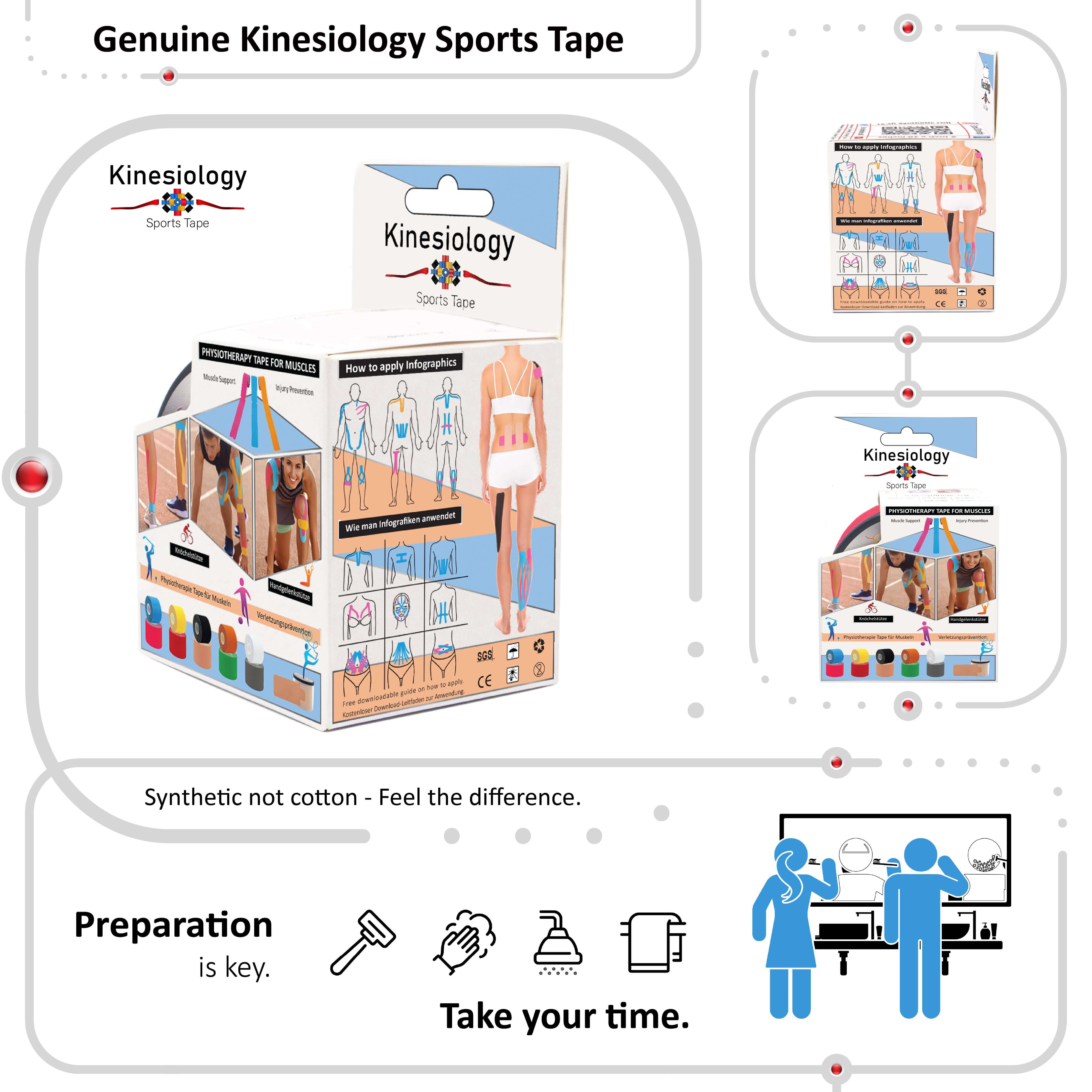
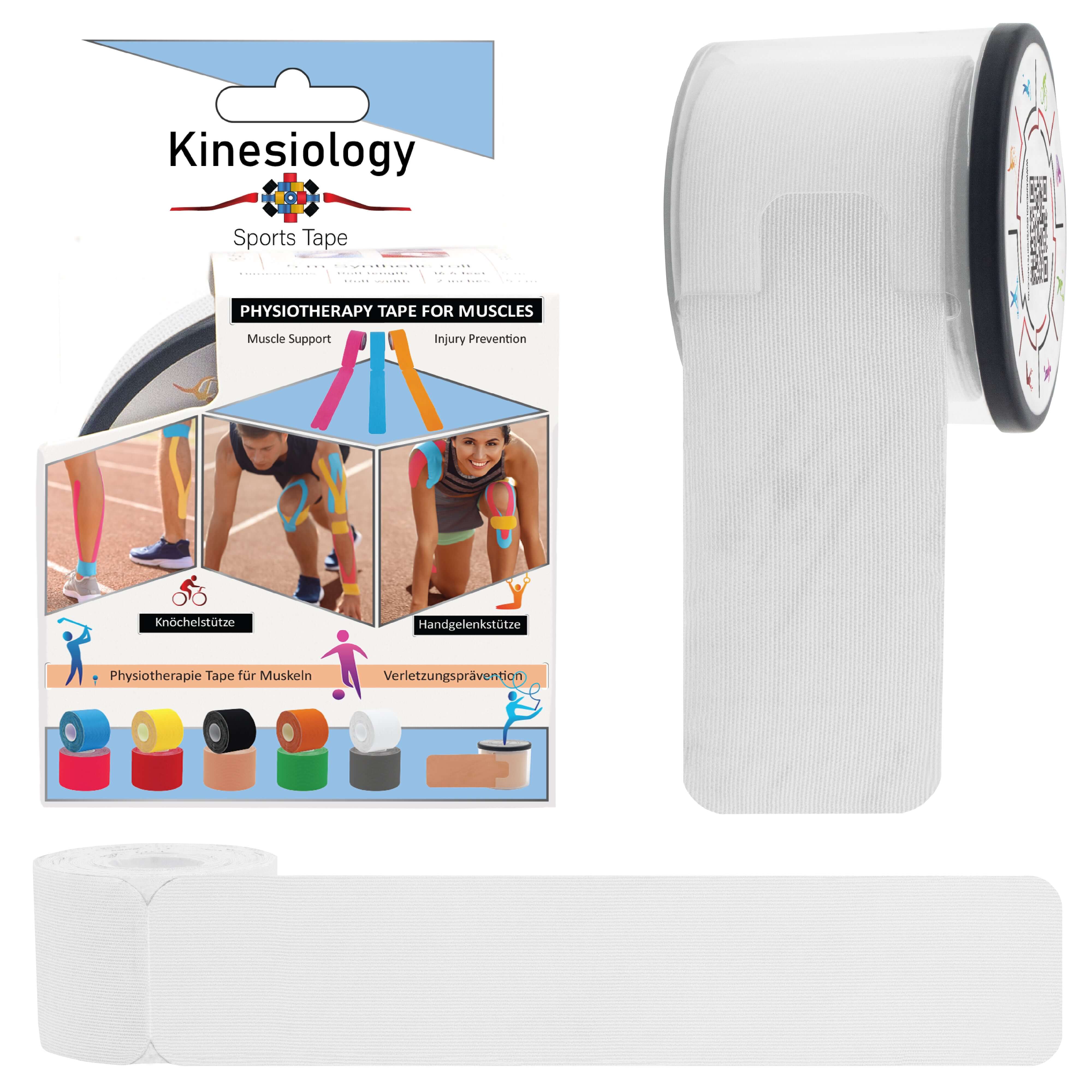
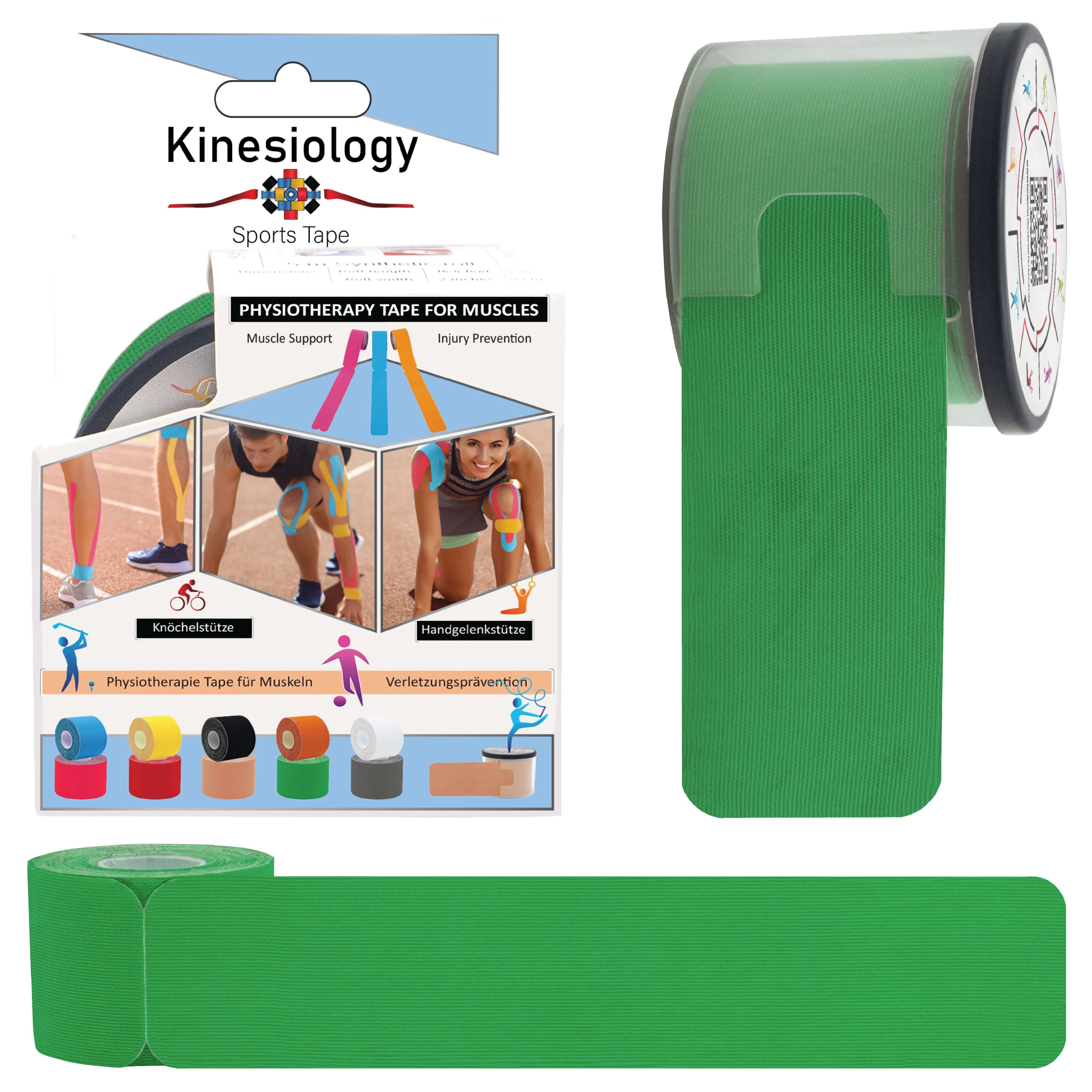
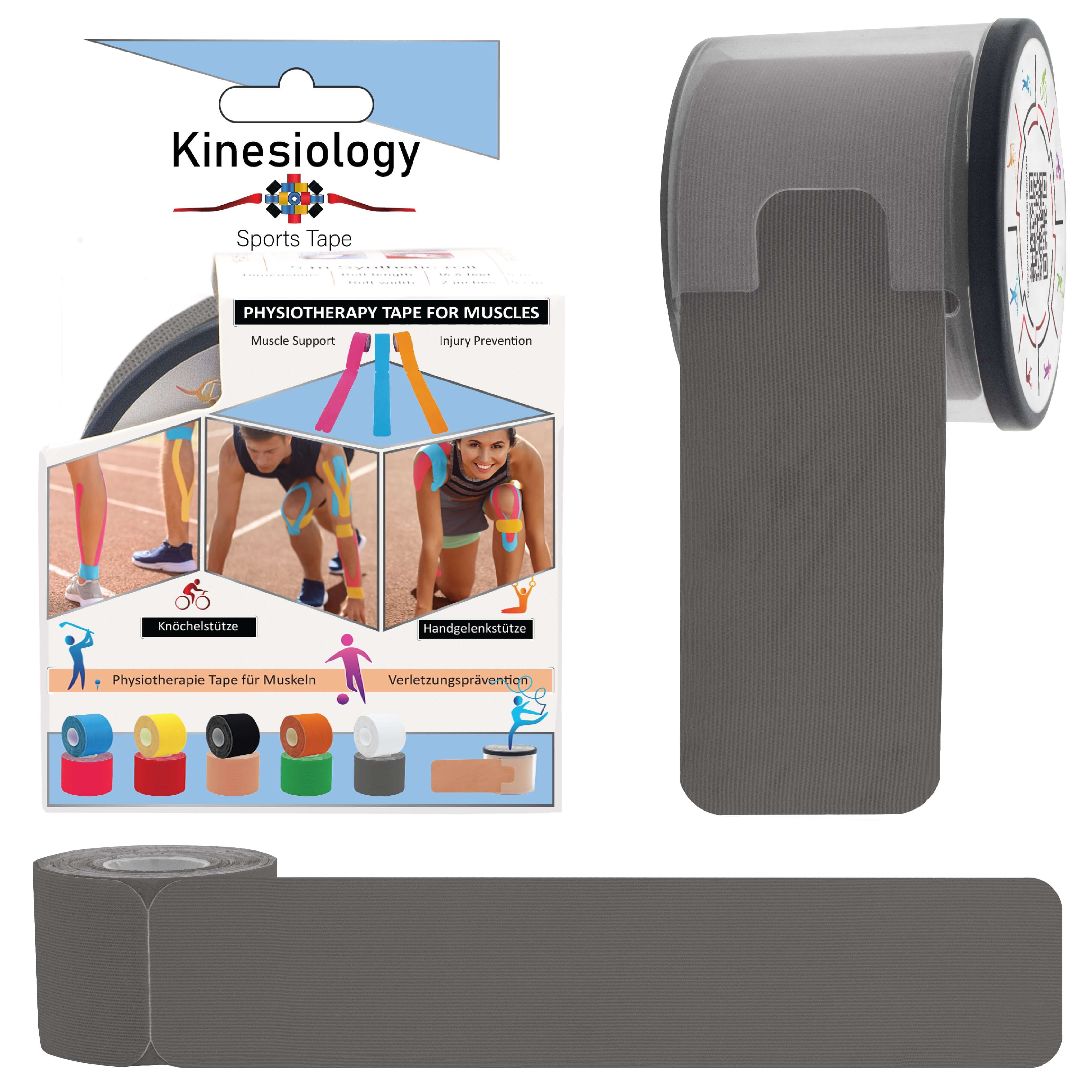
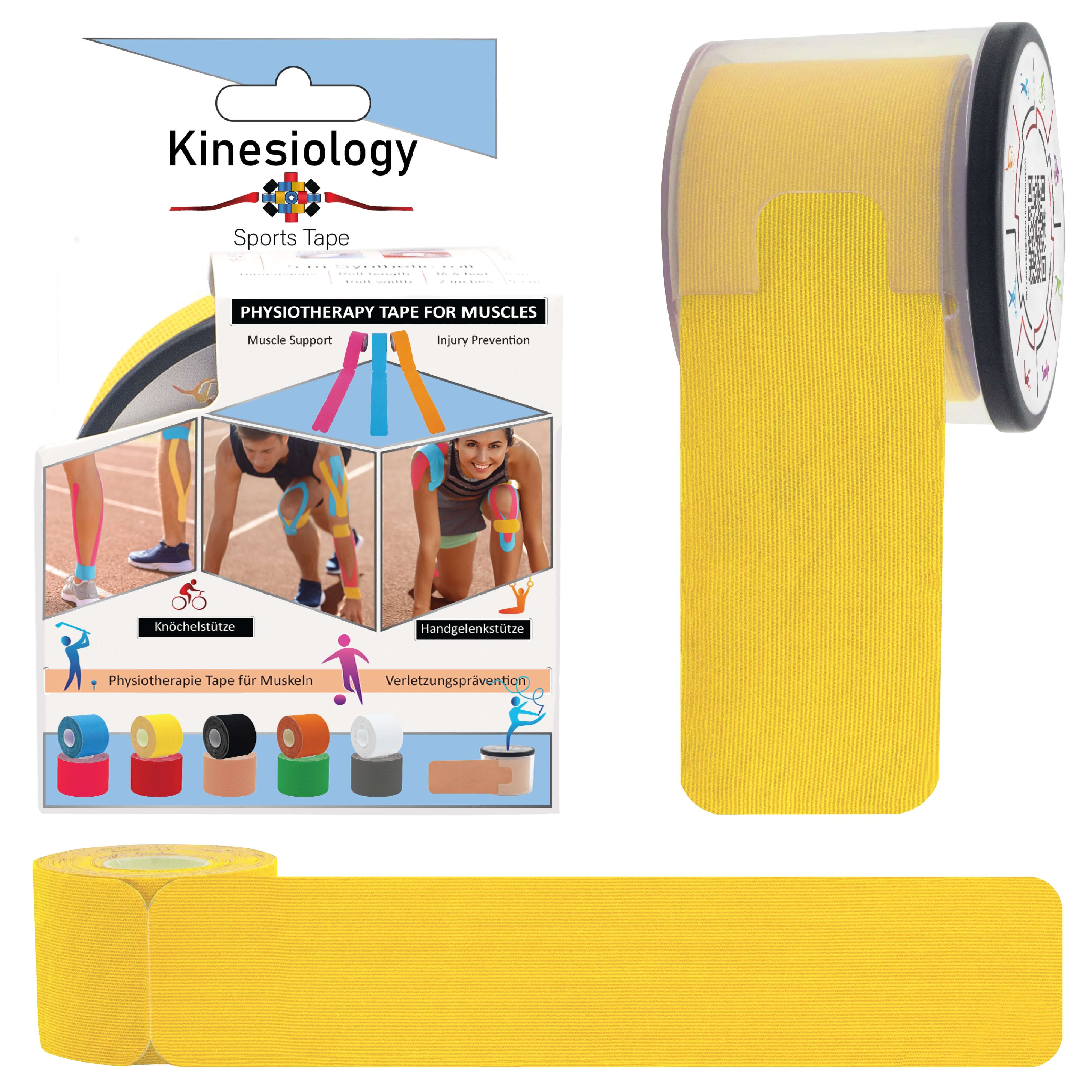
Synthetic kinesiology tape (95% Rayon, 5% Spandex) is the right textile for runners. Cotton tape lifts after one heavy sweat session; synthetic holds through marathon-distance perspiration, multiple showers, and 5-7 days of training. That’s the difference between a tape that survives one long run and a tape that gets you through a whole peak week of marathon prep.
There’s also a race-day tradition worth honouring. Bright colours on the start line, the tape visible above the sock, the ritual of application the night before the early alarm. Many runners reach for the Latin Talisman edition for the long taper and the worst mile — nil desperandum, never despair, printed along the tape that supports their calf. For the deeper pathologies, our 19 pain-guide articles and body-area pages walk through specific application patterns for the most common runners’ issues.
A calf fan from medial malleolus up to mid-tibia offloads the periosteum and reduces the bone-deep ache through mileage build-ups.
A patellar correction strip plus a vastus medialis cue helps the kneecap track properly through repeated flexion under load.
A glute med activator above the lateral knee, combined with a lateral thigh decompression strip, eases the friction at the lateral femoral condyle.
A fan from the heel forward across the arch supports the plantar fascia through the loading of every foot strike.
An I-strip from heel to mid-calf decompresses the tendon and provides a steady proprioceptive cue through tempo and long runs.
Apply Thursday for a Sunday marathon — tape settles in, survives shake-out runs, the carb-load shower, and the full 26.2 miles.

Six tapes from the 19 in our runners’ collection — race-day brights, a Latin Talisman edition for ritual, and the neutral colours for training blocks where you’d rather the tape disappeared.

Yellow Plain (high-vis road)
From £3.99

Red Plain
From £3.99

Pink Plain
From £3.99

Black Latin Talisman (Vertical)
From £3.99

Orange Plain
From £3.99

White Plain
From £3.99
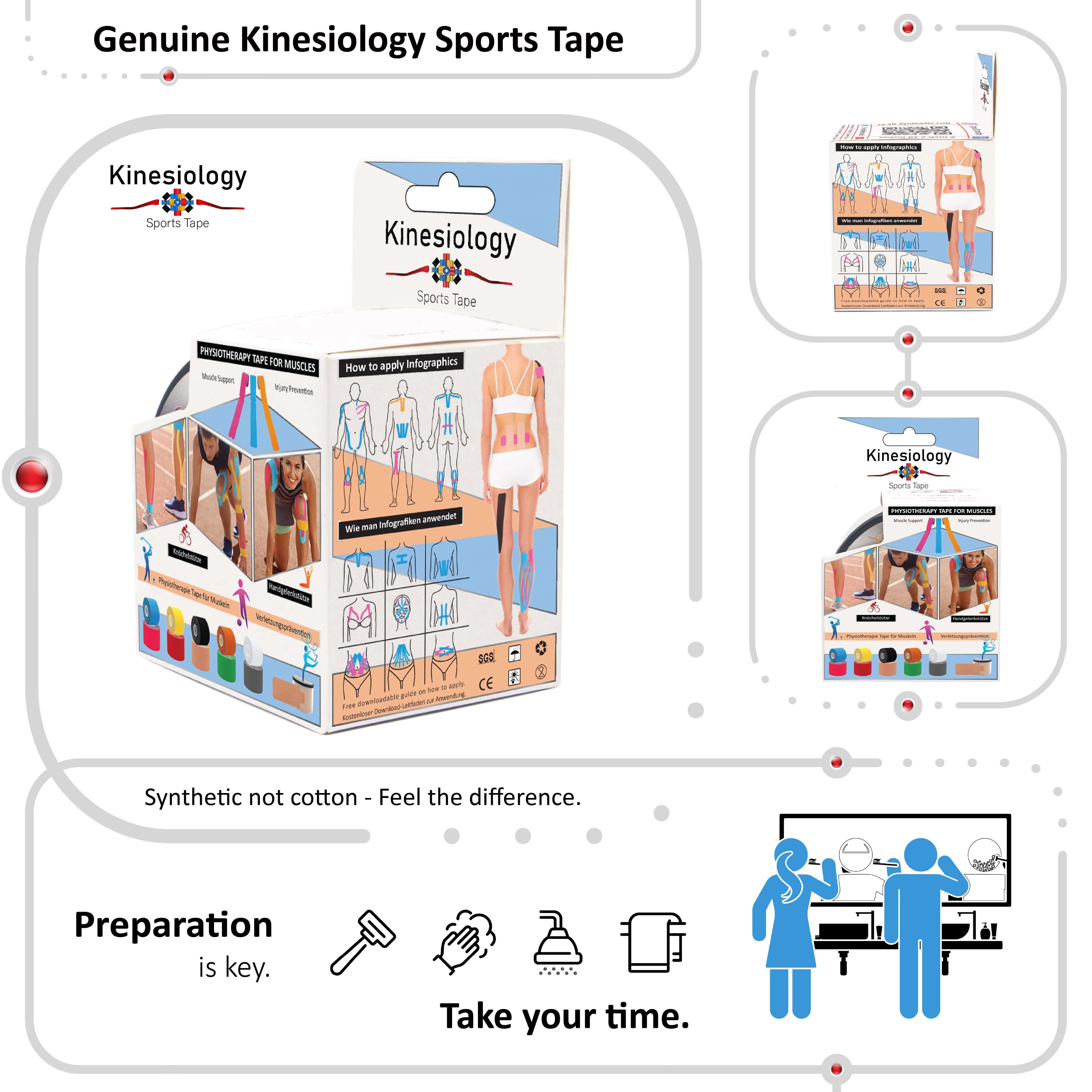
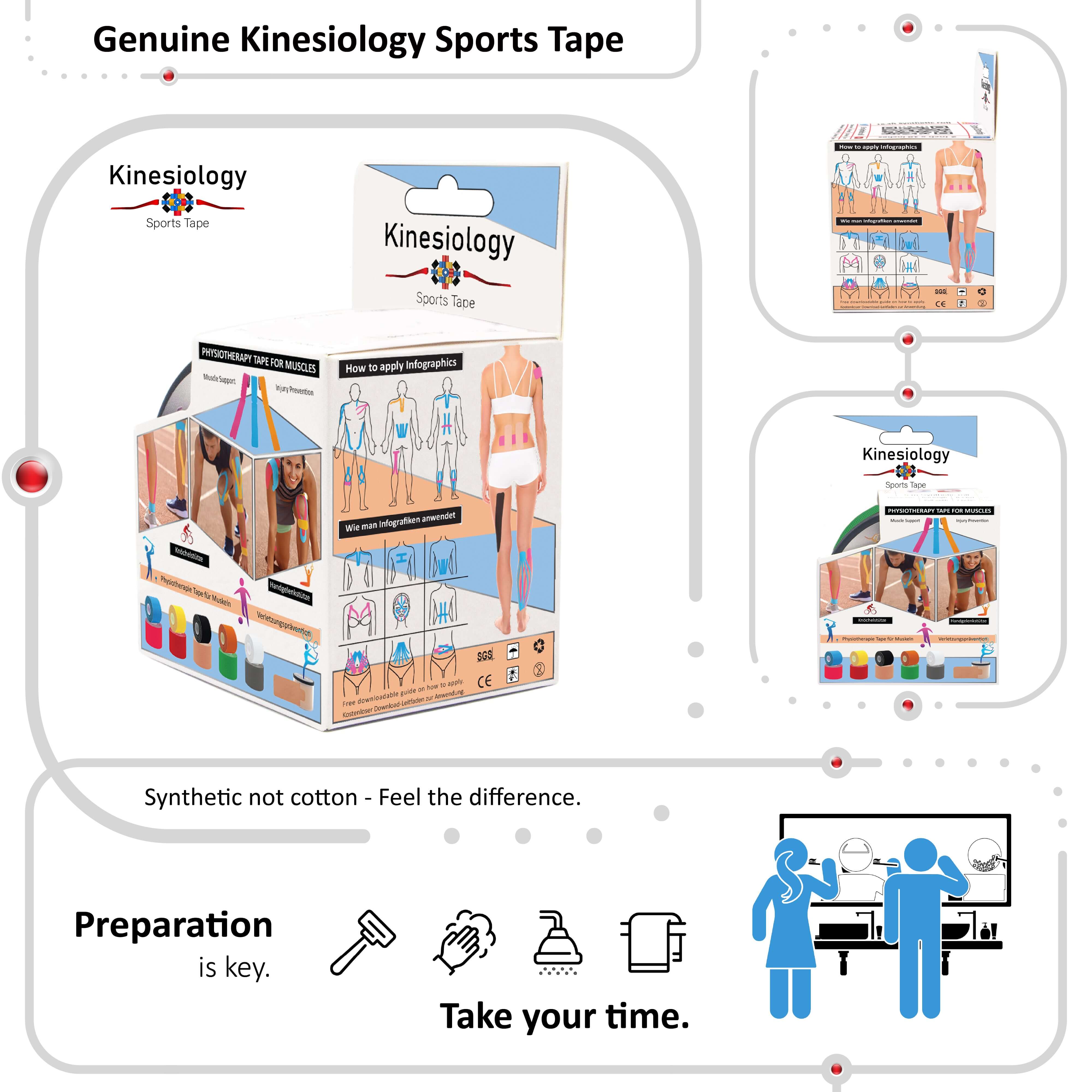
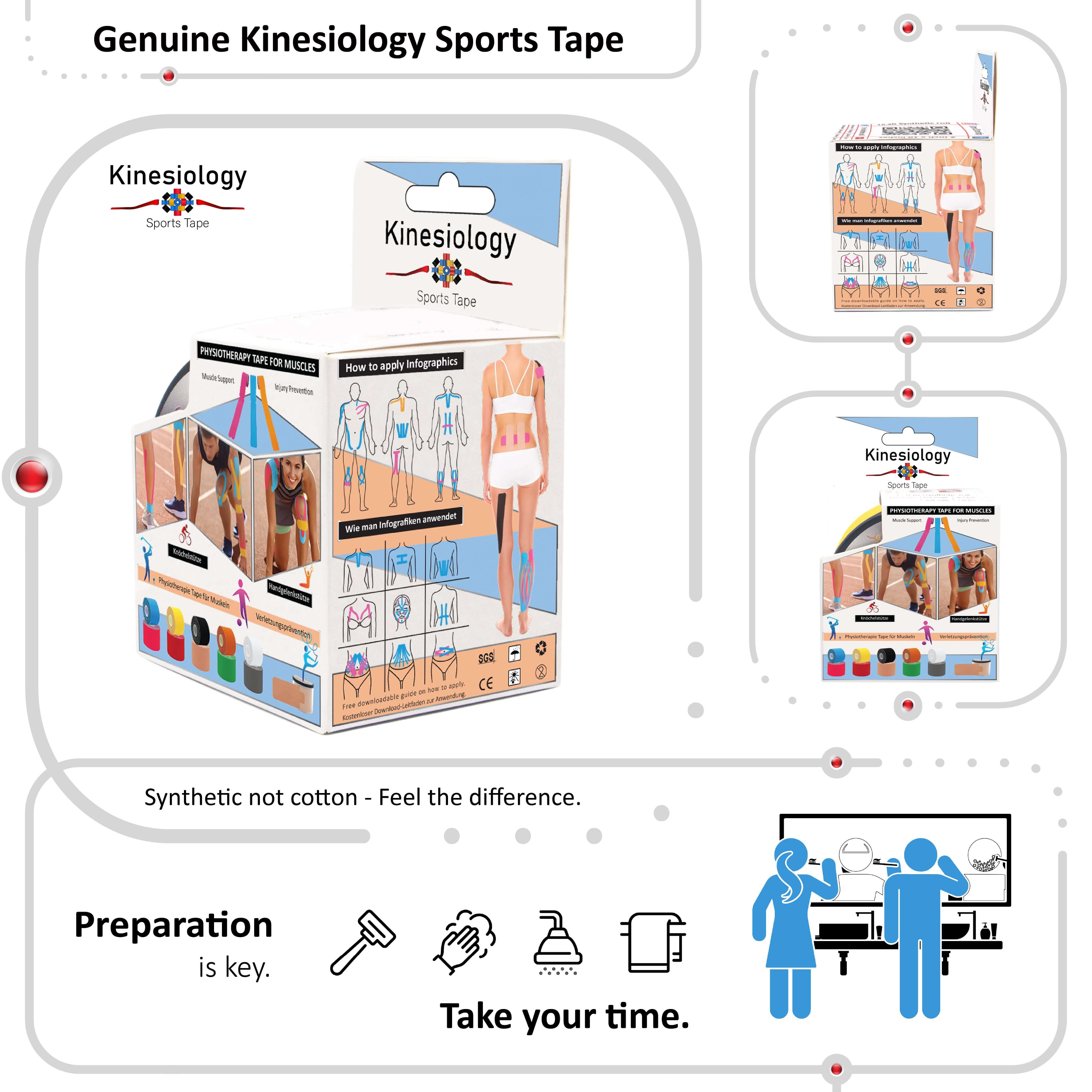
Apply 30 minutes before your run — ideally the night before a long one, so the adhesive is fully bonded and the tape forgets you’re wearing it. Skin clean, dry, no moisturiser. Round the corners if you’re going long. Rub firmly to activate the adhesive with body heat. For shin splints, fan from medial malleolus upward. For runner’s knee, a patellar correction with a small inferior tug. For IT band, anchor at the glute med and run distal along the lateral thigh.
For race day, the pre-race ritual matters — apply two nights before a marathon, do a 20-minute shake-out the morning of the race, and the tape will be perfectly bonded by the gun. It will survive four-plus hours of running, several showers, and the recovery walk to the train. During a training block, retape every 5-7 days; you’ll feel the moment the cue fades and it’s time for a fresh strip.