
RECENT POSTS

22.March.2026
Kinesiology Tape for Knee Pain: Complete Relief Guide for Athletes and Active Individual
0 Comments
21.March.2026
Kinesiology Tape for Knee Pain: Complete Relief Guide for Athletes and Active Individuals
0 Comments
21.March.2026
Kinesiology Tape Benefits: Complete Guide to Uses, Applications, and Therapeutic Effects
0 Comments
05.August.2025
Kinesiology Tape for Plantar Fasciitis: Complete Pain Relief and Recovery Guide
0 CommentsRunner's Knee Taping Guide: Patellofemoral Pain Syndrome (PFPS)
60-Second Taping Guide
Runner’s Knee (PFPS)
Pre-cut kinesiology tape to track the kneecap, offload the front of the knee and bridge the rebuild back to running.
What is runner’s knee (PFPS)?
Patellofemoral pain syndrome (PFPS), commonly called runner’s knee, is pain at the front or around the kneecap (patella) caused by abnormal tracking of the patella in its groove on the femur. It hits runners, cyclists and anyone with a sudden increase in lower-limb load. The classic symptoms are dull ache behind the kneecap that worsens going downstairs, after long sits at a desk (the “theatre sign”), squatting deep, and on the descent of a run.

Common causes
- Weak hip abductors and external rotators. The knee collapses inward on landing
- Tight quads, IT band and calves pulling the patella off-track
- Sudden mileage or hill volume increase
- Worn-out trainers, especially heavy heel-strike on hard surfaces
- Anatomical factors: flat feet, knock knees, increased Q-angle
How kinesiology tape helps runner’s knee
Tape applied around the patella with the right direction of stretch can subtly nudge the kneecap toward better tracking, reducing the friction-and-grind feeling at the front of the knee. The proprioceptive feedback also encourages the vastus medialis (the teardrop muscle on the inner thigh) to fire earlier in the stride cycle, which is one of the main targets in PFPS rehab. Combined with hip and quad strengthening, taping speeds the return to pain-free running for most people.
How to apply: patellar tracking


01
Prep
Sit with knee bent at 90°. Clean, dry skin.
02
Strip 1
Anchor below kneecap. Curve up around outer edge of patella to upper-inner thigh at 50% stretch.
03
Strip 2
Mirror strip on inner edge. Forms a U-frame around the kneecap.
04
Activate
Rub 30 seconds. Bend and straighten the knee a few times.
Tape is part of the answer, not the whole answer. PFPS responds to hip and quad strengthening more than anything else. The tape buys you pain-free movement while you build that base.
Best Tape For This
Black for stealth under tights, blue or pink for run-day visibility.
BlackShop the rangeRecovery tips beyond taping
- Hip strengthening: clamshells, side-lying leg raises, single-leg bridges. 3 × 12 daily.
- Quad strengthening: terminal knee extensions and step-downs. Focus on slow, controlled descent.
- Reduce running volume by 30% and avoid downhills and long runs for 2 weeks.
- Foam roll quads, IT band and calves 2 minutes each, daily.
- Replace trainers if 500km+ on them.
- Cadence cue: aim for 170 to 180 steps per minute to reduce load per step.
When to see a physio or GP
Book a physio if pain is sharp rather than dull, if the knee gives way or locks, if you have swelling, or if conservative work hasn’t helped after 6 to 8 weeks. A scan can rule out meniscus or chondral damage.
Frequently asked
Can I run with the tape on?
Yes. That’s the main use. Many runners tape preventively during marathon training blocks.
How long until pain reduces?
Many people feel less ache within the first taped session. Lasting reduction requires the strengthening work in parallel: 4 to 8 weeks for most.
Will tape fix flat feet or knock knees?
No. Those are anatomical and best addressed with footwear, orthotics if needed, and strength work. Tape manages the symptoms while you do the longer rehab.
Knee sleeve or kinesiology tape?
Different tools. A sleeve provides compression and warmth; tape provides proprioception and tracking support. Many runners use a sleeve in cold weather and tape for race day.
Related post
22
Mar
21
Mar
21
Mar
05
Aug
Pain & Recovery Guides
Kinesiology Tape for Plantar Fasciitis: Complete Pain Relief and Recovery Guide
Read more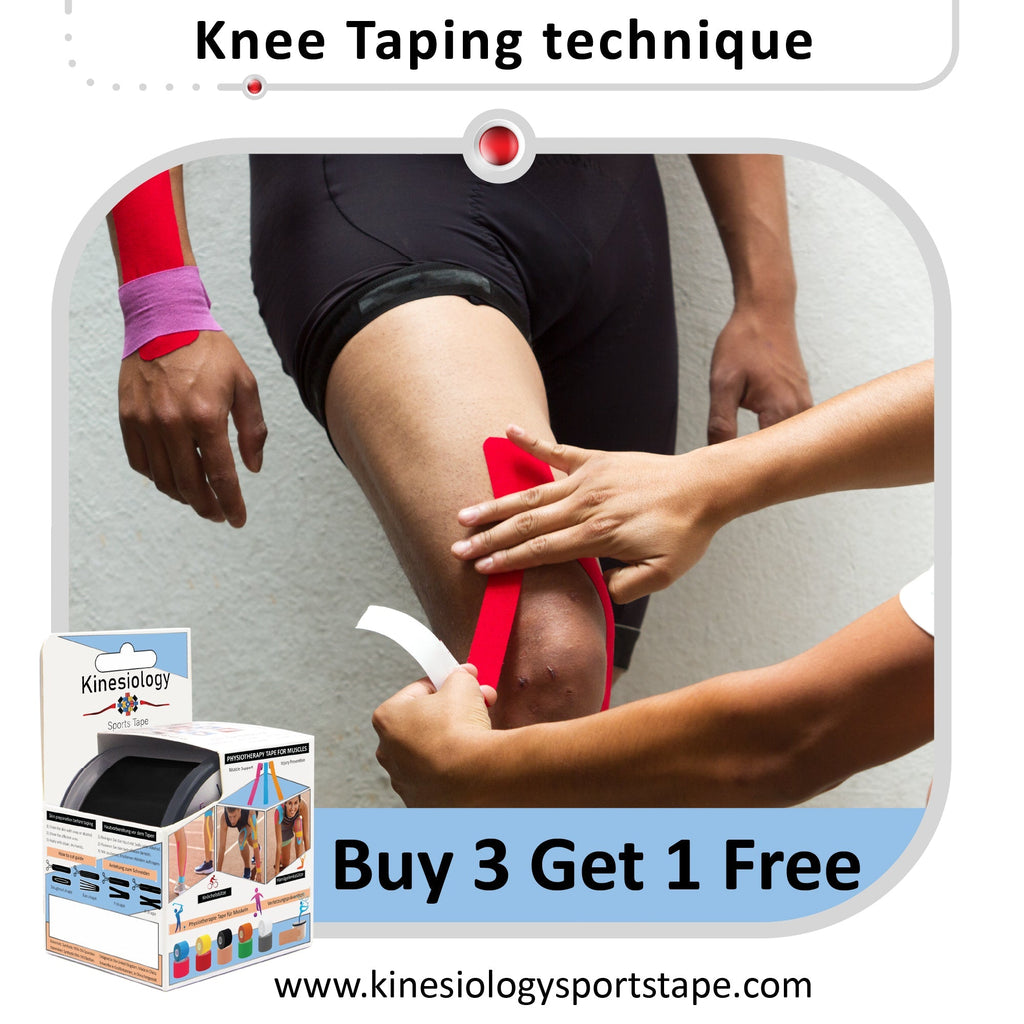
05
Aug