
RECENT POSTS

22.March.2026
Kinesiology Tape for Knee Pain: Complete Relief Guide for Athletes and Active Individual
0 Comments
21.March.2026
Kinesiology Tape for Knee Pain: Complete Relief Guide for Athletes and Active Individuals
0 Comments
21.March.2026
Kinesiology Tape Benefits: Complete Guide to Uses, Applications, and Therapeutic Effects
0 Comments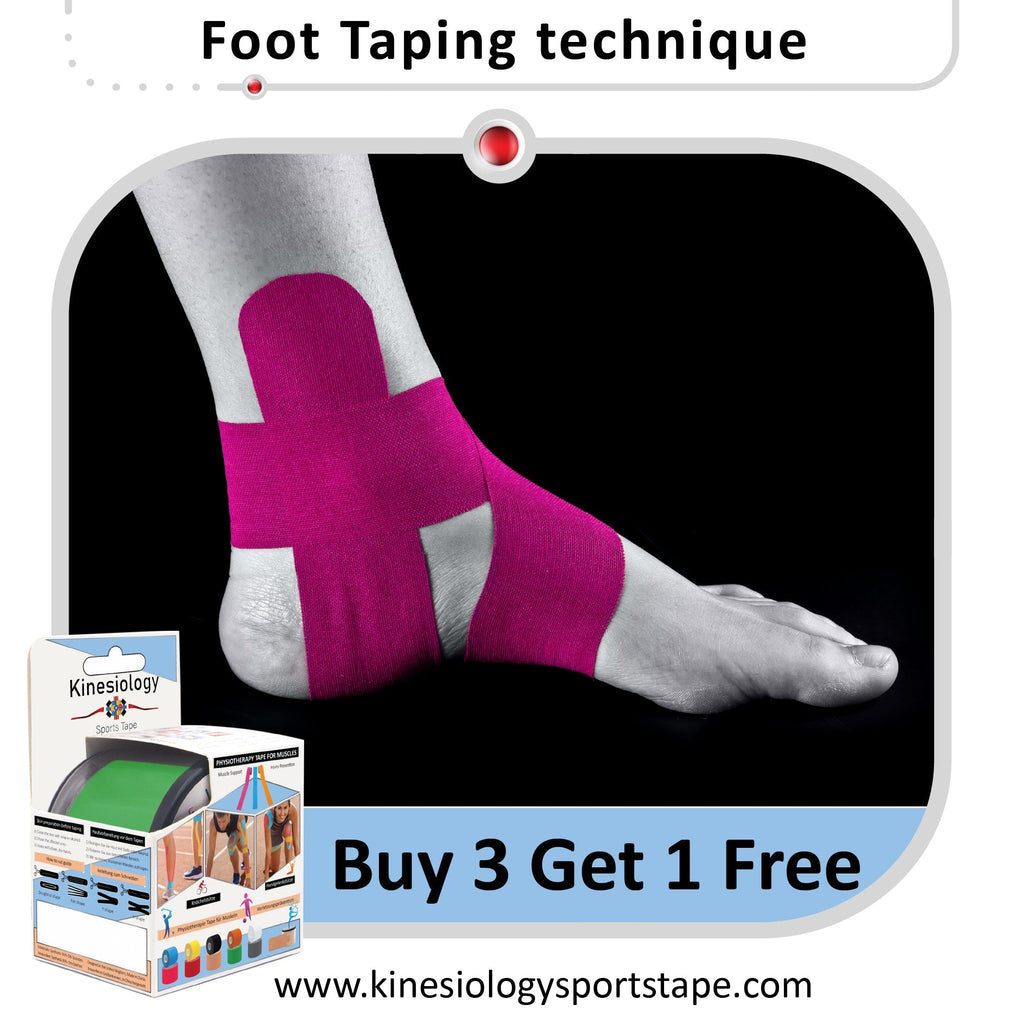
05.August.2025
Kinesiology Tape for Plantar Fasciitis: Complete Pain Relief and Recovery Guide
0 CommentsViking Runes & Symbols: The Complete Athlete's Guide to Norse Strength
The night before a raid, a Norse warrior sits by the fire and turns a knife over in his hands. He has spent the evening painting a symbol between his eyebrows in charcoal and tallow — eight tridents radiating from a single point, a thing called Aegishjalmur, the Helm of Awe. On the blade of his axe he carves three small marks: a single upward arrow, a sun-shape, a thorn. He does not call this superstition. He calls it preparation. To him the symbols are not decoration but force — a way of pulling certain currents of the world toward him and pushing others away.
A thousand years later, the symbols remain. They sit on rings, tattoos, lifting belts, kinesiology tape. The question for the modern athlete is not whether to believe in their literal magic, but what they meant to the people who first carried them, and what part of that meaning is still useful when you are about to do something hard.

The Viking world
The Viking Age runs from 793 AD — the raid on the Lindisfarne monastery — to roughly 1066, when the Norman conquest of England closes the door on the era. For nearly three centuries the Norse peoples of Scandinavia ranged across the known world: trading in Constantinople, settling Iceland and Greenland, raiding Britain and Francia, reaching North America five hundred years before Columbus.
Their cosmology was vast and specific. At the centre of it stood Yggdrasil, the world tree, whose roots and branches held the nine realms — Asgard of the gods, Midgard of humans, Jotunheim of the giants, Hel of the dead, and five others. The gods were not distant deities to be worshipped from afar. They were ancestors, neighbours, judges of conduct. Thor walked the same roads as the farmer. Odin wandered Midgard in a cloak, asking riddles.
Within this worldview, symbols were not passive ornaments. They were active forces. A rune cut into a sword changed the sword. A stave painted on a forehead changed the wearer. To know a symbol's name was to begin to use it — which is why the runes had to be earned, not given.
The gods that protect you
Odin, the All-Father
Odin is the seeker. He gave one of his eyes at the Well of Mimir for a single draught of wisdom. He hung from the branches of Yggdrasil for nine nights, pierced by his own spear, refusing food and water, until the runes revealed themselves to him. He is not the god of casual prayer. He is the god you call on when you are willing to suffer for what you want to know.
For the athlete, Odin is the patron of the long apprenticeship — the years of training that no one sees, the willingness to put your body under load again and again until it adapts. Wisdom, in his tradition, is paid for.
Thor, the protector
If Odin is the god of kings and poets, Thor is the god of the people. His hammer Mjölnir is the most-worn amulet of the Viking world; archaeologists have unearthed hundreds of small silver and bronze Mjölnirs from Norse graves across northern Europe. Mjölnir guards the boundary between the orderly human world and the chaos beyond it. When Thor swings the hammer, the giants of Jotunheim retreat.
Thor is the protector you wear when something is trying to break in — injury, fear, a hard opponent, the chaos of competition day.
Huginn and Muninn, the ravens
Two black birds sit on Odin's shoulders. Huginn is Thought; Muninn is Memory. Each morning they fly out across Midgard and return at dusk to whisper into the All-Father's ear what they have seen. The ravens are how the mind reaches further than the body — a reminder that the athlete who plans, watches film, and remembers their failures is doing the same work Odin did with his birds.
The Elder Futhark — runes as language and magic
The Elder Futhark is the oldest known runic alphabet, in use from roughly 150 AD until about 800, when it was gradually replaced by the shorter Younger Futhark across most of Scandinavia. The name comes from the first six letters: F-U-Th-A-R-K. Twenty-four runes, divided into three groups of eight called aettir.
Crucially, each rune was two things at once: a letter you could write words with, and a force you could invoke. The same character that began the word for cattle (Fehu) also meant wealth in the broadest sense — moveable property, fortune, abundance. Runes were carved on weapons to make them bite truer, on amulets to protect their wearers, on rune-stones to commemorate the dead, and on small wooden lots cast to seek the will of the gods. The Roman historian Tacitus describes Germanic peoples casting marked lots in his Germania, written around 98 AD.
Eight of the most powerful runes appear on the Viking Talisman design:
- Tiwaz — an upward arrow. Named for the god Týr, who gave his hand to bind the wolf Fenrir. The rune of balance, justice, sacrifice for the greater good. Carried by warriors who needed the courage to do the right thing under pressure.
- Ehwaz — shaped like an M. Means "horse" and stands for partnership, trust between two beings, movement in harmony. The rune of the team, the training partner, the bond between rider and mount.
- Sowilo — an S-shape. The sun. Guidance, victory, vitality, the light that never fails. One of the most positive runes in the futhark.
- Wunjo — shaped like a P. Joy, harmony, the contentment of a group that works together. The opposite of strife.
- Thurisaz — the thorn. Defence, the obstacle that protects what is behind it. The rune of the boundary. Worn for protection against ill intent.
- Uruz — the aurochs, the great wild ox of the European forests, now extinct. Primal strength, raw vitality, the power of the body when it is healthy. The rune of healing and physical resilience.
- Ansuz — Odin's breath. Inspiration, the divine word, communication that lands. The rune of the poet, the speaker, the one whose voice cuts through.
- Othala — heritage, ancestral land, what is yours by birthright. The rune of belonging.
A note on respect. The runes have, in the last century, been picked up and misused by far-right movements — Othala in particular has been deliberately politicised. The original culture from which they come is not responsible for what later groups did with them. Engage with the symbols seriously and historically, know what they meant before the misappropriation, and the original meanings hold. The dignity of a thousand years of Norse use outweighs a few decades of distortion.
The Icelandic staves — protection magic from the galdrabækur
After Iceland's official conversion to Christianity in the year 1000, the old magical tradition did not vanish. It went underground, then resurfaced in a particular kind of book: the galdrabækur, the Icelandic grimoires, hand-copied between roughly the 1500s and the 1800s. The surviving manuscripts — the Galdrabók in Stockholm's Royal Library, the Huld Manuscript of 1860 — preserve a tradition of protective and luck-bringing symbols called staves (galdrastafir) that draw on the same conceptual roots as the older runic magic.
Aegishjalmur — the Helm of Awe
Eight tridents radiating from a central point. Painted between the eyebrows before battle, originally in spit or blood. The intent was to project such fearsome presence that the enemy lost the will to fight. The Helm of Awe is the stave of dominant presence — what an athlete might recognise as the look in a boxer's eyes at the staredown.
Vegvísir — the Viking Compass
Eight arms ending in eight different runic shapes, arranged around a centre. The Huld Manuscript says: "If this sign is carried, one will never lose one's way in storms or bad weather, even when the way is not known." Vegvísir is the stave for orientation under pressure — the inner compass that keeps you moving toward the goal when conditions fall apart.
Lukkustafir — the Luck Stave
A composite symbol intended to draw fortune toward the wearer in ventures of all kinds. Carried for new undertakings, journeys, competitions.
Ginfaxi — courage in combat
Traditionally worn by Icelandic wrestlers in the form of glíma, the country's native grappling sport. Worn in the shoe so the opponent could not see it. The stave of nerve before the contest.
Wearing the Viking talisman today
The modern athlete is, in a real and not-romantic sense, a kind of warrior. Not because they are violent, but because they have chosen to put a disciplined body in pursuit of a hard goal. The training cycle is a campaign. The competition is the battle. The injury and the rehab are the wound and the recovery. The retirement is the homecoming.
The Viking symbols make particular sense to wear at the threshold moments of that life: PR attempts, race day, fight night, the first heavy session of a new training block, the first session back from a layoff. The act of putting the symbol on your skin before the hard thing is not magical thinking. It is a way of marking the moment as significant — a small ritual that tells the body and mind that something important is about to be asked of them. Sports psychology has known for decades that pre-performance rituals reliably improve focus and reduce anxiety. The Viking did not need a journal article to know this.
If you want to carry these symbols on your skin, the Viking Talisman Tape carries every symbol in this article — the gods, the runes, the Icelandic staves — printed in a single decoded design that you can wear for a training block, a race, or a recovery cycle. The tape is also a kinesiology tape, so the support is real as well as symbolic. For acute strains and soft-tissue injury where you might pair the talisman with practical taping, see our guide to taping muscle strains.
Frequently asked
What does Mjölnir mean?
Mjölnir is the hammer of the god Thor. In the Norse tradition it is the protector of the human world against the giants of chaos. Worn as an amulet, it stands for protection, strength, and the boundary that holds against what tries to break in. It was the most common pendant in Viking Age graves.
Are Norse runes culturally appropriate to wear?
Yes, with awareness. The runes are a thousand-year-old writing system used by the Norse peoples and have been openly studied, used and reproduced for centuries. The complication is that a small number of runes — Othala and Sowilo in particular — were appropriated by Nazi and later neo-Nazi movements in the twentieth century. The Norse heritage organisations of Iceland and Scandinavia have themselves pushed back against this misappropriation. Wearing the runes with knowledge of their original meaning is a reclamation, not an endorsement.
Which Norse god should I wear?
Thor for protection and physical strength; Odin for the long-term apprenticeship of skill and wisdom; Týr (whose rune is Tiwaz) for the courage to sacrifice for the greater good. Most Viking warriors wore Thor's hammer as their daily amulet and called on other gods for specific occasions.
Can I wear the Viking talisman during yoga or recovery practice?
Yes. Vegvísir, the compass stave, is well suited to mindful practice — it is about orientation and not losing your way. The talisman as a whole is also a reminder that the warrior tradition included healing and rest; Odin's nine nights on Yggdrasil were a fast and a vigil, not a fight.
One last image
Return for a moment to the warrior at the fire on the night before the raid. He has finished the charcoal mark between his eyebrows. He has carved his three runes. He sleeps badly, as any honest person does before a hard morning. But when he stands at dawn, he knows what he carries. The symbols are not a promise that he will live. They are a statement that he is ready, and that he has aligned himself with forces older than him and more durable than his life. That is the inheritance the Norse left us, and it is available to anyone willing to take it seriously.
Wear the Viking Talisman
Every symbol in this article appears on the Viking Talisman Tape, hand-decoded on each pack.
Read the full landing page Shop the Talisman CollectionRelated post
22
Mar
21
Mar
21
Mar
05
Aug
05
Aug