
Price :
QTY :
CART TOTALS :
There are items
in your cart
CART TOTALS :
With this products also buy:
Your shopping bag is empty
Go to the shop
Targeted Pain Relief
Pre-cut kinesiology tape for rotator cuff strain, subacromial impingement, frozen shoulder, AC joint sprain, biceps tendinitis, shoulder instability and bursitis.
This page covers seven of the most common shoulder conditions kinesiology tape can help. The shoulder is the most mobile joint in the body, which is exactly why it gets injured so often. Most shoulder pain responds well to support taping plus rotator cuff and scapular strengthening.
Painful arc when raising the arm overhead, ache when sleeping on the affected side, weakness reaching behind your back. The four rotator cuff muscles (supraspinatus, infraspinatus, teres minor, subscapularis) stabilise the shoulder; overuse irritates the tendons where they attach to the upper arm.
Tape pattern: Strip 1 over the deltoid (arm crossed across chest), curving from front to back. Strip 2 diagonally from upper traps to lower shoulder blade at 50% stretch.
Full Rotator Cuff Guide →Pain catching at a specific angle when raising the arm sideways, classic “painful arc” between 60 and 120 degrees. The supraspinatus tendon and subacromial bursa get pinched under the acromion bone. Often follows forward-rolled shoulder posture.
Tape pattern: Postural strip across upper back cueing scapular retraction, plus rotator cuff support. Opening up the subacromial space is the goal.
Progressive loss of shoulder range with pain at the end of motion. Three phases: freezing (4 to 6 months), frozen (4 to 6 months), thawing (6 to 12 months). Most common in women 40 to 60, diabetics, and after a period of immobilisation. Tape doesn’t cure but eases day-to-day comfort.
Tape pattern: Y-strip over deltoid for general support, plus skin-lift strip across the painful capsule region. Pair with the physio’s mobility programme.
Sharp pain at the top of the shoulder where the collarbone meets the shoulder blade, often after a fall onto the shoulder or outstretched hand. Grade I (mild) responds to support; Grade II/III need orthopaedic assessment.
Tape pattern: Two strips crossing over the AC joint at 50% stretch, providing proprioceptive feedback and gentle compression.
Full Ligament Sprain Guide →Pain at the front of the shoulder where the long head of the biceps tendon runs in its groove. Aggravated by overhead reaching, lifting, or holding heavy weights with the arm straight. Common in swimmers, throwers, and CrossFit athletes doing snatches.
Tape pattern: I-strip from biceps muscle belly up over the front of the shoulder at 25% stretch. Sit-down support.
Sensation that the shoulder is about to “pop out” with certain movements (apprehension), or actual subluxation/dislocation. After a first dislocation, the risk of recurrence in under-25s is high. Tape provides proprioceptive support during sport rehab.
Tape pattern: Y-strip stabilising deltoid plus a horizontal strip across the front of the shoulder at 50% stretch for anterior stability.
Full Joint Instability Guide →Diffuse shoulder pain often mistaken for rotator cuff. The bursa (cushioning sac) under the acromion is inflamed. Pain on overhead reaching, lying on the side at night. Frequently coexists with rotator cuff and impingement issues.
Tape pattern: Skin-lift strips over the inflamed bursa to ease pressure, plus rotator cuff support.
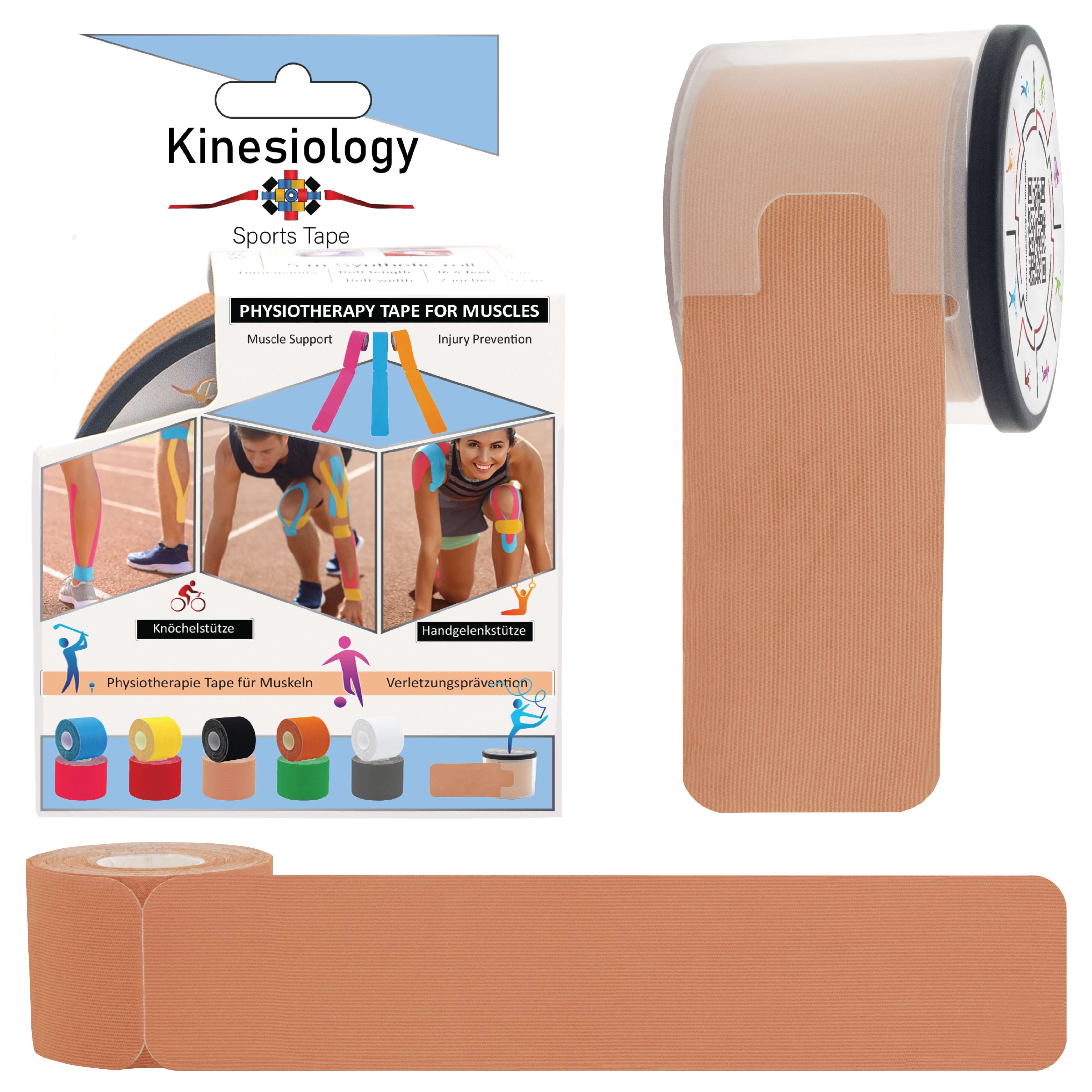
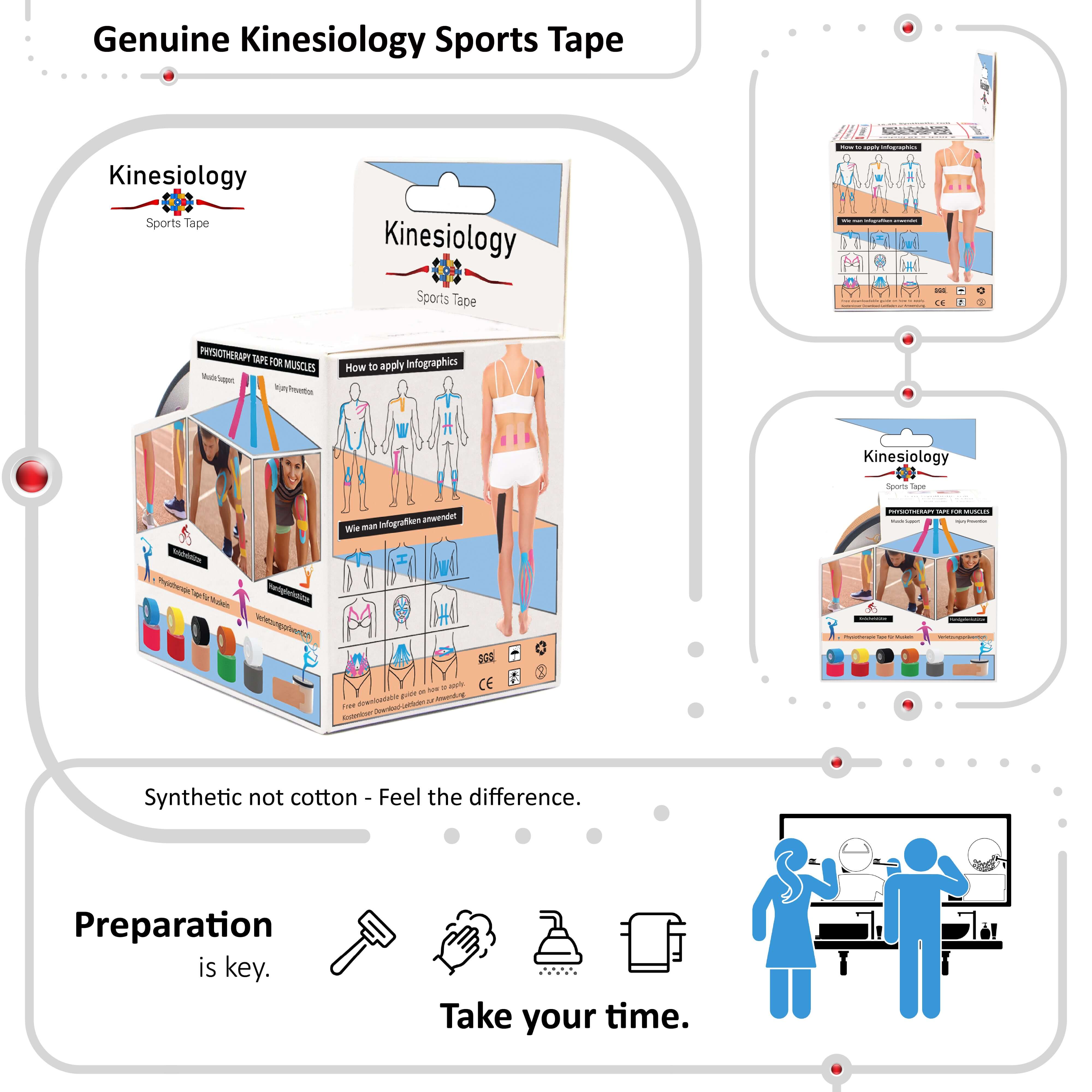
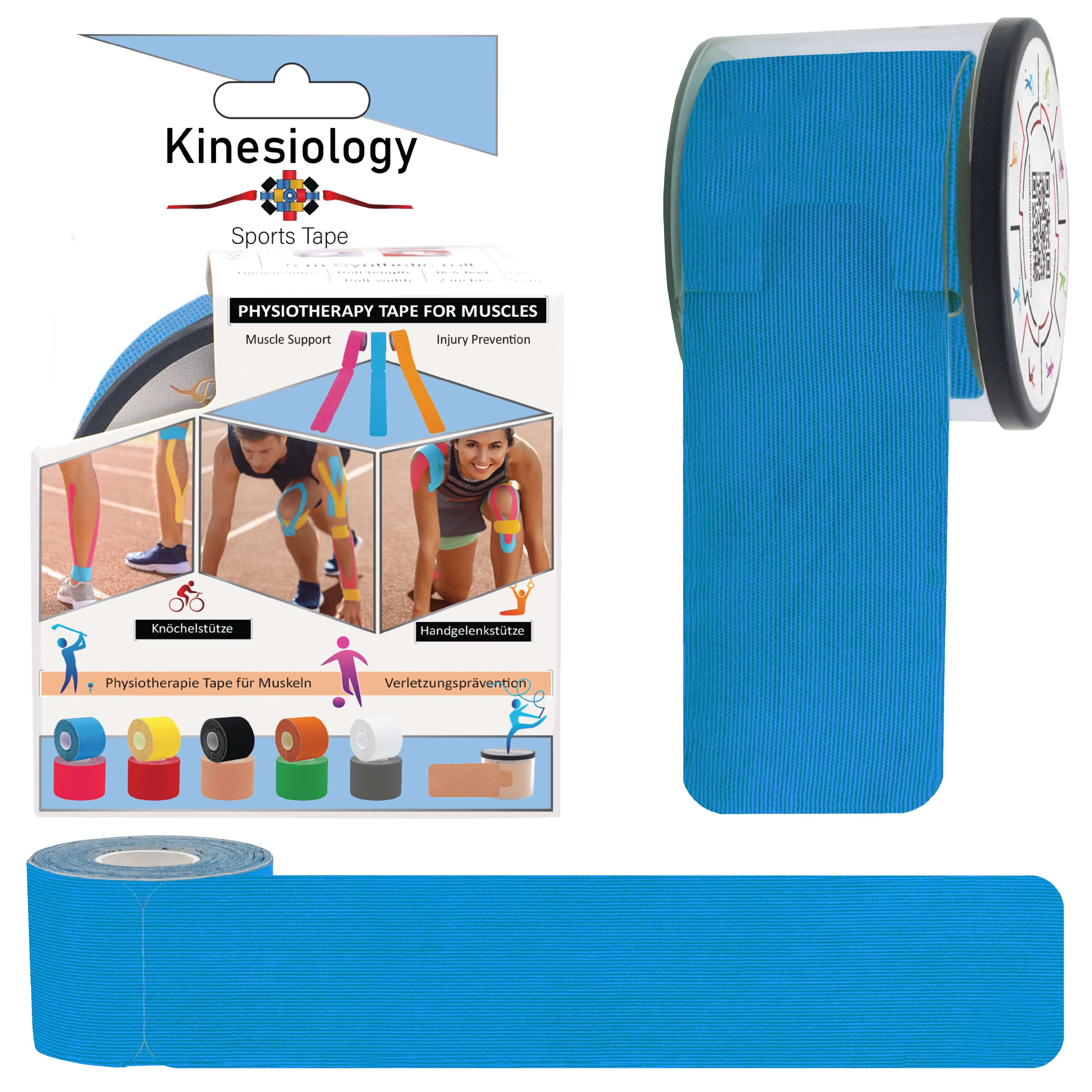
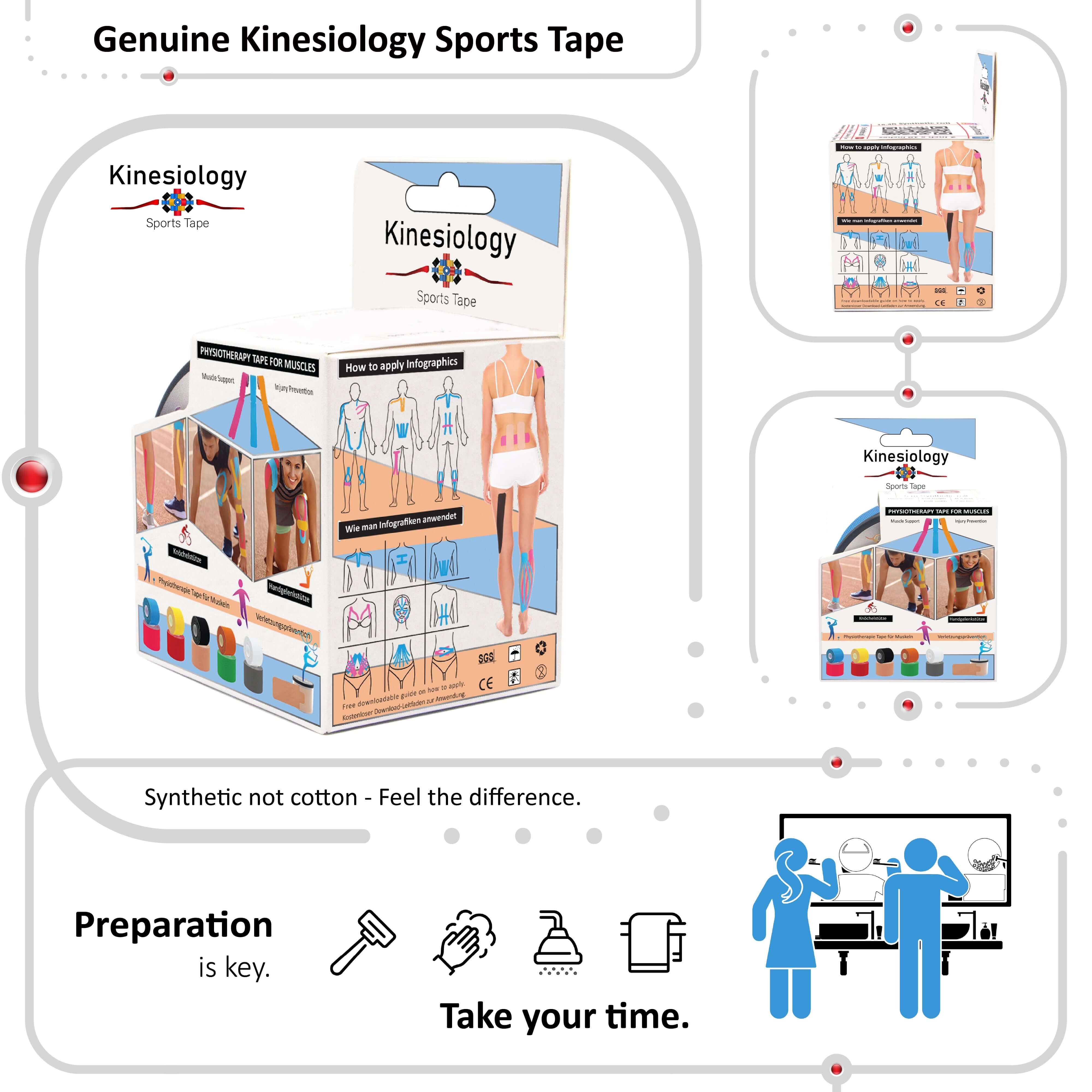
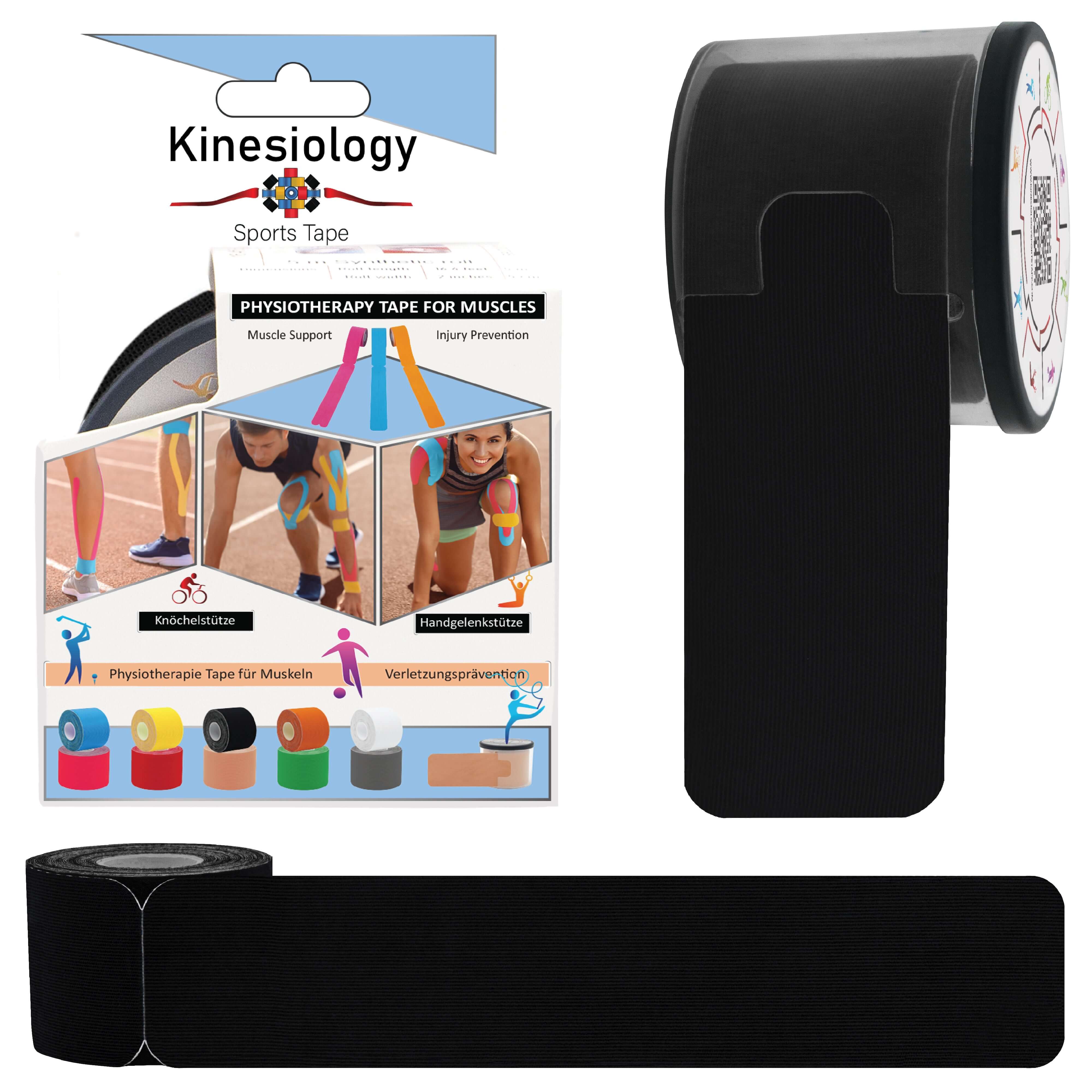
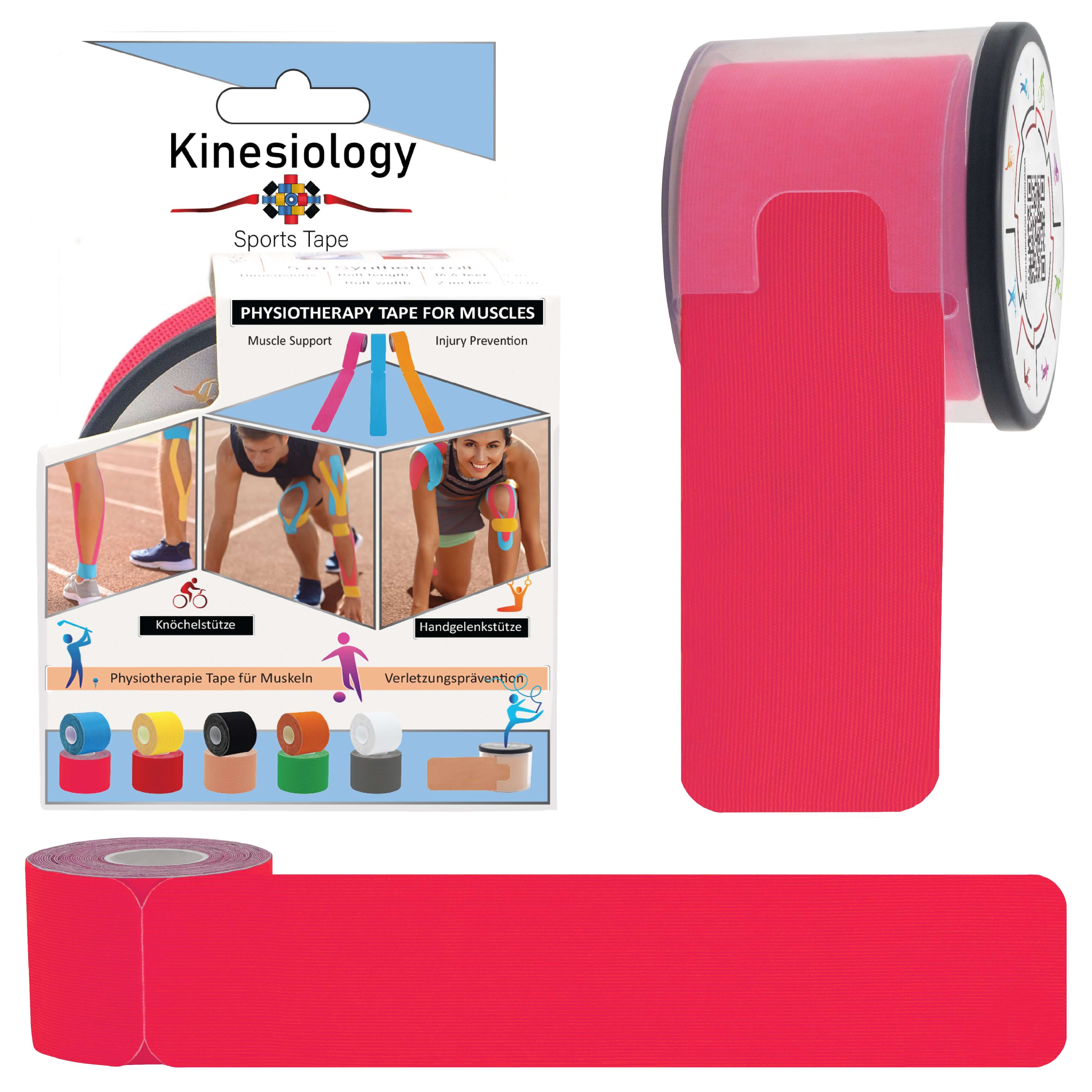
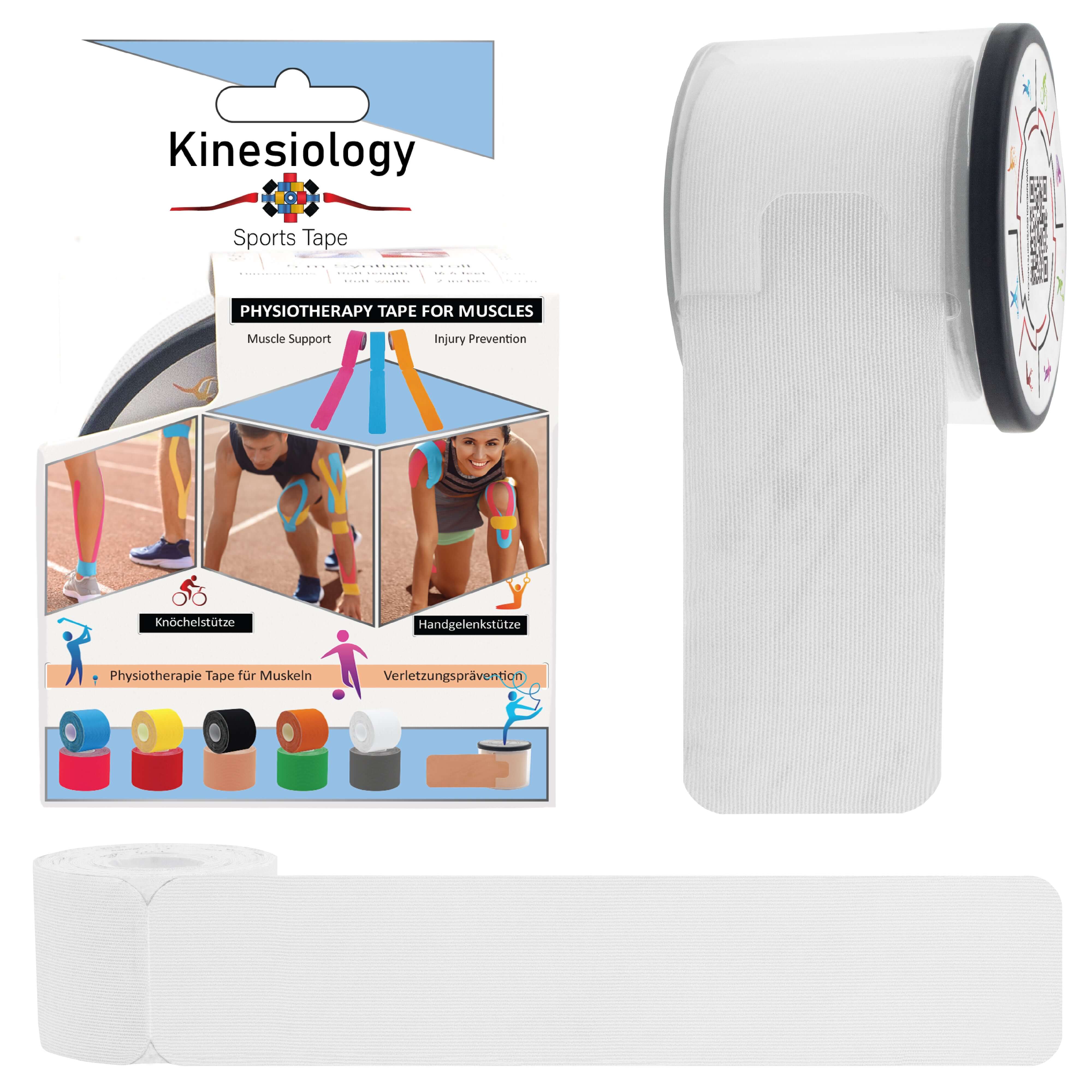
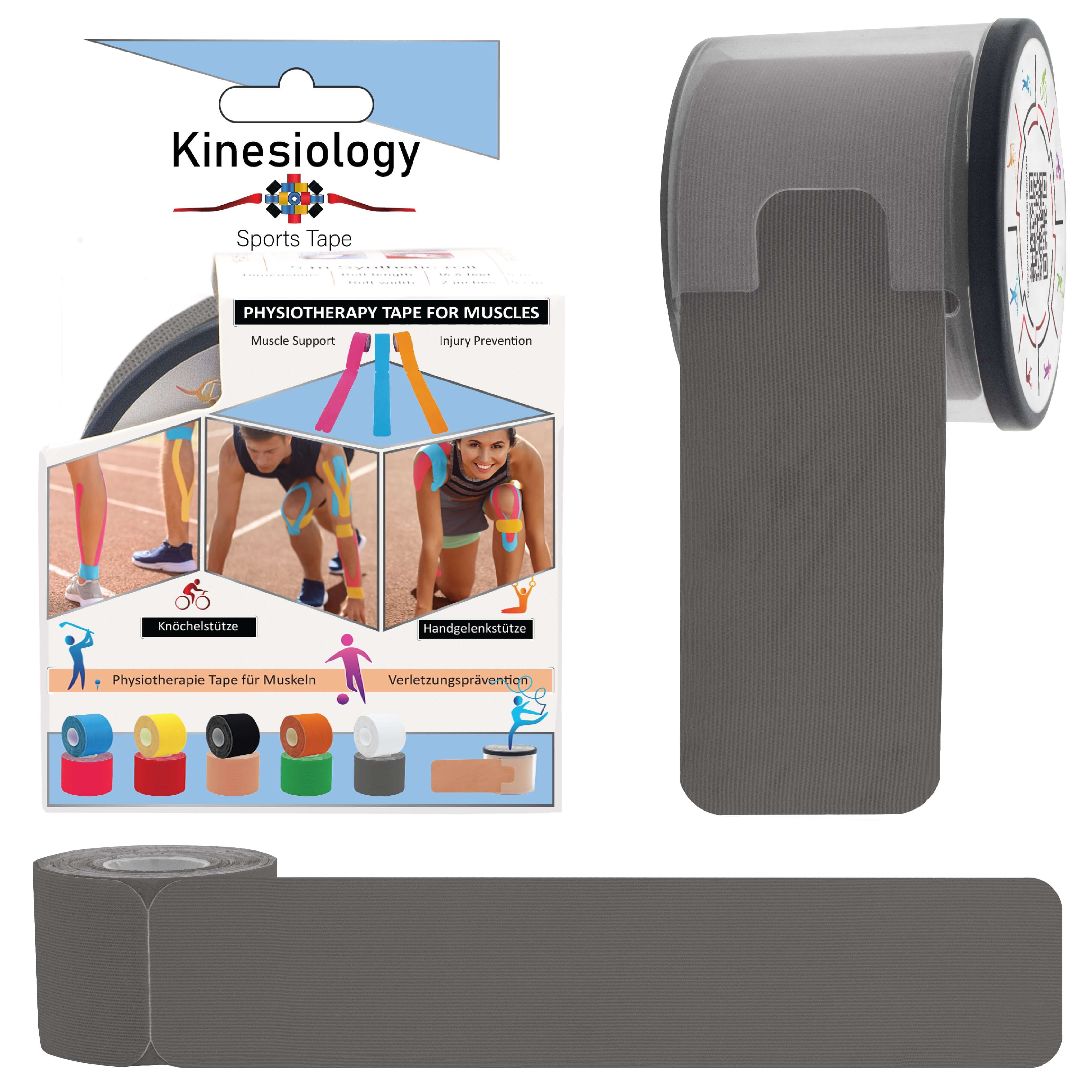
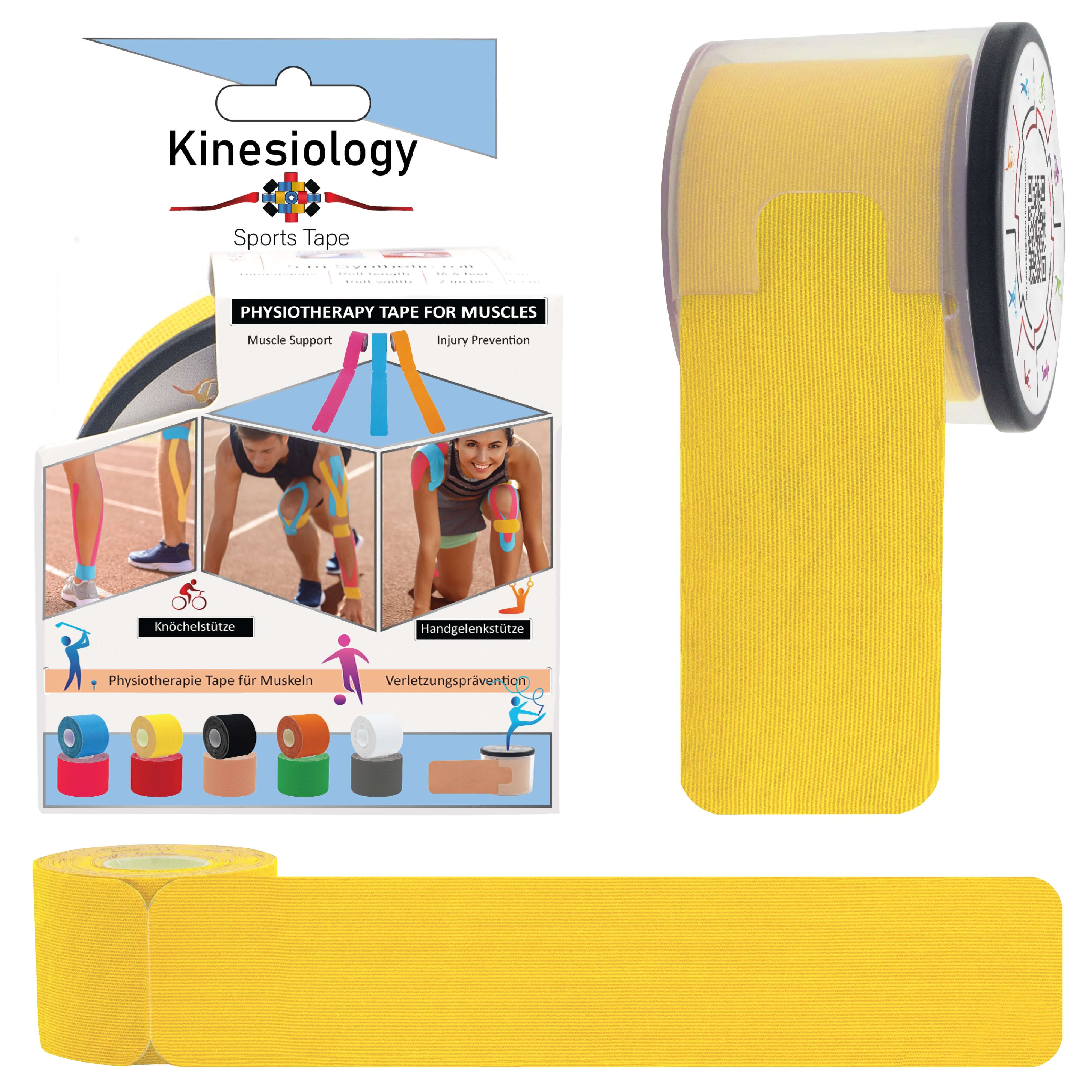
Full Bursitis Guide →Pre-cut 5cm × 25cm strips work well on the shoulder. Beige is the discreet office choice; black for the gym.
Beige £4.993 for £9.99Three mechanisms work together. First, scapular cueing: a strip across the upper back pulls slightly when you slouch, reminding the scapula to sit down and back (not forward-rolled). This opens up the subacromial space and gives the rotator cuff tendons more room. Second, proprioceptive feedback: the rotator cuff muscles fire earlier and more consistently, reducing the impingement-style pinch. Third, the skin lift over the painful arc area is thought to ease pressure on local pain receptors.
Most people feel less catching pain on overhead movement within the first day of taping. Lasting improvement comes from the strengthening work.
Yes. That’s the point — the tape supports the cuff during pressing, pulling and overhead work. Drop the weight if a movement flares pain.
Rotator cuff and impingement often take 6 to 12 weeks of consistent strengthening to fully settle. Tape helps day-to-day function during that window.
Yes. Many people specifically apply for sleep, as the cueing reduces the position-related ache that wakes them.
Different tools. Sling immobilises — for acute fractures or post-op. Brace gives some restriction. Tape gives proprioception without restriction. For most rotator cuff and impingement work, tape is the right choice.
One Y-shape strip works for many people. Two strips — one over the deltoid, one across the upper back — gives better coverage for impingement-pattern pain.
No. Frozen shoulder runs its course over 18 to 24 months regardless. Tape eases the day-to-day discomfort but doesn’t shorten the timeline. Hydrodilatation or steroid injection can speed things up in some cases.
You can do the deltoid strip solo. The upper-back/scapular strip is much easier with help. Many people get a partner or use two mirrors.
Browse all 19 taping guides
From plantar fasciitis to neck pain, step-by-step guides for every common condition.
All Pain Guides →Shoulder Taping Gallery