

Price :
QTY :
CART TOTALS :
There are items
in your cart
CART TOTALS :
With this products also buy:
Your shopping bag is empty
Go to the shopLearn · Introduction
What is kinesiology tape?
Kinesiology tape is a thin, stretchy, breathable cotton-or-synthetic strip with a gentle medical-grade adhesive. Applied to the skin in specific patterns, it supports muscles and joints while still allowing full movement — the opposite of how rigid sports tape works.
Kinesiology tape was invented in 1979 by Dr Kenzo Kase, a Japanese chiropractor working with athletes and rehab patients. He was frustrated that the only taping option available — rigid, woven athletic tape — immobilised the joint it was meant to help. His patients needed movement to heal. Restricting them made recovery slower, not faster.
His solution was a tape engineered to mimic the elasticity of human skin: roughly 130–140% stretch, a similar weight, and an adhesive pattern that would lift the skin microscopically rather than clamp it down. He called the method Kinesio Taping, and for nearly a decade it stayed inside Japanese clinics.
The world saw it for the first time at the 1988 Seoul Olympics, when Dr Kase donated rolls to the Japanese national team. Television cameras caught the bright tape strips on shoulders, knees and lower backs, and physios across Europe and North America started asking what it was. Through the 1990s and early 2000s adoption grew slowly inside professional sport.
The breakout moment came at the 2008 Beijing Olympics when American beach volleyball player Kerri Walsh competed wearing distinctive black strips across her shoulder. She won gold. The image went global, and within eighteen months kinesiology tape had moved from clinic-only to mainstream sport, then into everyday recovery. Today it is on the kit list of nearly every professional team, in every physio clinic, and in millions of household first-aid drawers.
The two products look similar on a shelf but do opposite jobs. Pick the wrong one and you either get no support when you need it, or you restrict the movement you are trying to rehabilitate.
What it does: immobilises. Holds a joint in a fixed position so it cannot move beyond a safe range.
Best for: acute injuries on the day they happen — sprained ankle on the pitch, a thumb that needs locking out for the rest of the match, post-fracture protection.
Wear time: a few hours. Comes off after the game.
Feel: tight, restrictive, deliberately so.
What it does: supports while allowing movement. Cues the muscle, decompresses the skin, gives proprioceptive feedback without locking the joint.
Best for: recovery, chronic niggles, training-load management, postural correction, lymphatic drainage, pregnancy support.
Wear time: up to 5–7 days, including showering and sleeping.
Feel: barely there.
Most physios carry both. Rigid tape on the touchline for acute incidents; kinesiology tape in the treatment room for everything that follows.
Kinesiology tape works through three overlapping mechanisms. Different application techniques emphasise different mechanisms, which is why one strip pattern is recommended for swelling and a completely different one for muscle support.
The tape pulls gently on the skin as you move. The skin’s mechanoreceptors send that signal to the brain, which subtly adjusts muscle firing patterns. You move better without consciously thinking about it — the tape becomes a real-time posture and movement cue.
The tape’s elastic recoil microscopically lifts the skin away from the tissue underneath. That creates more space for blood and lymph to flow through irritated or swollen tissue, which is why kinesiology tape is the go-to choice for bruising, oedema and post-surgical swelling.
Applied with directional intent — from origin to insertion of a muscle for support, or insertion to origin for relaxation — the tape gives a gentle pull that cues the tissue without restricting it. You keep full range of motion but get a quiet reminder of where the body wants to be.
Importantly, the tape is not a brace and does not provide mechanical stability the way a rigid support does. Its strength is in cueing and decompression, not immobilisation. That is also why almost everyone can wear it through normal daily life without it getting in the way.
Kinesiology tape is used across an enormous range of body areas and situations. The most common reasons people in the UK buy a pack:
Kinesiology tape is a support and comfort product. It is not a medical device. It is not a substitute for diagnosis. It is not a magic cure.
If you are in pain, the tape can be a useful part of a broader plan — rest, mobility work, strengthening, professional advice — but it is not a replacement for any of those things. If pain persists, gets worse, or comes with swelling, numbness or loss of function, please see a qualified physiotherapist or your GP. Tape should never go over open wounds, fresh stitches, active infections or undiagnosed lumps.
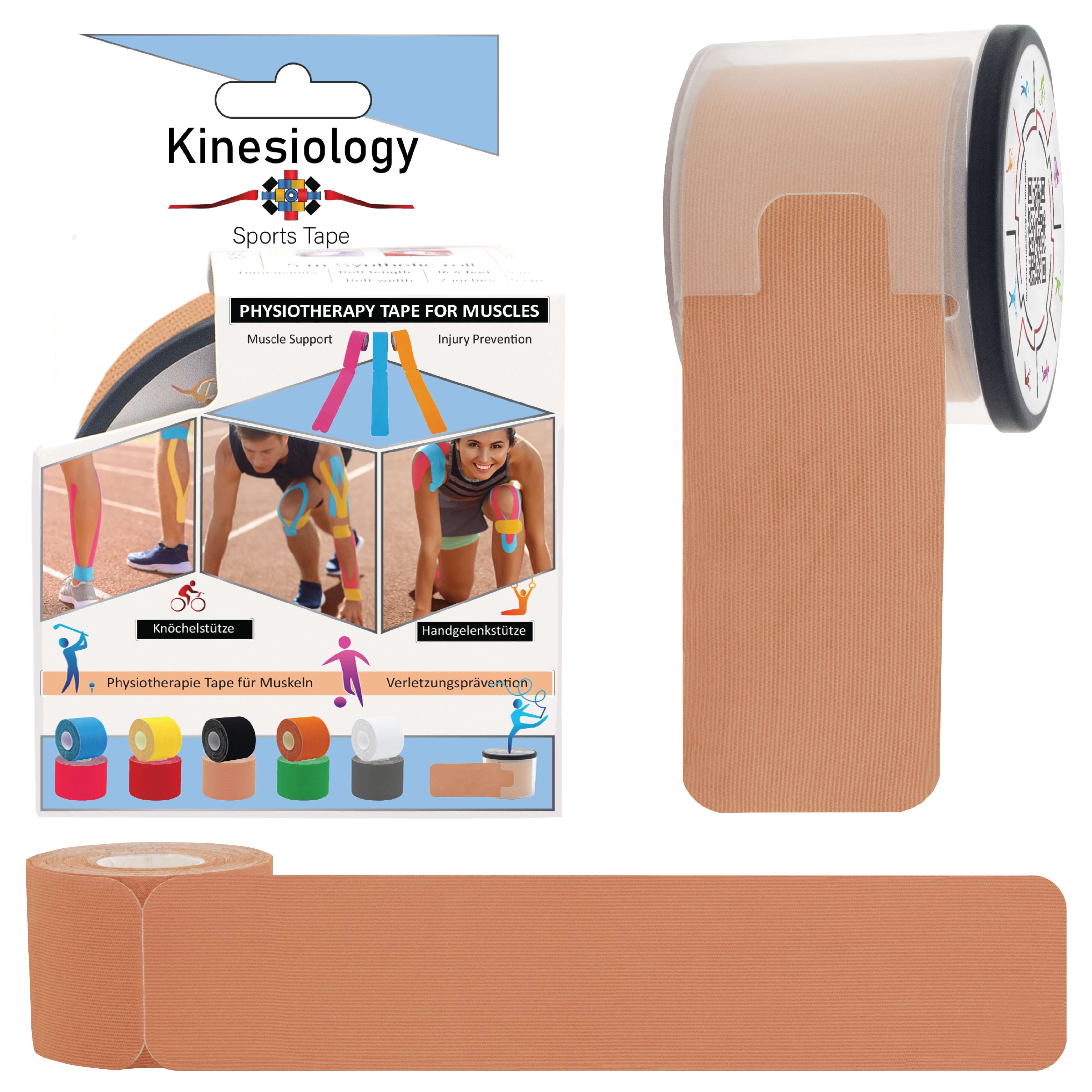
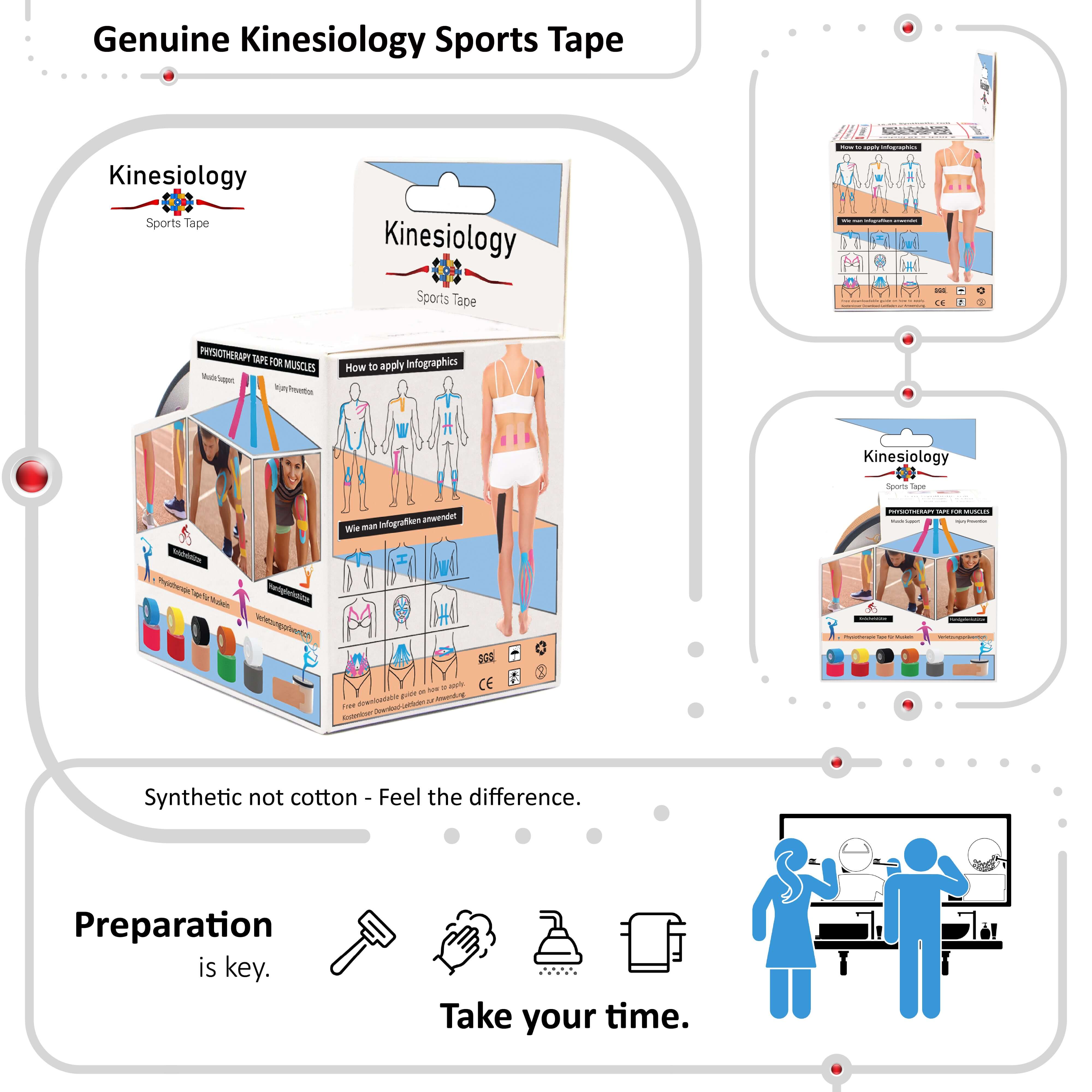
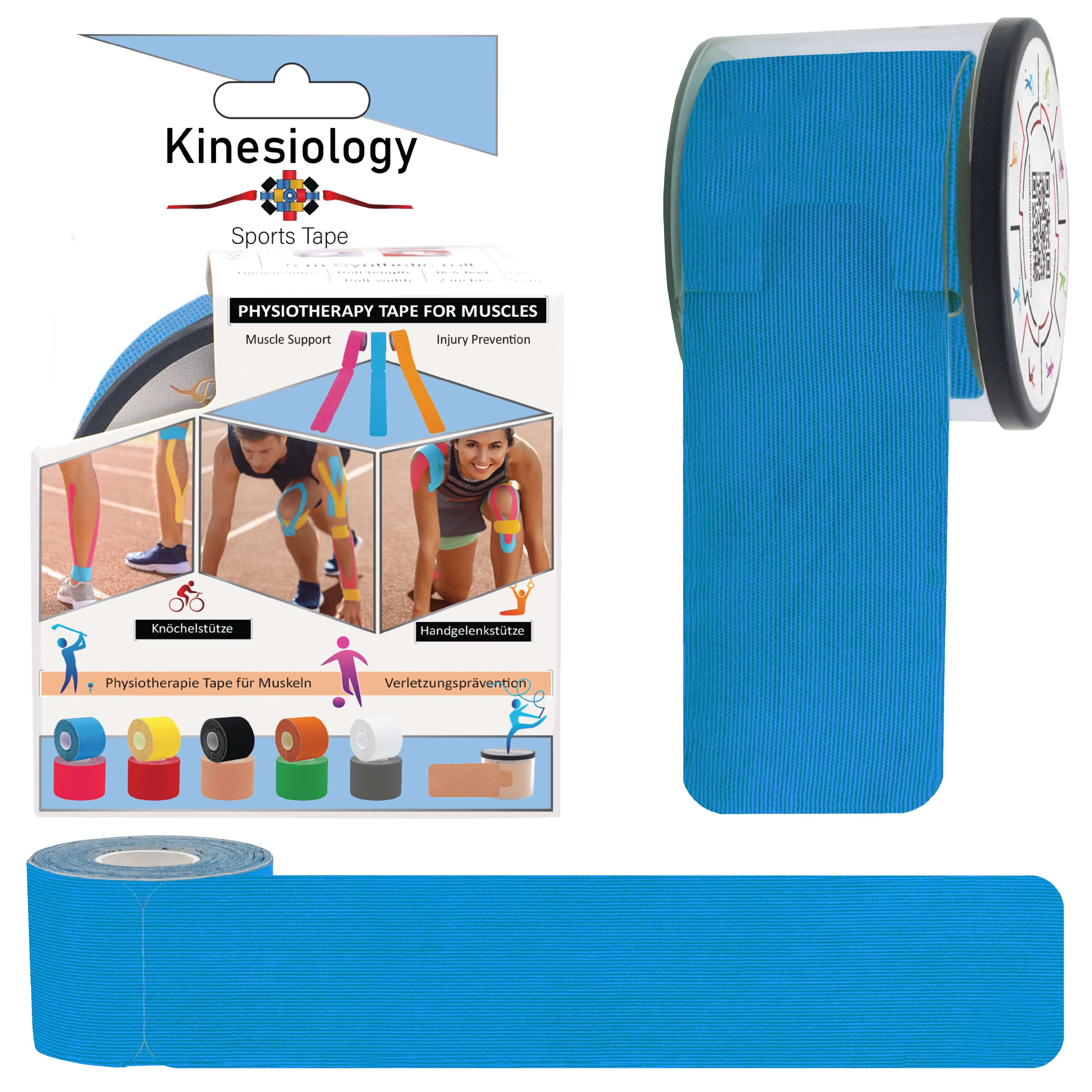
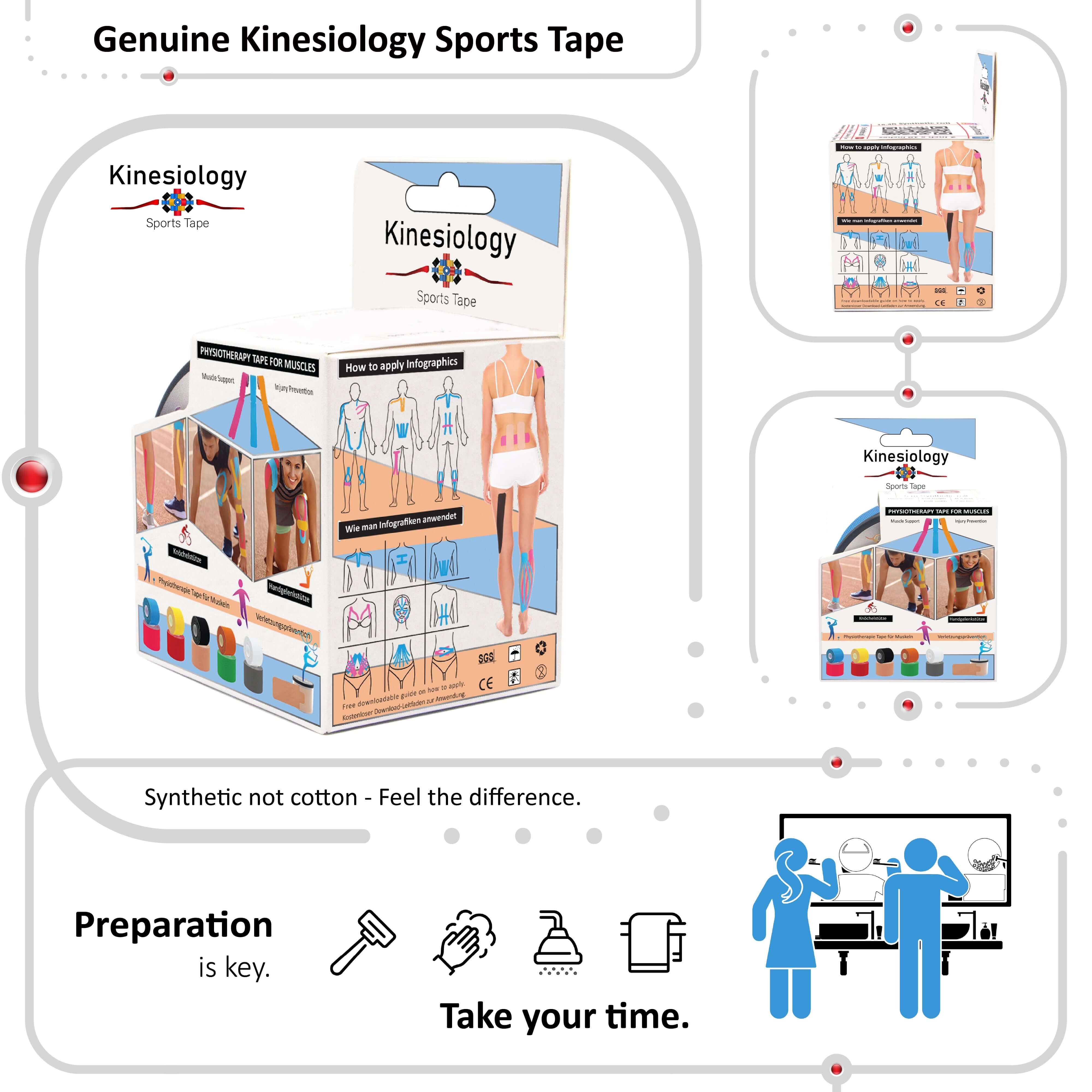
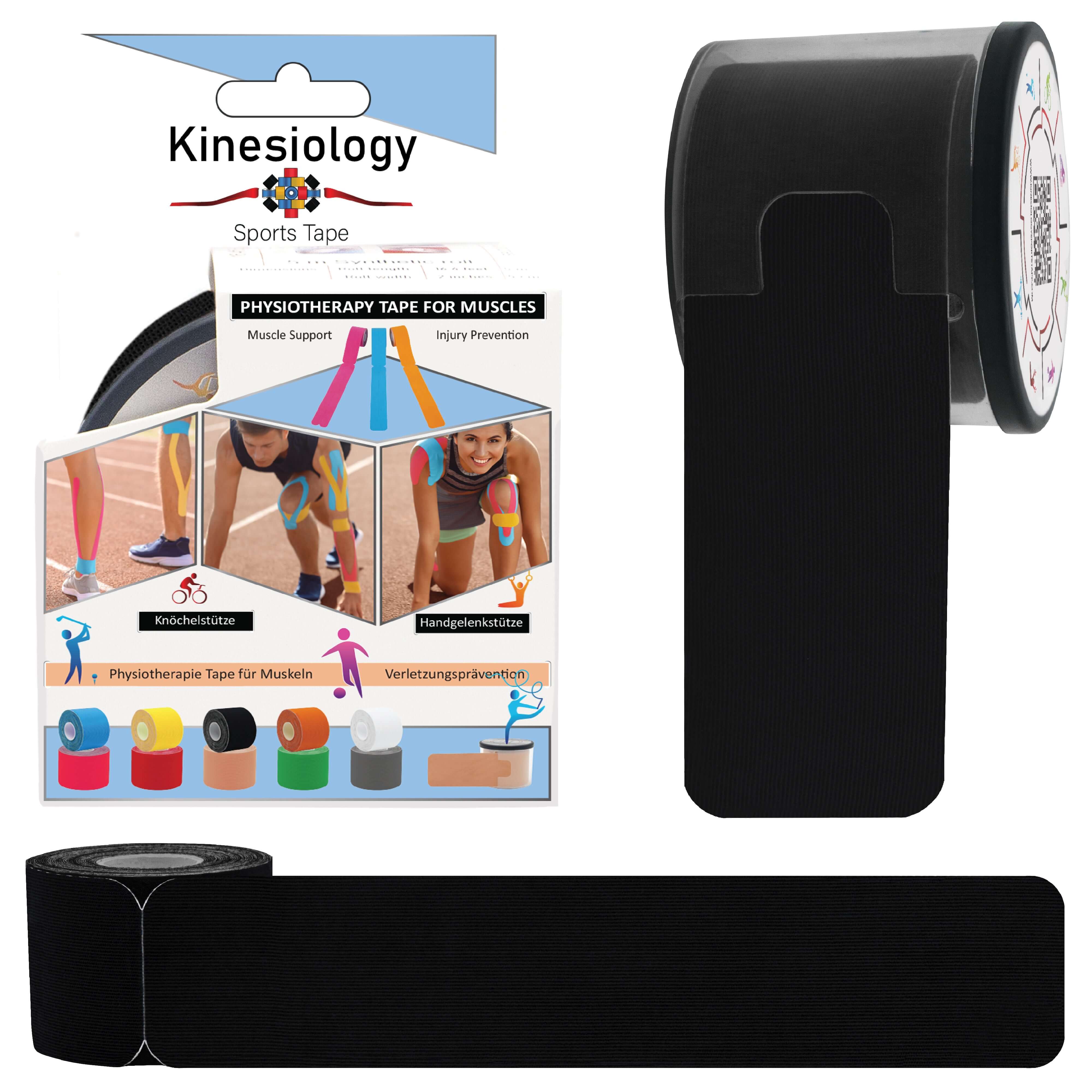
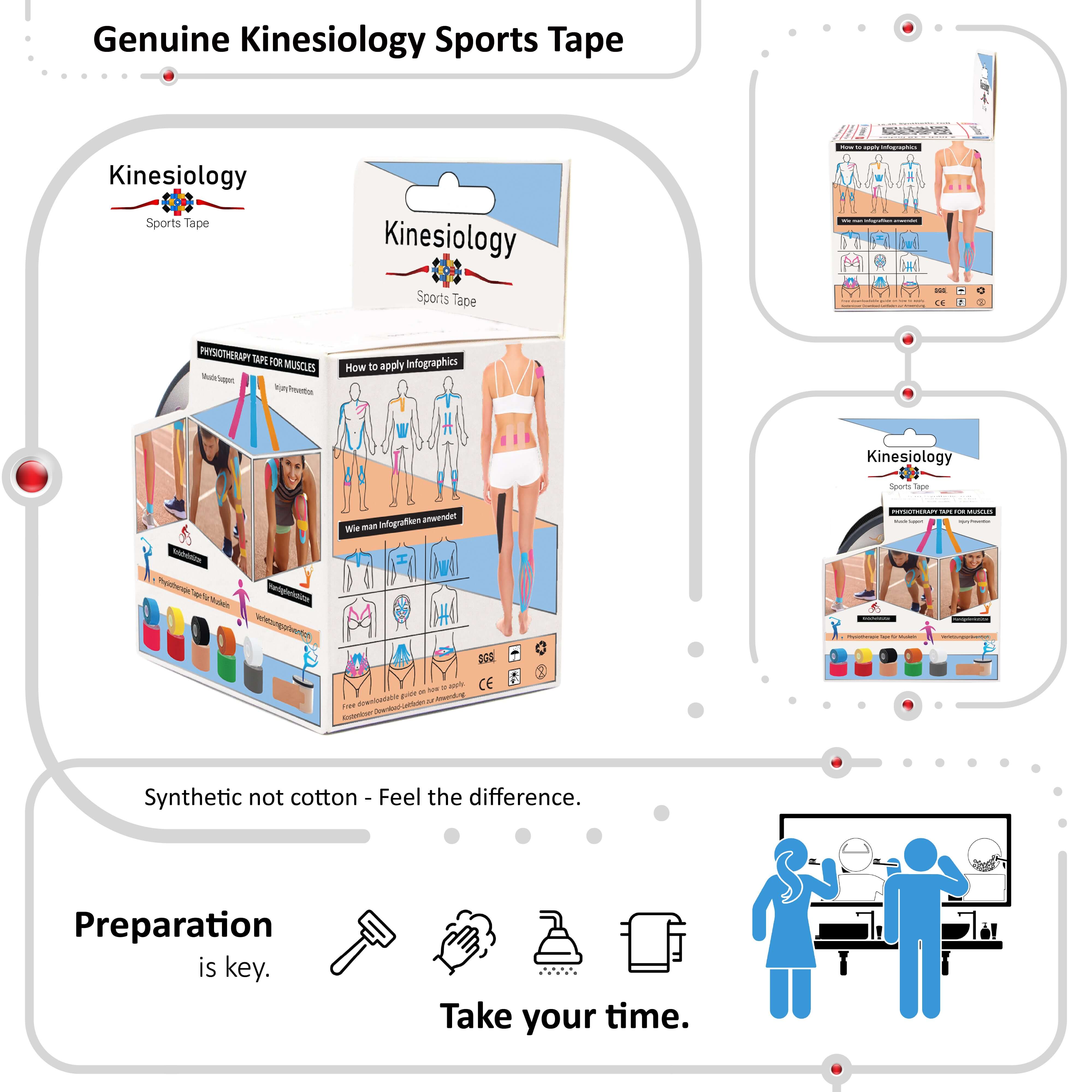
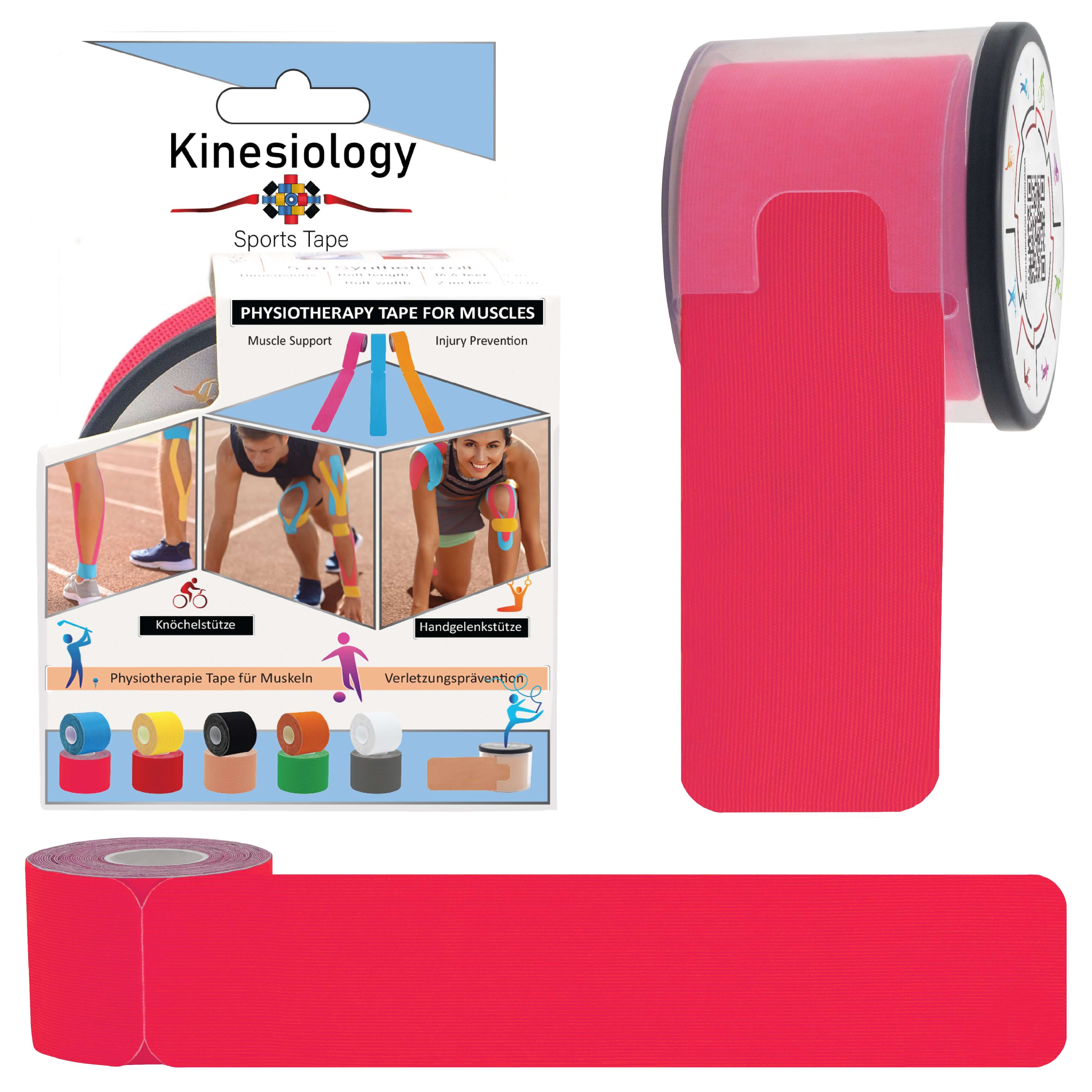
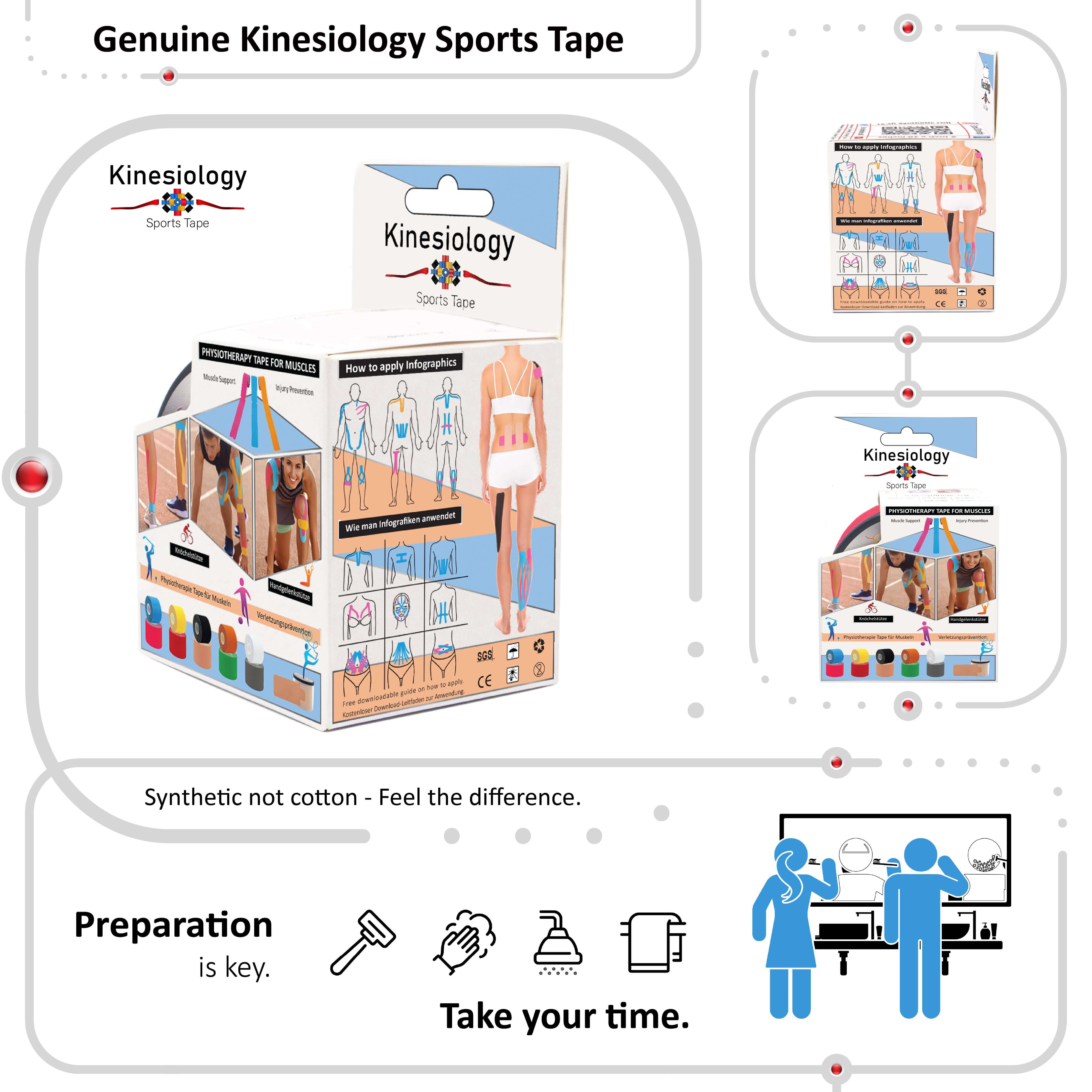
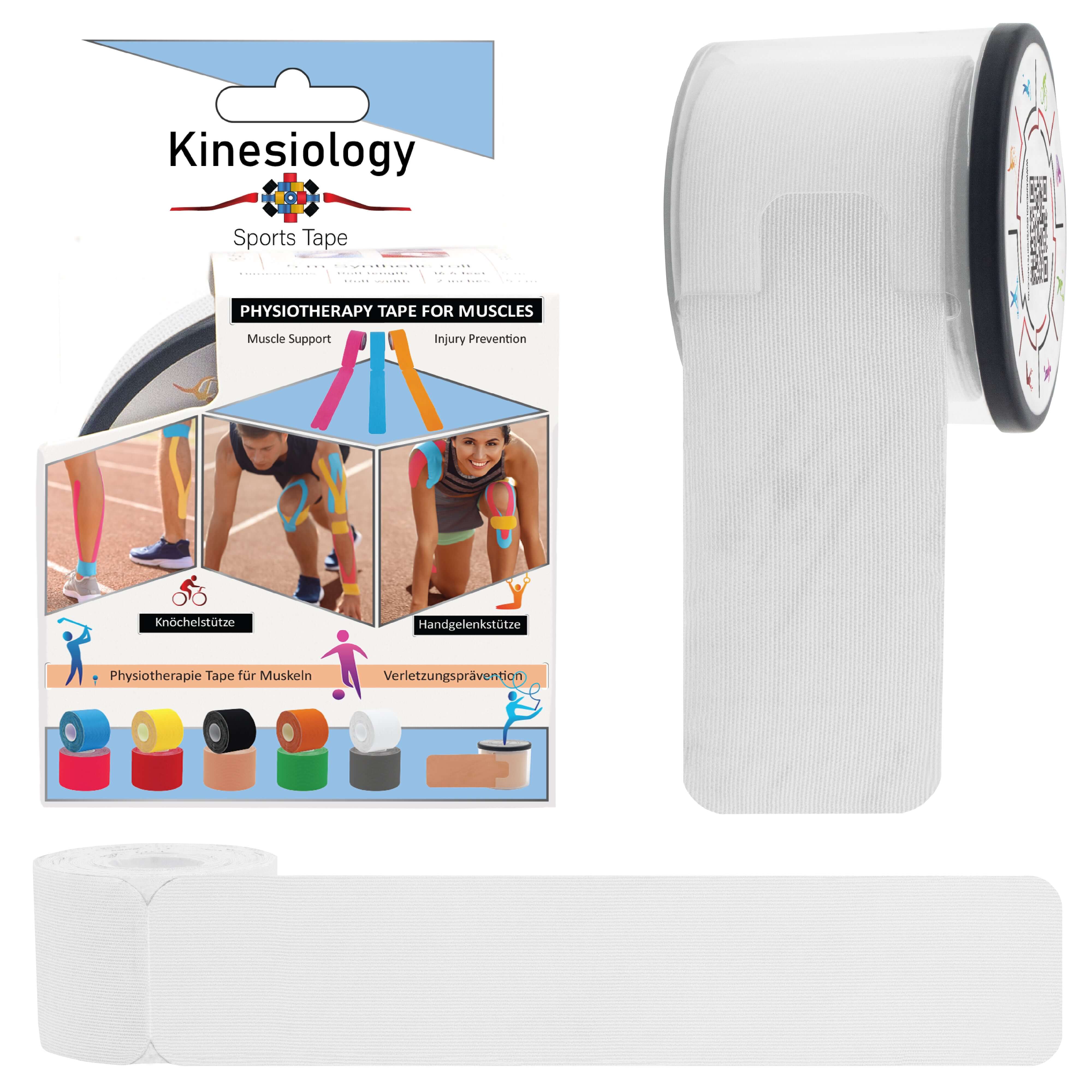
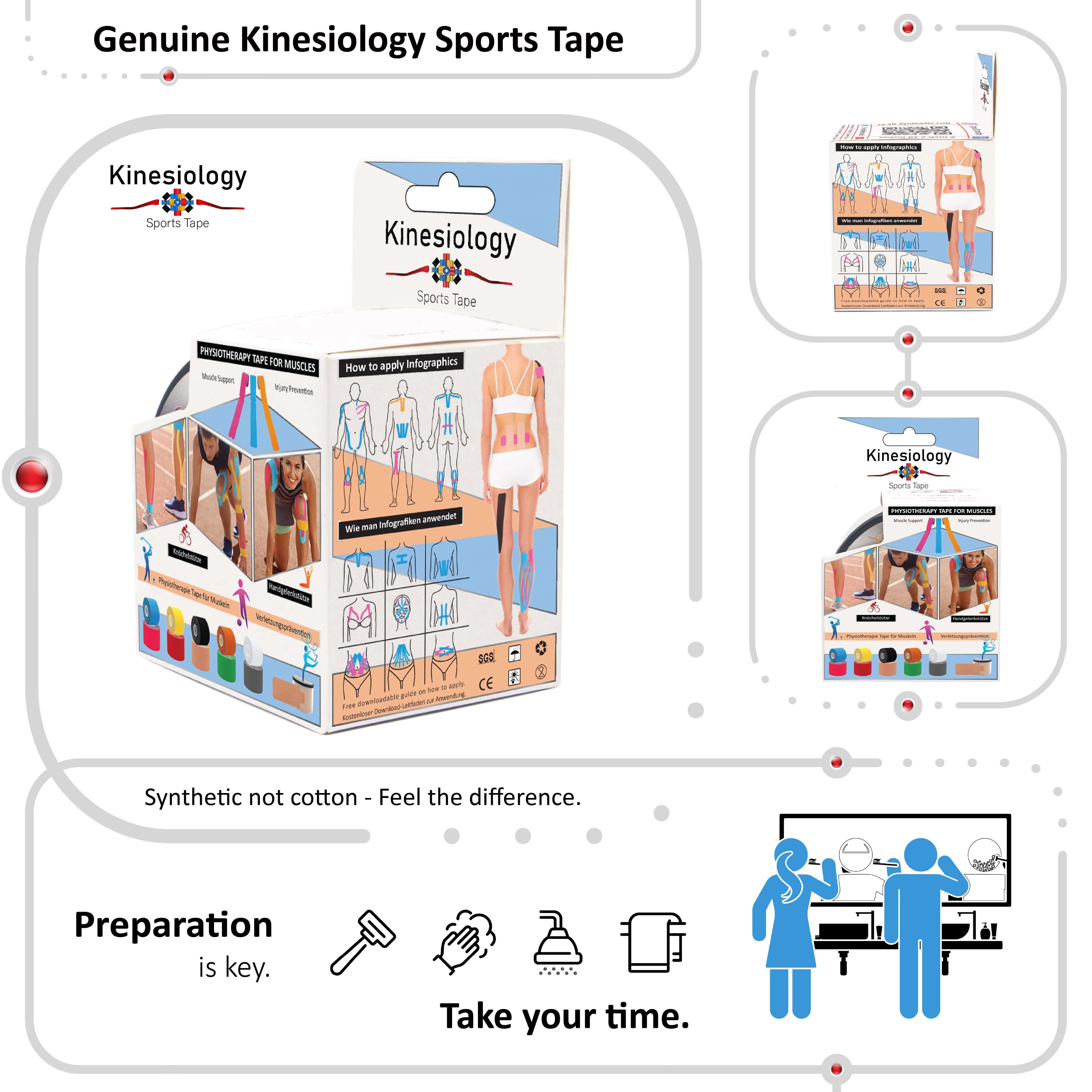
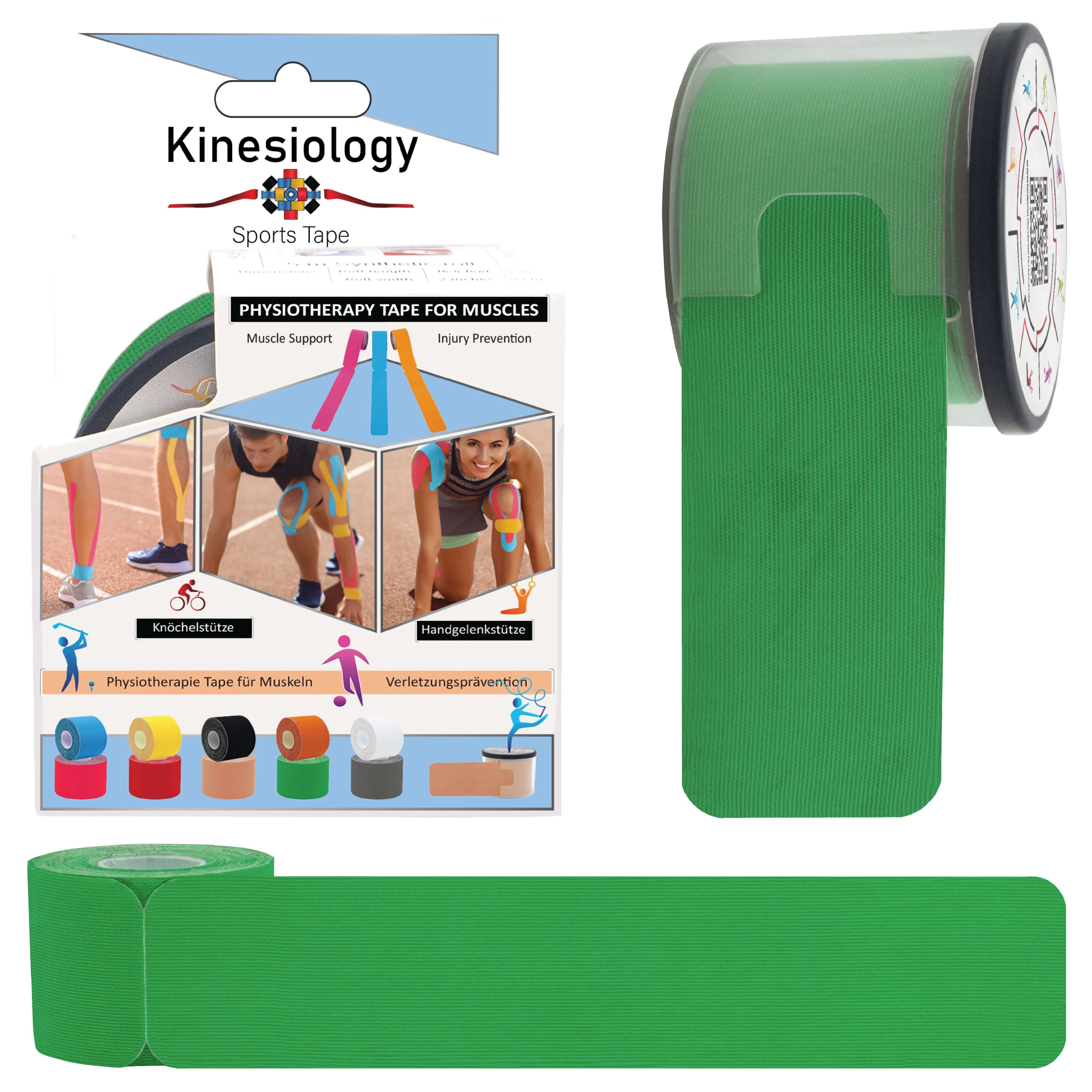
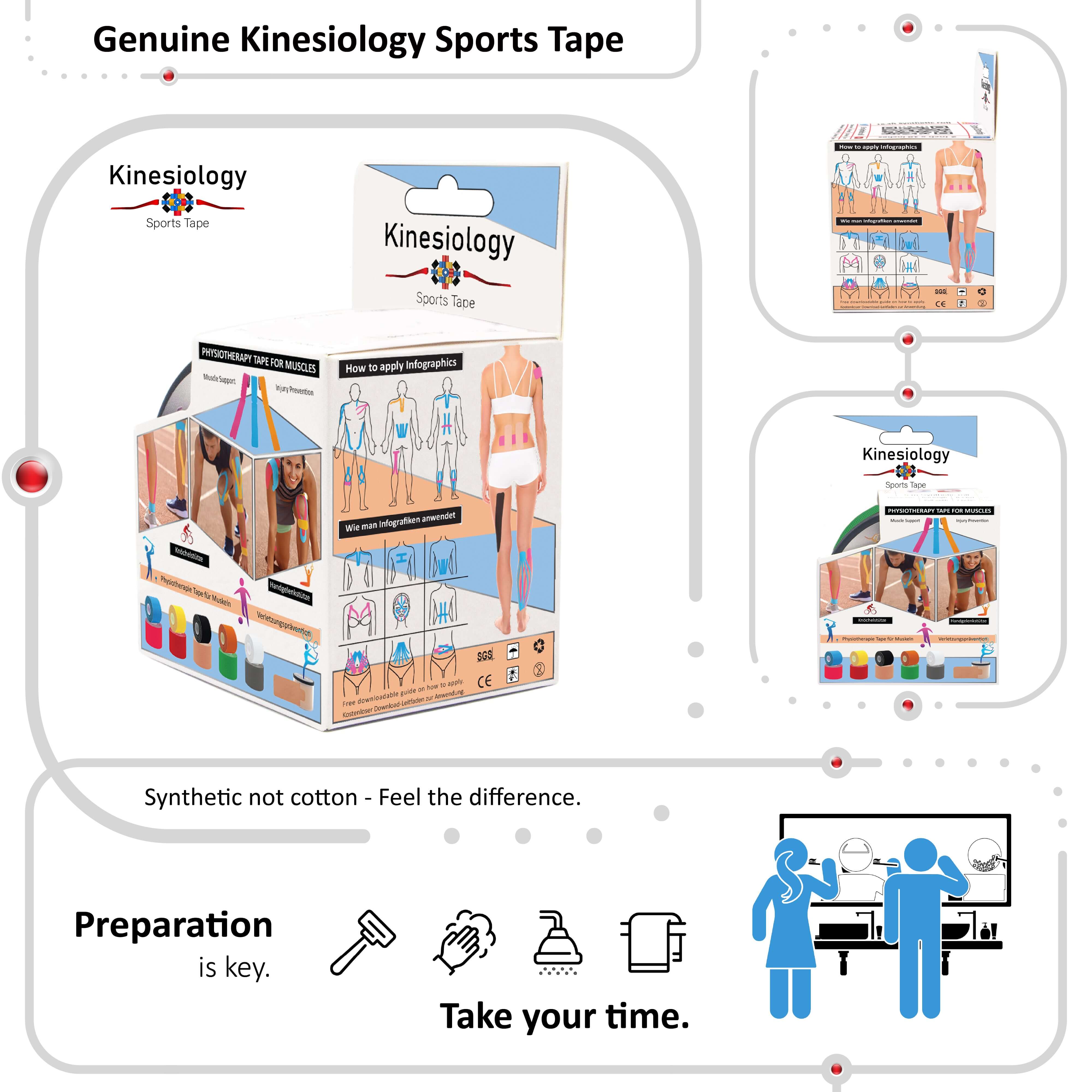
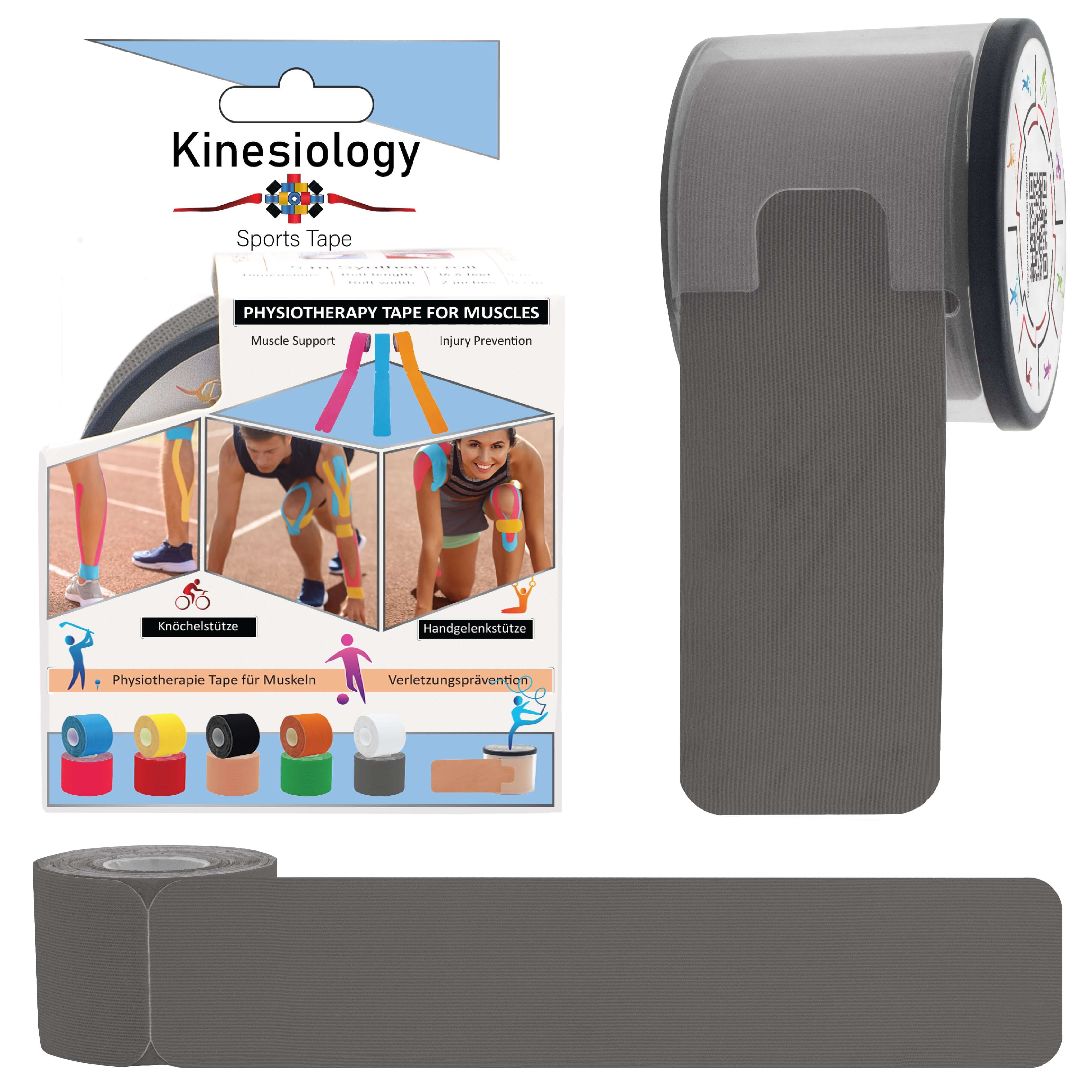
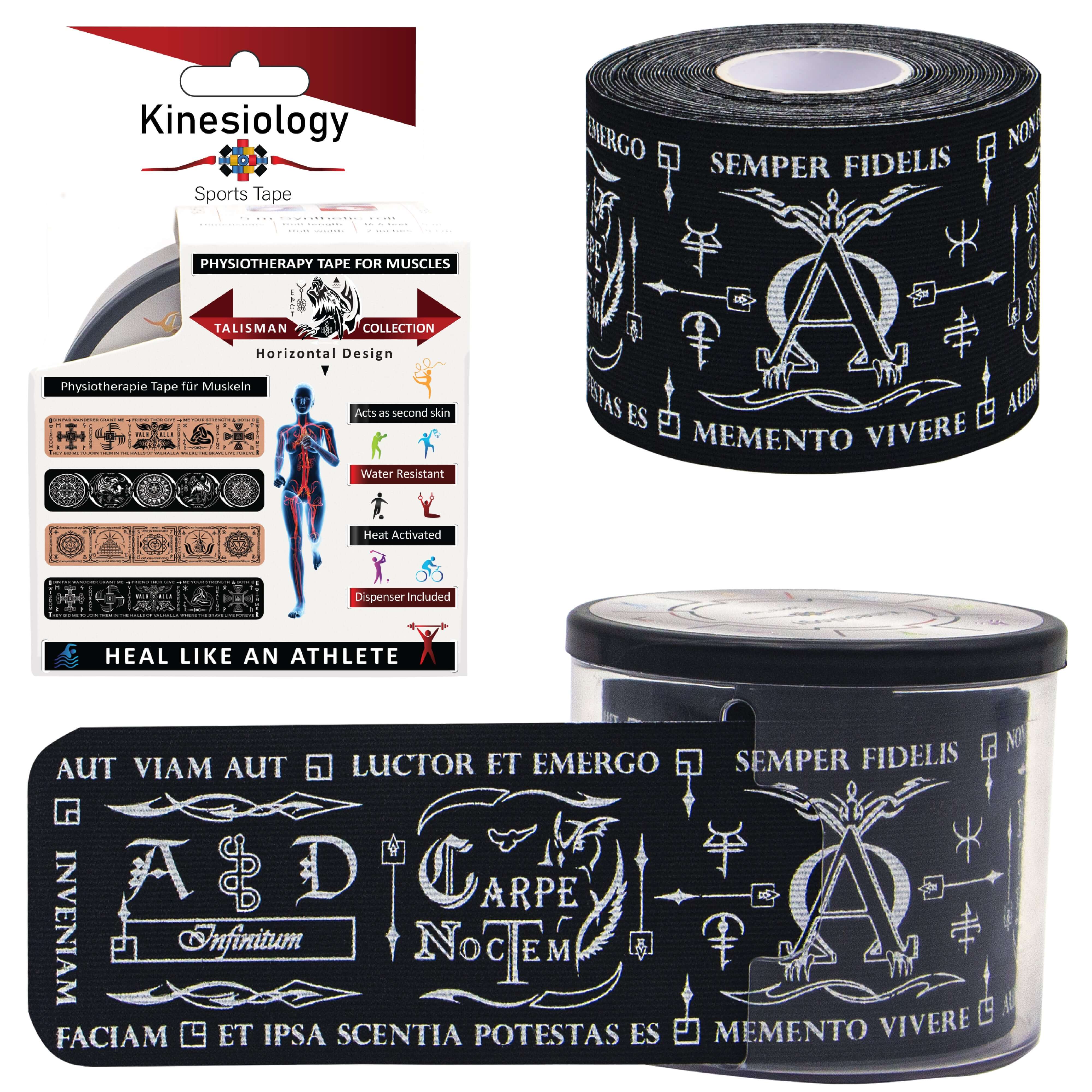
Kinesiology Sports Tape is the only kinesiology tape on the market with a built-in dispenser. Twenty pre-cut strips, each at the medically-favoured 5cm × 25cm size, threaded so they pull out cleanly one at a time. No scissors. No fraying edges. No flattened roll in the bottom of a kit bag.
Not sure which to buy? Read the UK buyer’s guide · Mix colours and designs on the counter