
Price :
QTY :
CART TOTALS :
There are items
in your cart
CART TOTALS :
With this products also buy:
Your shopping bag is empty
Go to the shop
Targeted Pain Relief
Pre-cut kinesiology tape for tennis elbow, golfer’s elbow, olecranon bursitis, distal biceps tendonitis, ulnar nerve entrapment (cubital tunnel) and elbow hyperextension. The elbow is a hinge joint that takes punishment from gripping, throwing, lifting and leaning on hard desks.
This page covers six of the most common elbow conditions kinesiology tape can help. The elbow has three working compartments — the hinge between humerus and ulna, the radial head that lets you rotate, and the soft tissues around them. Most elbow pain is tendon attachment irritation, and tape’s off-load mechanism is exactly suited to that.
Pain on the bony point on the outer elbow that radiates down the back of the forearm, worse on gripping, lifting a kettle, shaking hands or a backhand stroke. Most cases come from work-related gripping — tradies, hairdressers, plumbers, mouse-heavy desk workers — not actual tennis.
Tape pattern: Strip 1 anchors at the back of the wrist and runs up the back of the forearm to just above the elbow at 25% stretch (apply with wrist bent forward). Strip 2 horizontal decompression across the painful lateral epicondyle at 75% stretch.
Full Tennis Elbow Guide →Pain on the bony point on the inner elbow that radiates down the front of the forearm, worse on gripping, palm-up lifting and pulling movements. Common in golfers (trail arm), throwers, climbers, weightlifters doing chin-ups and deadlifts. About one-tenth as common as tennis elbow but treated very similarly.
Tape pattern: Strip 1 anchors at the front of the wrist and runs up the front of the forearm to just above the inner elbow at 25% stretch (apply with wrist bent back). Strip 2 horizontal decompression across the medial epicondyle at 75% stretch.
Full Golfer’s Elbow Guide →Soft, squishy swelling at the back tip of the elbow, sometimes painful but often just visibly puffy. The olecranon bursa — a fluid-filled cushion at the elbow tip — becomes inflamed from leaning on hard surfaces, a direct blow, or chronic friction. Common in students, draughtspeople, plumbers and wheelchair users. Most cases settle with padding and rest.
Tape pattern: Fan-strip lymphatic drainage — base anchored above the elbow, four thin tails fanning down over the swelling at 15% stretch only. Avoid putting any stretch through the bursa itself. See a GP if the swelling is hot, very red, or you have a fever — could be infection.
Full Bursitis Guide →Aching pain in the front of the elbow (the biceps tendon insertion on the radius), worse on chin-ups, palm-up curls, and lifting heavy in supinated grip. Often grumbles on for months in lifters who don’t vary grip. A sudden tear with a snap and a “Popeye” muscle balling up means full rupture — surgical.
Tape pattern: Y-strip with base at the front of the elbow, tails fanning up the biceps muscle belly at 25% stretch (apply with elbow straight). Horizontal off-load strip across the tender tendon insertion at 50% stretch.
Tingling, numbness or burning in the little finger and half of the ring finger, often worst at night with the elbow bent under the pillow. The ulnar nerve runs through the cubital tunnel on the inner elbow — the “funny bone”. Prolonged elbow flexion (sleeping, phone use, desk lean) compresses it. Cyclists with sustained handlebar grip also get it.
Tape pattern: Decompression Y-strip across the inner elbow with base on the upper arm and tails passing either side of the cubital tunnel at 75% stretch (apply with elbow straight). Lifts skin off the nerve. Combine with a sleep brace that keeps the elbow extended at night.
Pain in the front and inner elbow after the joint is forced past its straight position — a fall on an outstretched arm, a missed catch, or a martial-arts armbar. The anterior joint capsule and brachialis muscle get overstretched. Bruising and swelling at the elbow crease, painful end-of-range straightening.
Tape pattern: “X” pattern across the front of the elbow crease — two strips crossing diagonally at 50% stretch with the elbow held at 10° of flexion. Provides end-range support against further hyperextension without restricting working range.
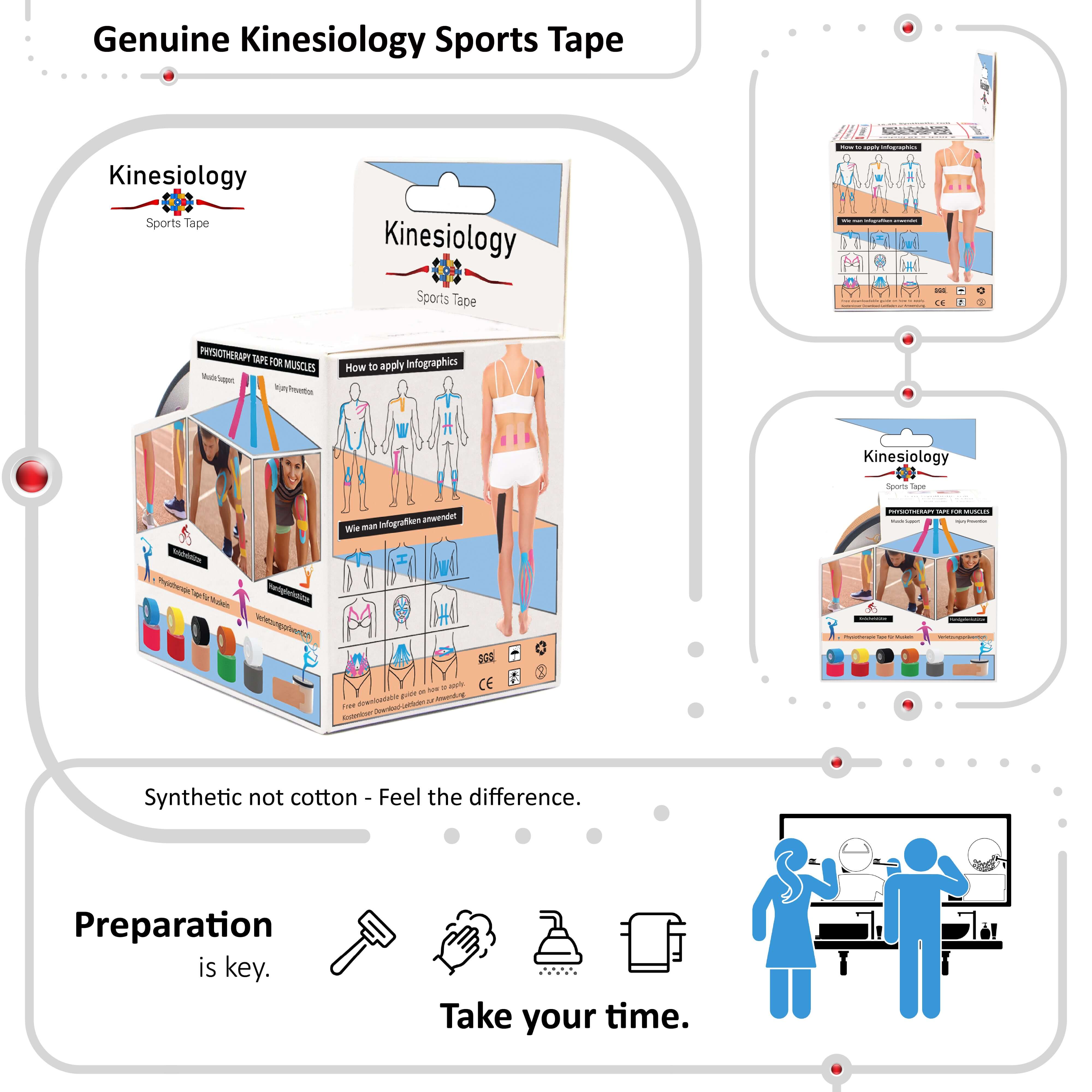
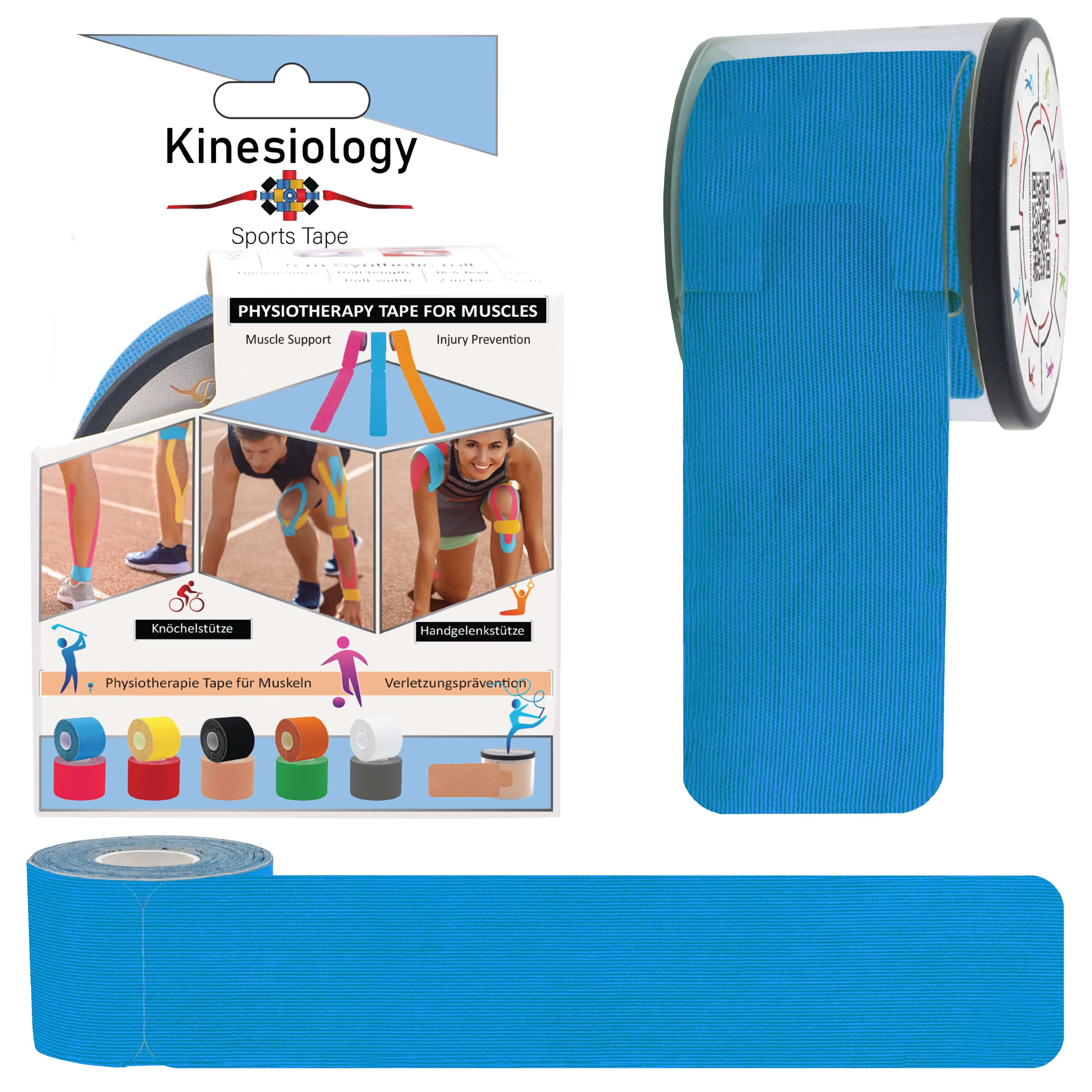
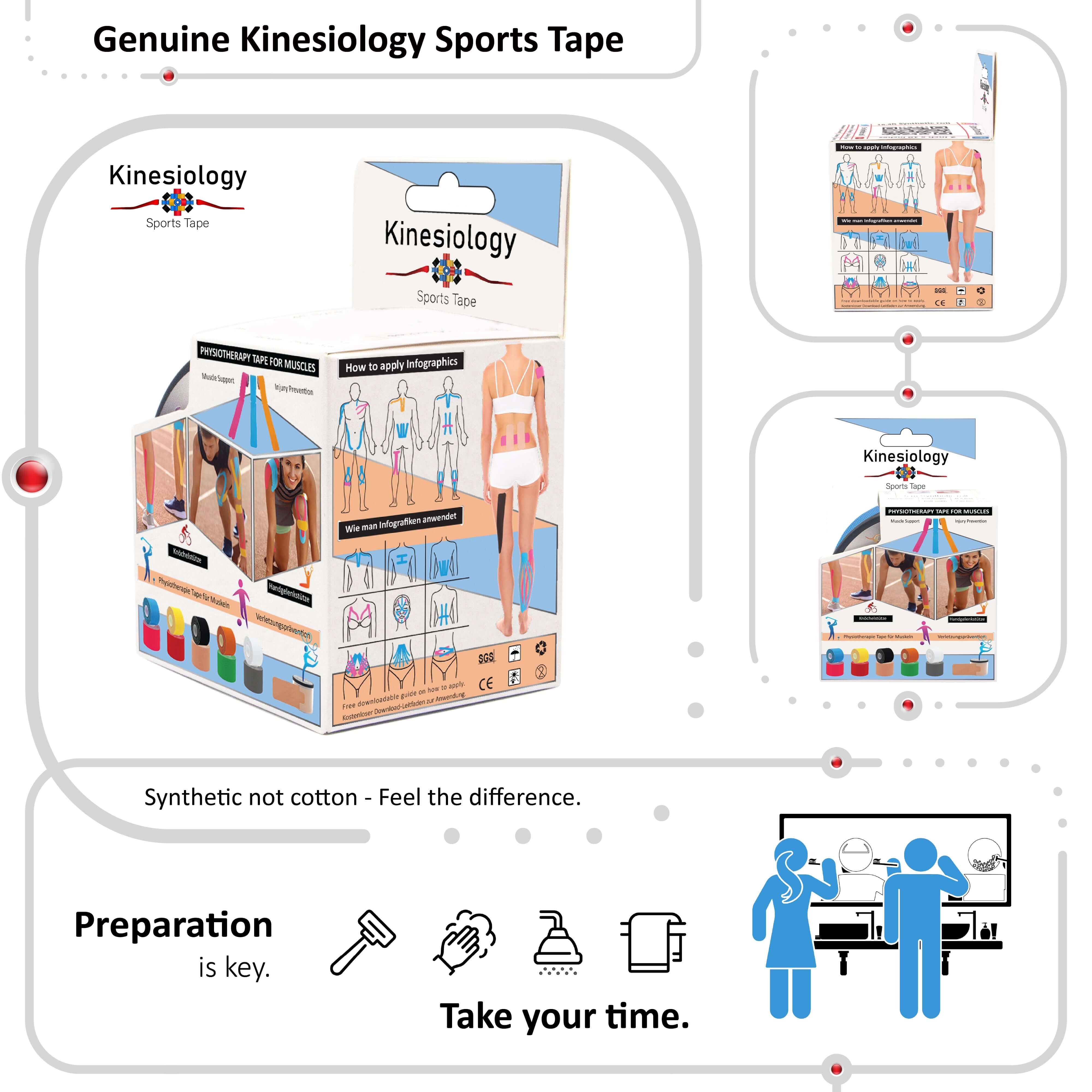
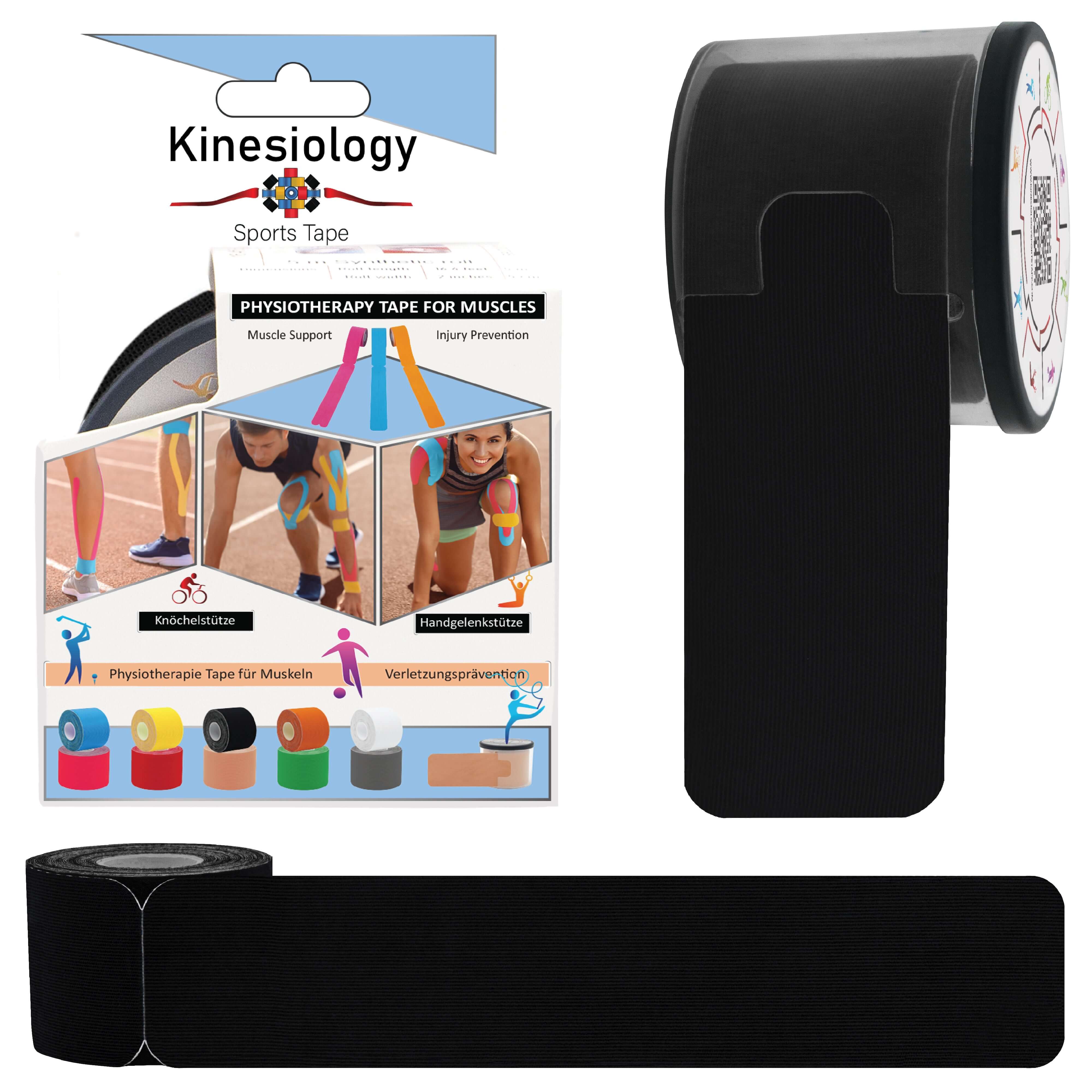
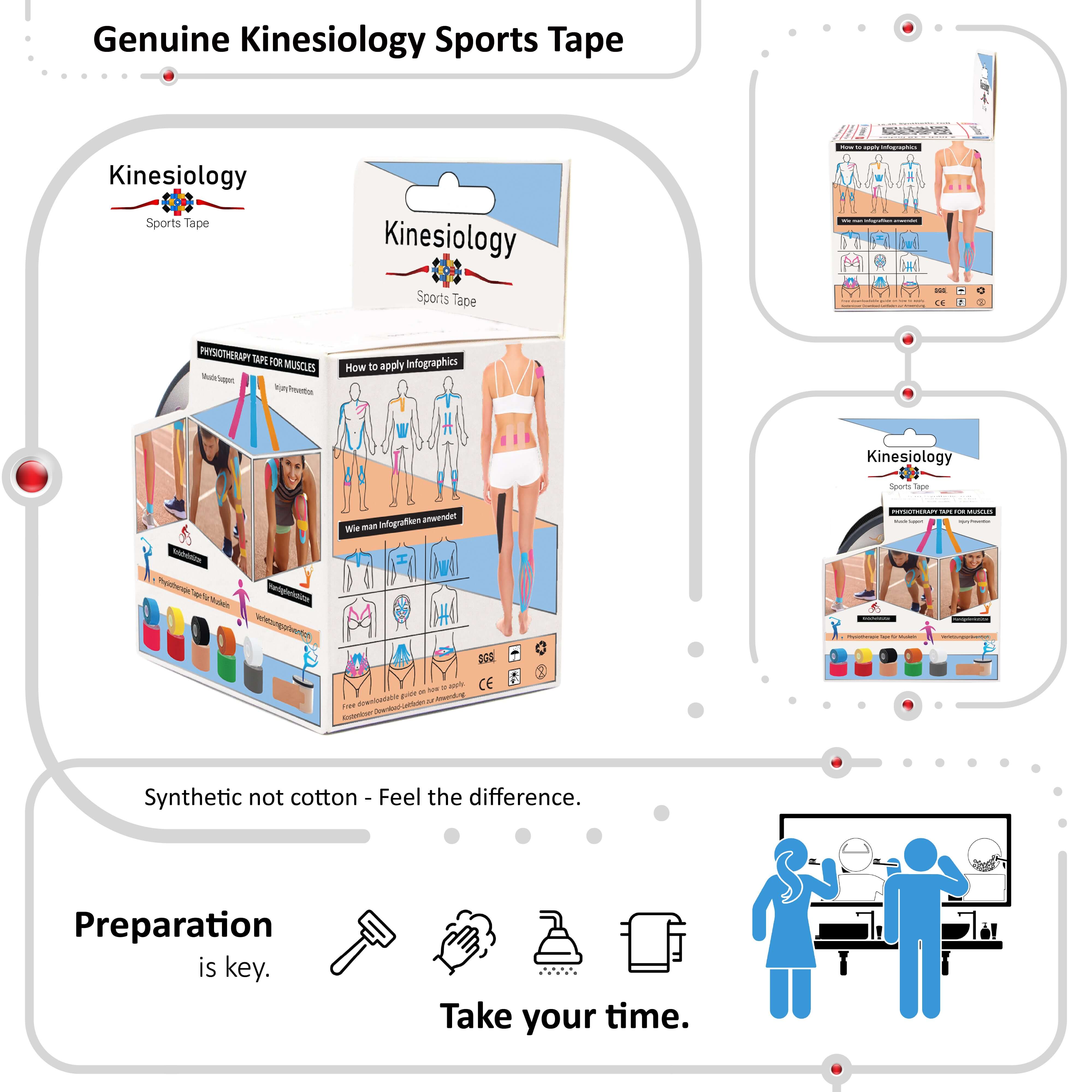
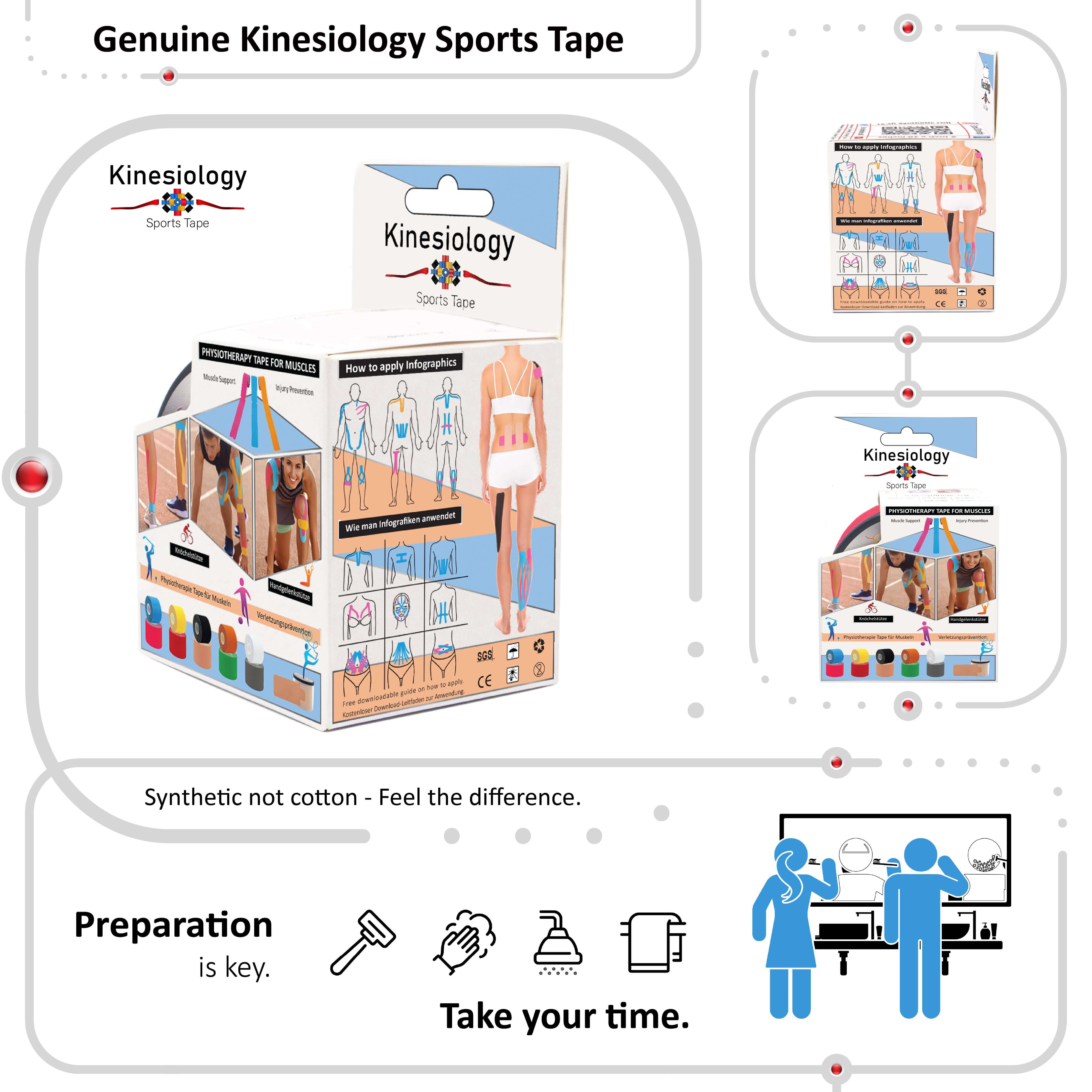
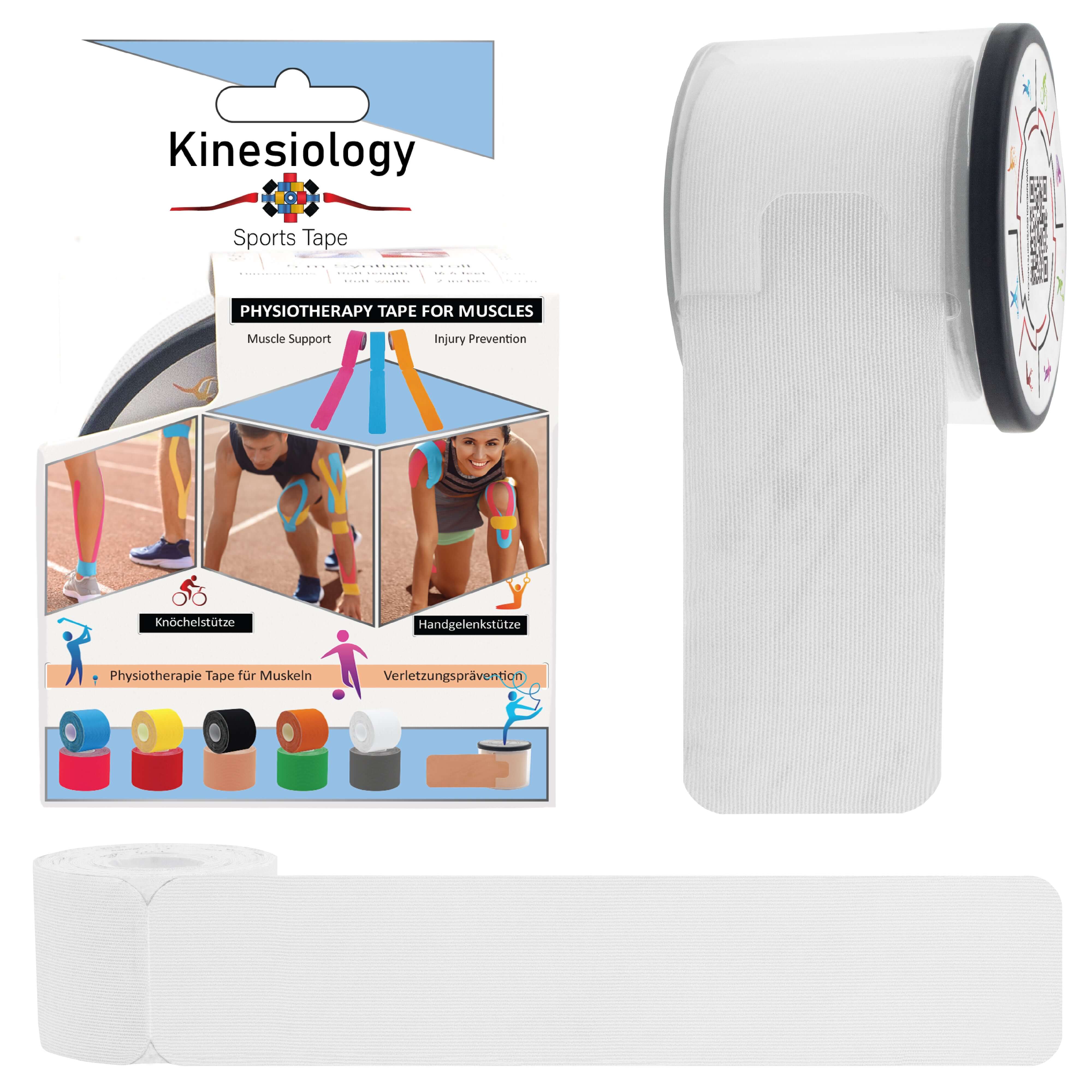
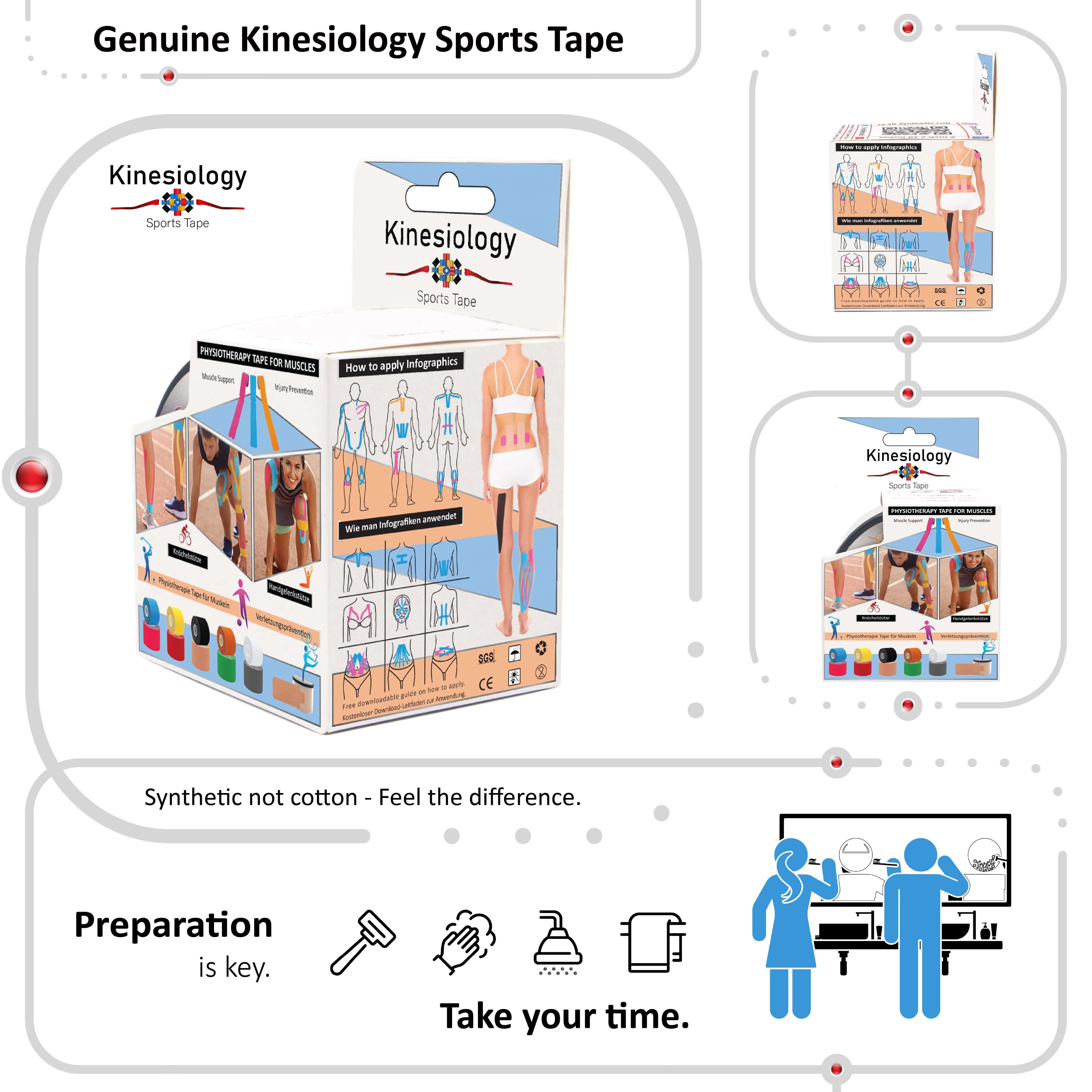
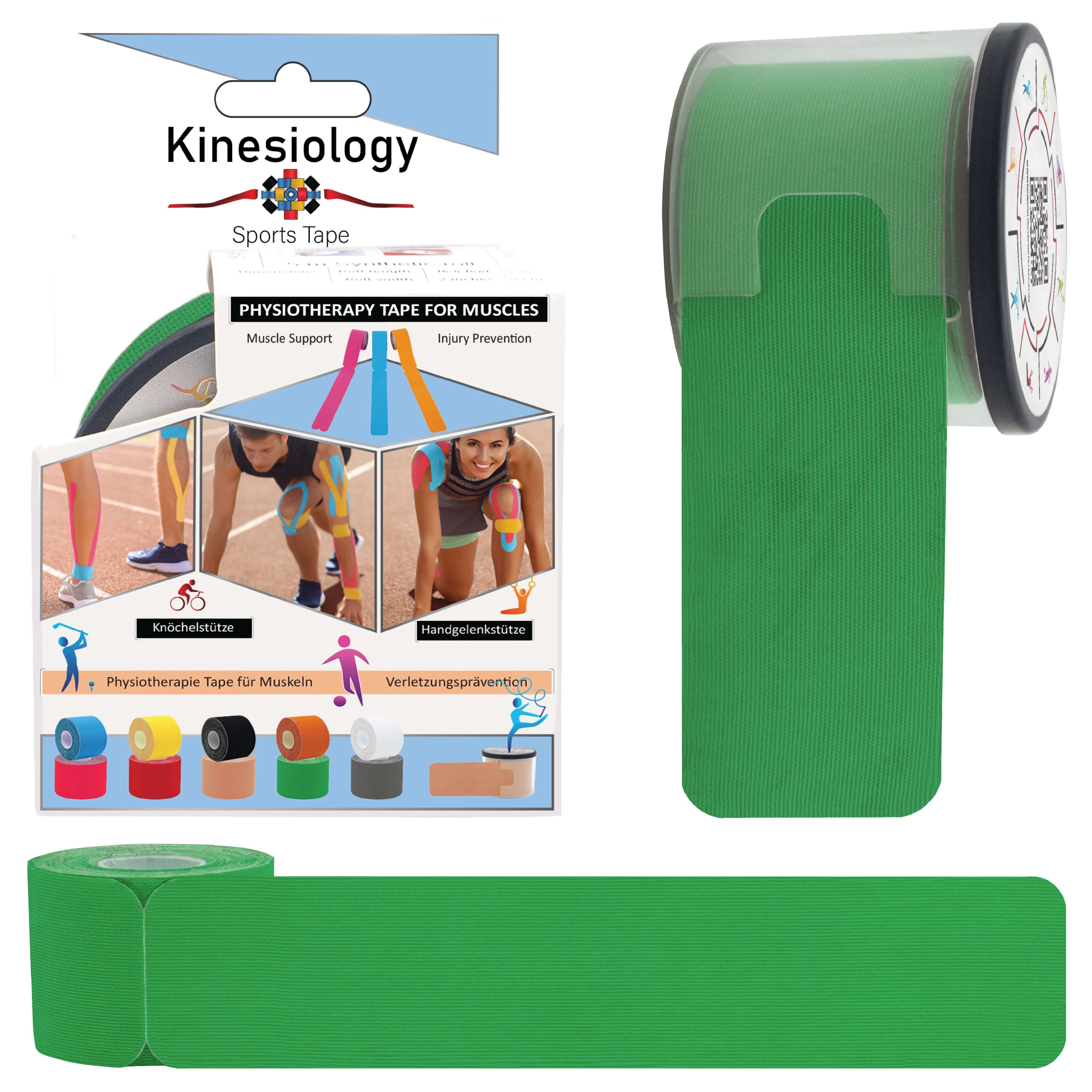
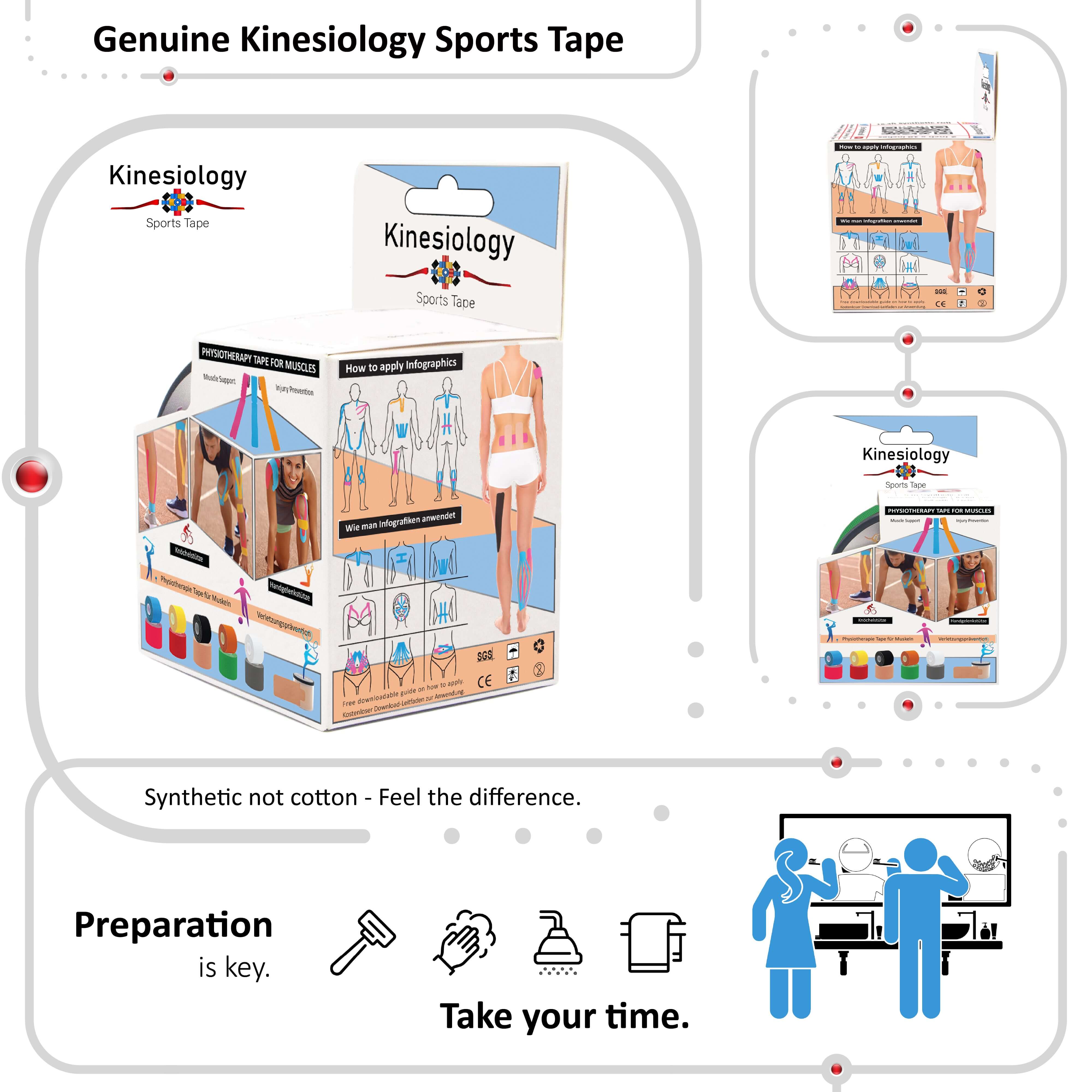
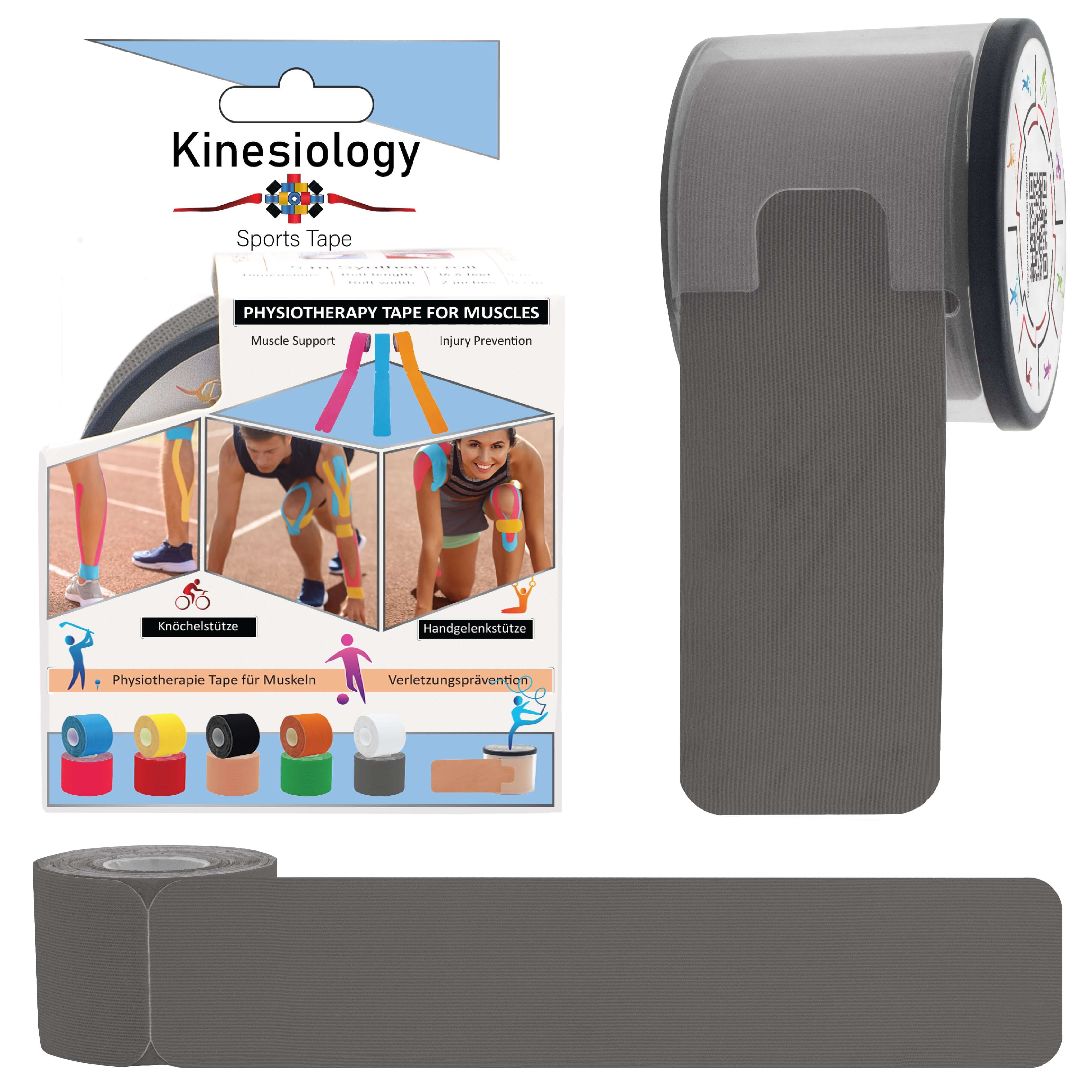
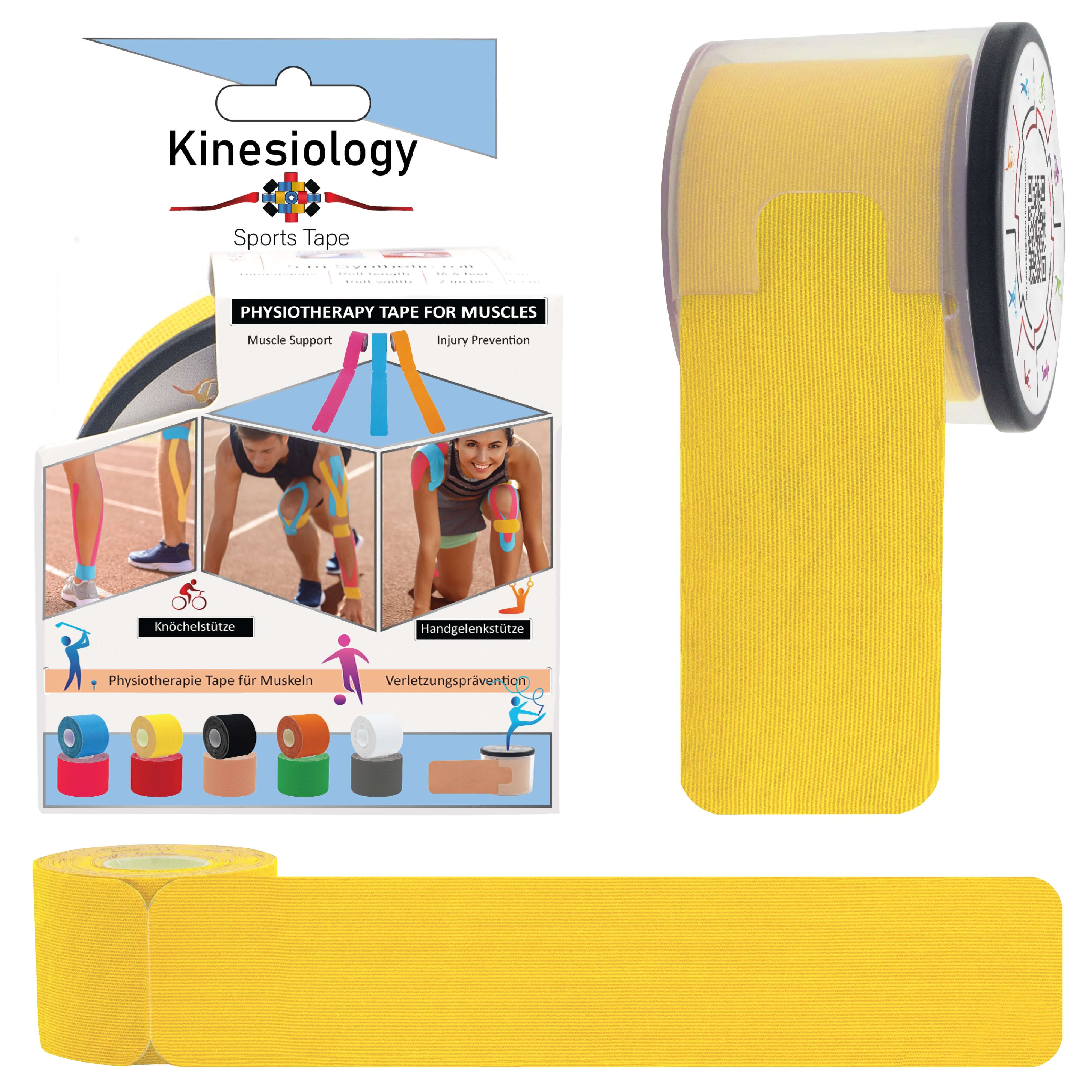
Pre-cut 5cm × 25cm strips suit the elbow perfectly — one strip per condition is usually enough. Synthetic Rayon/Spandex holds 5–7 days through showers, gym, gardening and racket sport.
Beige £4.993 for £9.99The elbow is a tendon-attachment hotspot — almost every muscle in the forearm attaches to a small patch of bone at the elbow, which is why overuse so often shows up as a sore epicondyle. Three mechanisms make tape effective. First, longitudinal off-load: a strip up the back or front of the forearm shares pulling force away from the irritated attachment. Second, decompression at the painful point: a higher-stretch horizontal strip across the epicondyle lifts skin and may reduce local pressure on inflamed tissue. Third, proprioceptive cueing: the tape reminds the brain to grip less tightly and to move from the shoulder rather than the wrist — mechanical changes that take repetition to become automatic.
For tennis and golfer’s elbow specifically, tape buys you tolerance during the heavy slow resistance phase that actually rebuilds the tendon. Tape is an adjunct, not a fix — the eccentric loading is what changes the tendon.
Both, ideally. Tape gives the soft-tissue off-load and decompression. A counterforce strap unloads the tendon attachment during activity. Apply tape first, strap over the top during sport.
5–7 days on synthetic Rayon/Spandex tape through showers, sweat and training. Round the corners and rub firmly for best hold.
Yes — that’s a main use case. Drop the working weight 30–50% during the symptomatic phase, build back gradually, and prioritise slow eccentrics.
With tape, eccentric loading and load management, most cases settle in 3–6 months. Without rehab, 1–2 years is normal. The condition is self-limiting eventually, but rehab dramatically shortens it.
Classic olecranon bursitis presentation. If it’s not red, hot or feverish, it usually settles with padding, avoiding pressure on the elbow tip, and lymphatic taping. If it’s hot, red, or you feel unwell, see a GP same-day to rule out infection.
Likely. The ulnar nerve compresses with prolonged elbow flexion (sleeping curled up, phone in hand). Try a soft elbow brace at night that keeps the elbow straight, plus the decompression tape pattern. If symptoms persist or hand strength weakens, see a physio.
Browse all 19 taping guides
From neck pain to plantar fasciitis, step-by-step guides for every common condition.
All Pain Guides →